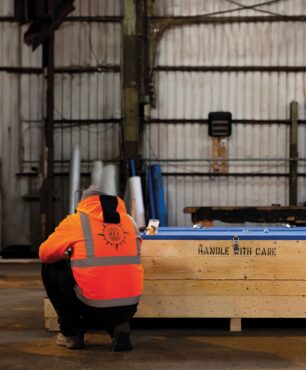
Heavy haulage abnormal loads transporting T-pylon power infrastructure for Hinkley Point C
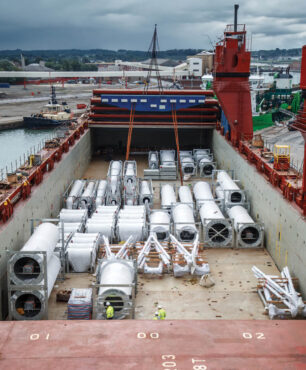
Heavy engineering rail track shipments moved via multimodal logistics
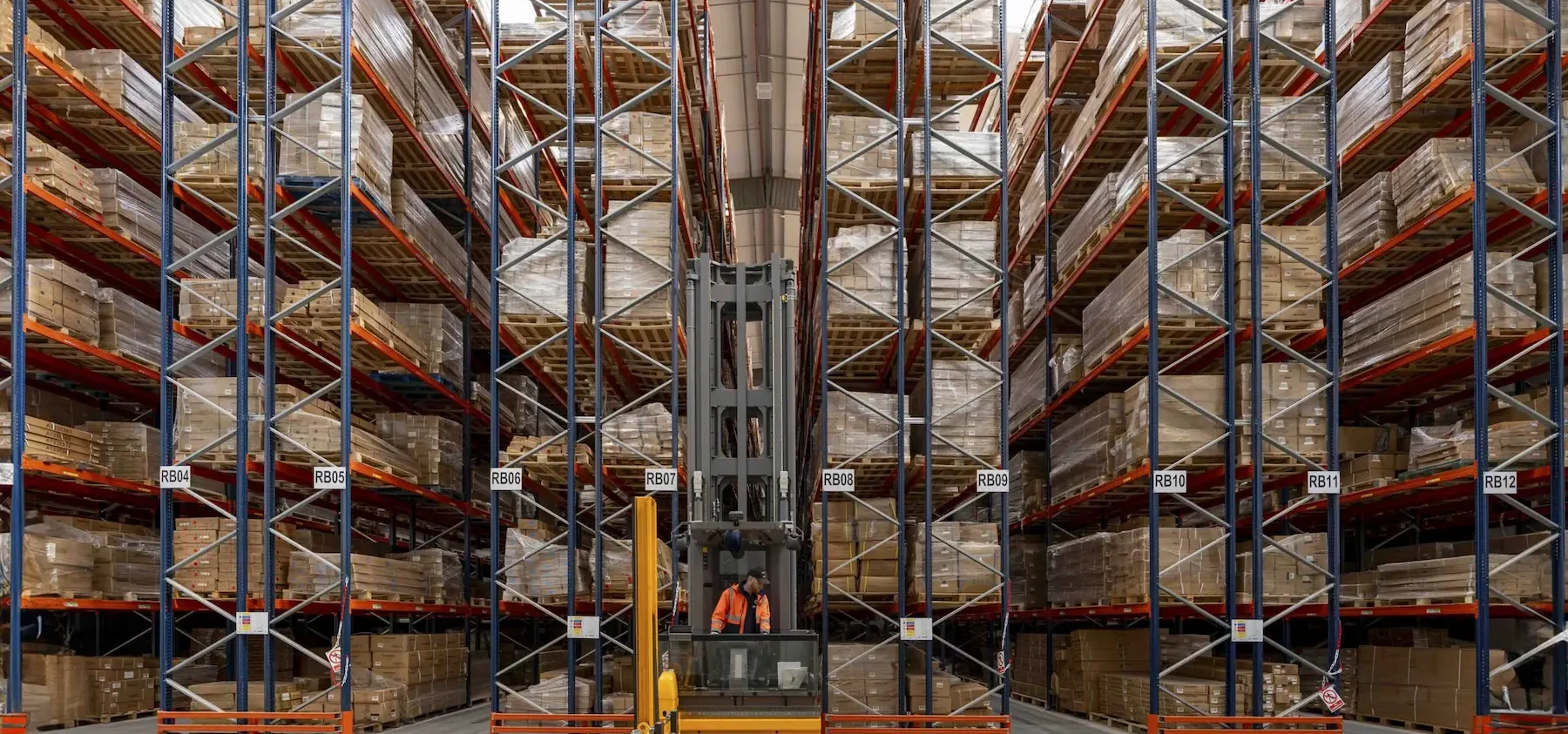
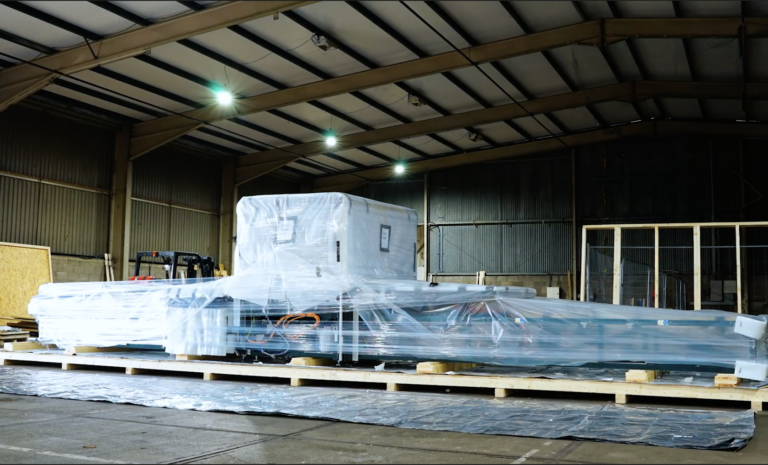
Heavy plant staging and port-centric warehousing in Suffolk UK
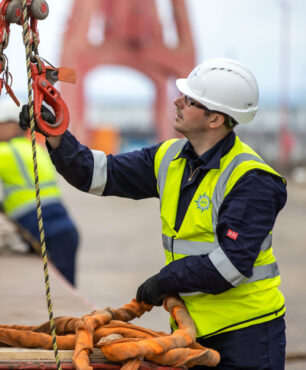
Specialist project logistics team planning out-of-gauge heavy haulage route
01 / 04
Engineering-Led Project Logistics

Heavy Haulage Abnormal Loads: How Global Procurement Teams Engineer, Permit, and Deliver Out-of-Gauge Cargo

Procuring international logistics for heavy haulage abnormal loads demands precision engineering, statutory road network authorisations, and seamless multimodal orchestration. Whether navigating UK STGO Category 1-3 regulations, mobilising Self-Propelled Modular Transporters (SPMTs), or executing structural bridge assessments, Hemisphere Freight Services delivers verified engineering solutions for industrial machinery, renewable energy pylons, and critical infrastructure.

For more than 30 years, our accredited logistics teams have eliminated supply chain vulnerabilities by taking ownership of the complete journey: from initial swept-path civil simulations and police escort notifications to deep-sea heavy lift chartering and quayside port staging. Discover how global contractors, EPC firms, and heavy manufacturing leaders execute out-of-gauge (OOG) and heavy lift cargo movements with absolute safety, full regulatory compliance, and total accountability.

0+

Years managing complex industrial project cargo

0t+

Gross vehicle weights managed under STGO Special Orders

0

UK operating hubs supporting coastal and port-centric staging

0%

In-house permit filing, route clearance & lashing engineering

Trusted by engineering leaders, infrastructure contractors, and global brands

  • Hemisphere client logo
  • Hemisphere client logo
  • Hemisphere client logo
  • Hemisphere client logo
  • Toolport logo
  • Hemisphere client logo
  • TaylorMade logo
Equipment & Technical Capabilities

Specialist Fleet & Heavy Lift Engineering Specifications

Selecting the exact transport configuration prevents axle overload, eliminates tipping risks, and ensures strict compliance with highways authorities and structural bridge parameters.

Low loader trailer for heavy machinery haulage
Low Bed Transport

Low Loaders & Semi-Low Loaders

Equipped with hydraulic detachable goosenecks, outriggers, and multi-position deck height adjustment. Ideal for wheeled heavy plant, excavators, and high-cube industrial equipment up to 60 tonnes.

Get Catalog
Multi-axle modular hydraulic platform trailers
Hydraulic Platforms

Multi-Axle Modular Platform Trailers

Configurable hydraulic suspension modules engineered to distribute heavy structural loads over dozens of pendulum axles. Capable of handling over 250 tonnes with hydraulic leveling and load equalization.

Get Catalog
Self-Propelled Modular Transporter SPMT unit
Precision Rigging

Self-Propelled Modular Transporters (SPMT)

Hydrostatically driven modular transporters offering 360-degree electronic steering and carousel rotation. Designed for ultra-heavy transformers, offshore jackets, and refinery columns requiring millimetric placement.

Get Catalog
Heavy machinery export packing and lashing
Technical Lashing

Vessel Deck & Marine Lashing Systems

Certified steel saddle fabrications, D-ring welds, wire rope turnbuckles, and high-tensile chain lashing. Calculated precisely to IMO/ILO/UNECE CTU Code standards for offshore marine stability.

Get Catalog
Engineering Workflow

The Five Crucial Stages of Abnormal Load Execution

A rigorous, auditable standard operating procedure designed to eliminate transit downtime and ensure safety across every kilometer.

  1. 01

    Cargo Analysis & Stability

    We review technical drawings, gross mass, Center of Gravity (CoG), and structural lifting points to calculate exact deck weight distributions and ground pressure loads.

  2. 02

    LiDAR & Swept Path Surveys

    Our engineers perform digital swept-path surveys using AutoTURN simulations, identifying pinch points, bridge clearances, utility cables, and roundabout geometries.

  3. 03

    Statutory Permits & Escorts

    We manage all statutory notifications via ESDAL to highway authorities, bridge masters, and regional police constabularies, coordinating private and police escorts.

  4. 04

    Multimodal Transport Execution

    From factory floor RoRo operations to coastal barging, heavy tractor pull, or heavy-lift vessel chartering, each movement is supervised by an on-site master rigger.

  5. 05

    Site Positioning & Jacking

    Cargo is delivered directly onto foundation plinths utilizing hydraulic skidding, SPMT staging, or mobile heavy cranes, completed with certified structural de-rigging.

Inside Hemisphere Freight Services heavy lift operations
Enterprise Advantage

Why Global Industrial Contractors Rely on Hemisphere

Over three decades, Hemisphere Freight Services has built an exceptional track record delivering project-critical infrastructure. Unlike freight brokers who subcontract fundamental responsibilities, HFS owns strategic UK warehousing, maintains direct engineering oversight, and operates in-house customs compliance teams. We do not pass problems between third parties—we resolve them with internal engineering capability.

  • Port-Centric Strategic Infrastructure: Direct access to facilities at Port One, Felixstowe, Ipswich, and Liverpool for heavy laydown and staging.
  • Full In-House Customs Control: Immediate clearance of complex project machinery under temporary admission, inward processing, or bonded duty suspension.
  • Accredited Quality & ESG Leadership: ISO 9001:2015 certified, BRCGS AA+ storage standards, and certified carbon neutral operations years ahead of national benchmarks.
Proven Engineering Track Record

Case Studies: Demanding Heavy Haulage Projects

View all case studies
Hinkley Point C T-pylon abnormal load logistics
Hinkley Point C · Infrastructure

National Grid T-Pylon Transport

Coordinated the transport of massive structural steel pylons along a 57-kilometer construction corridor, integrating precise police notifications, multi-axle modular transport, and scheduled laydown.

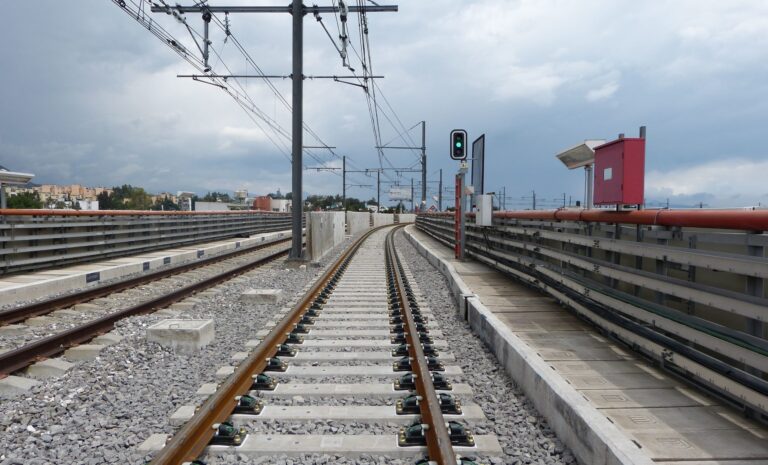
Metro rail track assemblies shipped to Mexico
Pandrol · Rail Infrastructure

Mexico City Metro Rail Assembly Export

Engineered multimodal shipment of heavy rail track assemblies. Overcame complex loading geometries, provided bespoke export packing, and coordinated international ocean freight without delays.

Inca Digital heavy industrial machinery export
Inca Digital · Industrial Equipment

Precision Industrial Machine Moving

Designed ISPM 15-compliant bespoke structural timber packaging and specialized low-loader transport for high-precision, sensitive digital manufacturing equipment requiring anti-vibration transit.

Client Feedback

Verified Industrial Client Testimonials

“Attention to detail from initial planning right through to the final execution is what makes Hemisphere different. For both large and small projects, the reliability in finding solutions without leaving anything to chance has been consistent over the last 10 years.”
Dallol Energy LimitedEnergy Infrastructure Client
“Hemisphere understand our business, and that's what sets them apart from other companies. When challenges arise, they work with us to find solutions that are as cost-effective as possible. The fact that we have worked with Hemisphere for over 12 years is testament to how much we value their relationship and expertise.”
BiGDUGUK Industrial Storage Partner
“Hemisphere have always delivered a reliable, friendly and honest service. I get regular updates on my shipments, their rates are competitive, and I know the team is only ever a phone call or email away. It's far easier having everything covered by one provider.”
Joma Jewellery & Katie LoxtonSenior Logistics Management
Low-Carbon Project Transport

Decarbonizing Heavy Haulage & Abnormal Moves

Carbon Neutral Heavy Fleet Operations

Executing massive abnormal loads and heavy engineering transport while managing carbon output requires forward-thinking logistics. Achieving carbon neutrality five years ahead of UK 2030 targets, Hemisphere empowers engineering clients to meet stringent Scope 3 GHG protocols without sacrificing payload capacity or operational precision.

Explore our carbon reduction framework

Multimodal Coastal & Inland Barging

Bypassing congested road corridors by utilizing roll-on/roll-off inland waterways and coastal barges significantly reduces fuel burn per tonne-kilometer.

Heavy haulage project carbon accounting

Verified Heavy Load Carbon Reporting

Every out-of-gauge shipment includes granular carbon reporting data, enabling precise Scope 3 accounting for engineering audits and compliance reports.

Biofuel integration for heavy haulage operations

HVO100 Renewable Diesel Compatibility

Supporting transitions to high-output Hydrotreated Vegetable Oil (HVO100), eliminating up to 90% of net greenhouse gas emissions from heavy tractor movements.

Industrial packaging waste reduction and timber recycling

Circular Heavy Export Crating

ISPM 15 timber saddles and steel cradles manufactured at our Ipswich facility are designed for multi-cycle returnable use, minimizing fabrication waste.

Procurement Knowledge Base

Heavy Haulage Abnormal Loads FAQ

Authoritative technical guidance addressing the most frequent regulatory, engineering, and operational inquiries posed by global procurement managers.

Get Catalog
What legally constitutes an abnormal load under UK STGO and European road regulations?

An abnormal load, formally termed an Abnormal Indivisible Load (AIL), is defined under UK and European law as cargo that cannot be divided into two or more consignments for road carriage without unreasonable expense or risk of damage, and exceeds standard Construction and Use (C&U) vehicle limits. Standard maximum thresholds are 44,000 kg gross weight, axle loads exceeding 10,000 kg (or 11,500 kg for driving axles), width exceeding 2.9 meters, or a rigid vehicle length exceeding 18.65 meters.

In the UK, movements outside C&U limits are governed by the Road Vehicles (Authorisation of Special Types) (General) Order 2004 (STGO). Cargo is stratified into three distinct regulatory categories:

  • STGO Category 1: Up to 46,000 kg (or 50,000 kg with 6 axles), maximum width 2.9m. Requires 2 days' notice to highway authorities.
  • STGO Category 2: Up to 80,000 kg gross vehicle weight, maximum axle weight 12,500 kg. Requires 2 clear days to police and highway authorities.
  • STGO Category 3: Up to 150,000 kg gross vehicle weight, maximum axle load 16,500 kg. Requires 5 to 10 clear days' notification with full bridge engineering calculations.

Any movement exceeding 150,000 kg gross weight, 6.1 meters in overall width, or 30 meters rigid length requires an explicit VR1 permit or Department for Transport (DfT) Special Order authorization, involving in-depth structural assessments by regional bridge authorities and statutory service providers.

How far in advance must heavy haulage permits, route notifications, and escorts be arranged?

Permit lead times are legally governed by the physical dimensions and gross weight of the configuration. Under Highways England's Electronic Service Delivery for Abnormal Loads (ESDAL) platform and equivalent international ministries, the statutory notification lead times are:

  • 2.9m to 3.0m width: 2 clear working days' notification to regional police constabularies along the entire route.
  • 3.01m to 5.0m width or 44t to 80t GVW: 2 to 5 clear working days' notice to police, bridge owners (including Network Rail and British Waterways), and local highway departments.
  • Over 5.0m width or 80t to 150t GVW (STGO Cat 3): 5 to 10 working days, permitting structural assessment of dynamic axle loadings across culverts and overpasses.
  • Over 150 tonnes or 6.1m width (DfT Special Orders / VR1): 8 to 12 weeks minimum. Requires dynamic finite-element bridge load approvals, trial run swept-path verifications, and contractual agreements for temporary street furniture removal.

Early contractor involvement during the equipment fabrication phase is vital to avoid project commissioning delays.

What is the difference between modular hydraulic platform trailers and SPMTs?

Modular hydraulic platform trailers are passive trailer systems that require towing by heavy-duty ballast tractors (such as 6x4, 8x4, or 10x4 prime movers). These platform trailers incorporate hydraulic suspension cylinders interconnected into hydraulic 3- or 4-point suspension zones, equalizing axle loads dynamically across unlevel roads and camber transitions.

In contrast, Self-Propelled Modular Transporters (SPMTs) integrate their own hydrostatic drive systems powered by external diesel or electric Power Pack Units (PPUs). Every axle line features independent electronic steering capable of full 360-degree rotation. SPMTs do not require a tow tractor, enabling omnidirectional movement, crab-steering, and on-the-spot carousel rotation. SPMTs are the preferred solution for congested petrochemical plants, modular shipyard transfers, and roll-on/roll-off (RoRo) barge loading where tractor turning clearance is non-existent.

How does weather, bridge loading capacity, and swept-path analysis impact transit routing?

Heavy haulage routing is dictated by civil and environmental constraints rather than shortest distance. Bridge engineers evaluate load distribution using axle-weight dispersion formulas. If a bridge deck cannot absorb concentrated bending moments, trailers must be reconfigured with spacer beams or additional axle lines to spread the footprint.

Swept-path analysis utilizes CAD software (such as AutoTURN) to simulate the precise swept path of the tractor-trailer envelope around tight corners, roundabouts, and junctions, identifying where kerbs must be ramped or traffic signals temporarily disconnected. Furthermore, meteorological factors like high crosswinds present severe tipping risks for high-cube cargo (such as wind turbine blades or columns), imposing strict operational wind speed limits. On marine multimodal segments, high tidal fluctuations determine the exact docking windows for heavy RoRo barge operations.

How do carbon-reduction frameworks apply to abnormal loads and heavy engineering movements?

While moving massive components requires high engine torque, carbon emissions can be substantially curtailed through three strategic mechanisms:

  • Modal Shifting: Utilizing coastal and inland waterways removes up to 80% of road mileage, dramatically lowering fuel consumption per gross tonne moved.
  • Renewable Biofuels: Powering heavy ballast tractors and SPMT power packs with Hydrotreated Vegetable Oil (HVO100) reduces net carbon dioxide emissions by up to 90% without losing drivetrain torque.
  • Route Optimization: Precise engineering eliminates wrong turns, aborted climbs, and extended idling time at police checkpoints. Hemisphere provides auditable Scope 3 greenhouse gas reports for all abnormal load operations to support global corporate sustainability compliance.

Plan Your Heavy Haulage Abnormal Loads With Proven Engineering Precision

Consult with our chartered project cargo engineers today to secure swept-path surveys, permit approvals, and cost-effective multi-axle heavy transport solutions worldwide.