Source compliant, high-reliability logistics hardware, lifting infrastructure, and verified global shipping corridors audited under stringent European and international safety frameworks.

Combining three decades of freight forwarding excellence, deep tariff regulatory mastery, port-centric warehousing, and industrial export packaging under one institutional umbrella.
Operating under rigorous ISO 9001:2015 Quality Management certification alongside unannounced BRCGS AA+ Storage and Distribution credentials, providing pharmaceutical, food, and high-value cargo owners uncompromised traceability.
Strategic multi-site consolidation gateways located directly adjacent to Felixstowe container port, Port One Suffolk, ABP Port of Ipswich, London Heathrow air freight hub, and Liverpool for rapid transatlantic and short-sea distribution.
Ranked among the elite independent IATA cargo agents with bonded airside facilities at London Heathrow, managing high-priority flight chartering, cold chain temperature-sensitive lifelines, and rapid time-critical spares.
Surpassing corporate decarbonization milestones five years ahead of national benchmarks through on-site solar generation, electric port handling fleets, and consignment-level Scope 3 greenhouse gas reporting methodologies.
In modern industrial procurement, selecting a "CE Certified Customs Brokerage Services Manufacturers & Exporter" requires cross-functional comprehension of technical directive alignments, tariff engineering, and the physical integrity of cargo moving across regulatory borders. International exporters and EPC (Engineering, Procurement, and Construction) contractors cannot treat customs brokerage as a detached clerical checkpoint. Instead, the interface between harmonized manufacturing specifications, product certifications, export packaging integrity, and multi-jurisdictional declarations directly governs supply chain velocity and financial liquidity.
When exporting complex infrastructure—such as the pre-engineered power distribution switchgear and modular substation designs detailed in our product matrix—the convergence of CE marking with import documentation becomes absolute. Under European Union harmonized standards and corresponding UK Conformity Assessed (UKCA) statutes, goods falling under the Machinery Directive (2006/42/EC), Low Voltage Directive (2014/35/EU), and Electromagnetic Compatibility Directive (2014/30/EU) require thorough technical file compilation, Declarations of Conformity (DoC), and accredited factory production control.
A customs brokerage partner operating with embedded technical compliance conducts pre-lodgement documentation scrub cycles. Discrepancies between commercial invoices, bill of lading cargo descriptors, and declared HS/Taric codes (such as Chapter 85 for electrical machinery or Chapter 73 for specialized alloy chains) can cause border control holds, physical inspections at container examination facilities, and subsequent port demurrage fees that rapidly surpass product margins.
In jurisdictions utilizing sophisticated customs risk-scoring engines (such as the UK Customs Declaration Service and the EU ICS2 Release 3 framework), shipments containing industrial equipment without pre-cleared, harmonized conformity profiles are disproportionately flagged for Route 1 (documentary check) and Route 2 (physical examination). Cross-referencing CE technical certificates directly within document codes reduces documentary dwell times at Felixstowe and Rotterdam from an industry average of 72 hours down to automated clearance within minutes.
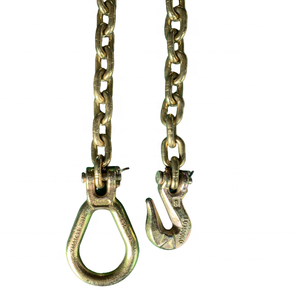
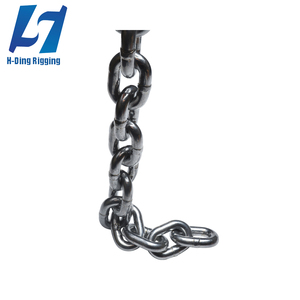
The reliability of containerized ocean and road freight relies on standardized transport chain assemblies. As reflected in our inventory of Grade 70 (G70) and Grade 43 (G43) carbon and alloy steel link chains, lashing mechanics must comply strictly with international transport mandates, including EN 12195-3 (Load Restraint Assemblies on Road Vehicles) and AS/NZS 4344 standards. Utilizing inferior chain links lacking traceable proof load testing risks cargo shifting, catastrophic vessel stability failure, and severe customs carrier penalties under SOLAS Verified Gross Mass (VGM) discrepancies.
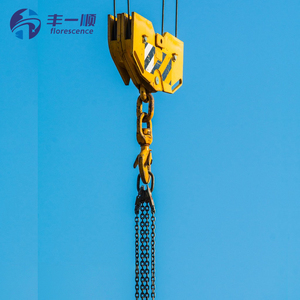
Every transport chain link, clevis winged grab hook, and pear terminal engineered for heavy project haulage carries indelible heat-code markings correlating directly to metallurgical tensile mill certificates. By maintaining mill test traceability within the freight documentation portfolio, customs brokers and port-centric staging depots ensure smooth transfers from Ro-Ro vessels or deep-sea container berths onto heavy haulage low-loaders without road authority safety impounds.
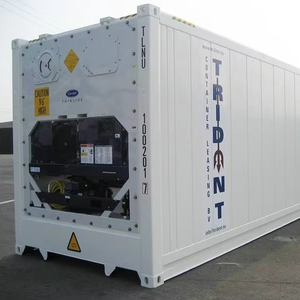
Procuring 20ft and 40ft refrigerated containers (reefers) requires managing mechanical refrigeration systems operating under Machinery and Pressure Equipment Directives alongside the sanitary customs protocols of border health control posts. Modern reefers running automated micro-processor controllers require precise pre-trip inspections (PTI) and digital data logging. In perishable goods logistics, where temperature drift of even 1.5°C destroys high-value bio-pharmaceuticals or specialty food cargoes, our integrated logistics framework combines bonded cold warehousing, BRCGS AA+ certified storage, and direct Customs Bonded transfers.
Under Bonded Warehousing regimes, import duty and Value Added Tax (VAT) remain completely suspended while containers reside in secure storage. For global food brands and multi-national exporters, this provides working capital flexibility: release cargo in phased domestic distribution batches as orders dictate, or re-export finished units across continental corridors without incurring non-recoverable duty outlays.
Detailed performance benchmarks correlating product classifications with customs clearance protocols and international safety certifications.
| Product Category | Applicable CE/ISO Standard | Primary Customs HS Heading | Critical Documentation | Clearance Protocol |
|---|---|---|---|---|
| 20FT Refrigerated Reefers | ISO 1496-2, PED 2014/68/EU | HS 8418.69 | PTI Record, CE DoC, Refrigerant F-Gas Log | Immediate Port Devanning / Bonded Entry |
| G70 / G43 Lifting Chains | EN 818-2, AS/NZS 4344, NACM | HS 7315.82 | Tensile Test Cert, Heat Number Trace, Mill Spec | Standard Tariff Release / Duty Calculation |
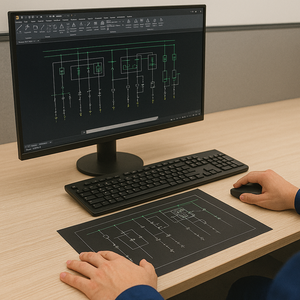
| Substation Distribution Design | IEC 62271, LVD 2014/35/EU | HS 8537.20 | CAD Schematics, Factory Test Certs, CE File | Dual-Use Control Check & Project Entry |
| China-Saudi DDP Consolidation | SASO SABER, SASO IECEE | Multi-Chapter LCL | SABER Conformity, SASO COC, Commercial Inv | Pre-Clearance FASAH Saudi Single Window |
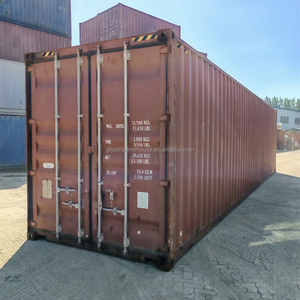
| ISO Intermodal Cargo Containers | ISO 668, CSC Safety Convention | HS 8609.00 | CSC Safety Approval Plate, Lloyd's/BV Cert | Temporary Admission (TA) / Free Circulation |
Emerging regulatory mandates, automated trade corridors, and technological innovations transforming industrial manufacturing, equipment sourcing, and clearance operations.
The European Union's Carbon Border Adjustment Mechanism (CBAM) has fundamentally altered metal procurement. Importers of steel chains, structural enclosures, and container steel must now provide verified, installation-level embedded carbon data. Exporters lacking auditable emissions documentation face punitive default tariff multipliers at European and UK ports.
Global customs authorities are shifting toward machine learning models that scan bill-of-lading line items against historical commercial invoices to identify tariff misclassifications. Procurement teams are adopting automated Harmonized System classification software integrated into customs APIs to guarantee 100% tax compliance prior to vessel departure.
The procurement of intermodal reefer containers and high-value cargo units is moving toward permanent IoT sensor integration. Real-time monitoring of shock, tilt, atmospheric gas levels, door apertures, and internal temperature feeds directly into blockchain-enabled customs documentation, allowing pre-arrival clearance without manual port physical inspection.
Geopolitical turbulence across maritime choke points is compelling manufacturers to establish buffer inventories at port-centric free zones and bonded logistics parks. Rather than relying on rigid just-in-time cross-ocean delivery, strategic buyers position intermediate hardware inventory within bonded warehousing facilities directly adjacent to primary sea berths.
How manufacturing advancements, metallurgical innovations, and digital trade networks are shaping the next generation of exported logistics equipment.
Lifting and transport chain manufacturing is transitioning toward boron-treated micro-alloy steels. Grade 70 and higher configurations achieve significantly greater working load limits (WLL) with reduced total deadweight, directly lowering gross tare container tonnage, reducing freight fuel consumption, and helping heavy haulage project convoys comply with axle-weight road transport limits.
The elimination of paper documentation across regional trade interfaces—exemplified by Saudi Arabia's FASAH single window and the UK's Single Trade Window (STW)—requires export logistics manufacturers to embed customs schema into their ERP engines. Consignment packing lists and commercial declarations now transmit directly into customs databases prior to port departure.
Reefer container engineering is rapidly phasing out legacy R-134a and R-404A refrigerants under international F-Gas mandates. Next-generation 20ft and 40ft units are built with CO2 (R-744) transcritical cooling technology and hydrofluoroolefin (HFO) blends. This transition ensures imported refrigerated hardware complies with tightening European atmospheric emissions legislation while reducing lifecycle energy overhead.
Direct, actionable clarifications addressing the practical, regulatory, and procedural complexities faced by global procurement directors and project freight managers.
CE marking confirms that a manufactured good complies with applicable European health, safety, and environmental protection legislation (such as the Machinery Directive or Low Voltage Directive). Customs clearance is the statutory fiscal and regulatory process of declaring goods to border authorities for tariff classification, duty/VAT collection, and border security. A product can have a valid CE mark but be delayed at customs due to incorrect HS codes, just as an accurate customs declaration will be rejected if required CE conformity files are absent.
In an authorized customs bonded warehouse, standard import duties and import VAT remain legally suspended until the moment the equipment is formally released into domestic free circulation. For high-capital machinery, container fleets, or project inventory that may sit prior to on-site installation, this defers significant tax outflows. Furthermore, if the goods are subsequently sold and re-exported to an overseas market, domestic import duty is waived entirely.
Full Container Load (FCL) provides a dedicated, sealed container environment, eliminating the risk of cargo crushing, rough handling during consolidation, and cross-contamination from adjacent third-party consignments. Heavy steel products, like Grade 70 transport chains, can cause severe load imbalances in shared LCL containers. With FCL, weight distribution is engineered and secured in accordance with CTU (Cargo Transport Unit) packing codes before the container is sealed.
Delivered Duty Paid (DDP) transactions into the Kingdom of Saudi Arabia require more than standard invoices. Importers must secure product registration on the SABER electronic platform, obtain a SASO Certificate of Conformity (CoC), and file through the FASAH customs clearance system. The shipper must also provide certified bilingual commercial invoices, packing lists, clean bills of lading, and verified certificates of origin to permit seamless door-to-door delivery without border demurrage.
Under FOB (Free On Board), the seller's responsibility ceases once goods cross the vessel's rail at origin; the buyer bears ocean transit, maritime insurance, import customs clearance, and duty payments. Under CIF (Cost, Insurance, and Freight), the seller pays carriage to the destination port, but import clearance risk remains with the buyer. Under DDP (Delivered Duty Paid), the seller or their authorized freight forwarder assumes full legal and financial responsibility for origin export clearance, international freight, and destination customs duties/taxes.
International shipments utilizing timber crates, pallets, or bracing must comply with ISPM 15 (International Standards for Phytosanitary Measures). This requires debarking, approved heat treatment (56°C for a minimum of 30 minutes to the core), and official stamping with the IPPC mark. Non-compliant timber results in immediate customs rejection, mandatory fumigation at port of entry, or re-export at the cargo owner's expense.
Initiate direct dialogue with our qualified logistics directors, tariff specialists, and project freight engineers. Receive comprehensive duty optimization schedules, routing models, and technical container allocations tailored to your exact industrial procurement profile.