Direct access to multimodal transport, temperature-regulated handling, heavy-duty marine chains, and door-to-door bonded shipping pipelines.

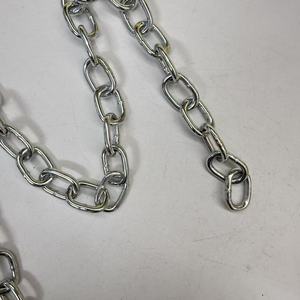
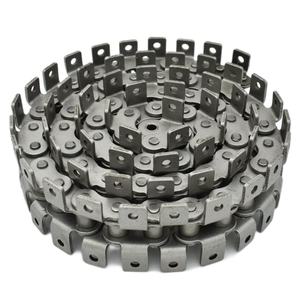

In modern industrial procurement, the intersection of CE Certification and international freight forwarding represents an essential bridge between product engineering integrity and transnational trade compliance. When sourcing industrial equipment—ranging from heavy-duty galvanized welded link chains and modular conveyor lines to complex electronic assemblies—the certification mark guarantees adherence to stringent European Union safety, health, and environmental protection directives.
Simultaneously, international supply chain engineering requires logistics manufacturers to offer compliant customs brokering, fiscal representation (DDP/DDU frameworking), and temperature-monitored corridors. Sourcing managers must evaluate not only the base tensile capacity of structural hardware, but also the environmental traceability and conformity assessment procedures under directives such as the Machinery Directive (2006/42/EC) and the Construction Products Regulation (CPR EU 305/2011).
Balancing transit lead time against the landed unit cost demands rigorous comparative analysis. Below is the multi-tier operational matrix employed across global transport corridors from East Asian manufacturing nodes to European and Transatlantic terminals:
| Transport Mode | Ideal Cargo Profile | Lead Time (East Asia to UK/EU) | Key Compliance & Handling Protocol |
|---|---|---|---|
| Full Container Load (FCL) | High-volume hardware, transmission chains, industrial stock (>15 CBM) | 30 – 42 Days | Direct container seal verification, verified gross mass (VGM) SOLAS compliance |
| Less than Container Load (LCL) | Mixed industrial batches, trial machinery runs, scheduled spare replenishment | 35 – 48 Days | Hub devanning, deconsolidation manifests, ISPM 15 timber certification |
| Expedited Air Consolidation | Critical automotive prototypes, high-value electronics, emergency repair components | 3 – 6 Days | IATA dangerous goods (DGR) clearance, lithium battery UN38.3 test packaging |
| Multimodal Cold-Chain DDP | Temperature-sensitive chemicals, active pharmaceutical ingredients (API), coatings | Calculated per route | GDP compliance, autonomous IoT data loggers, bonded warehousing customs release |
Procurement directors in 2025 and beyond are shifting away from siloed supplier structures. The future of manufacturing logistics hinges on three key market dynamics:
1. Decentralized Port-Centric Storage: Transshipment models that integrate bonded warehousing facilities near key container terminals—such as Felixstowe, Port of Ipswich, or Rotterdam—allow importers to suspend duty and value-added tax payments until cargo enters active distribution. This significantly mitigates working capital constraints.
2. Scope 3 Emissions Transparency: The implementation of the Carbon Border Adjustment Mechanism (CBAM) requires transparent reporting on transport corridors. Shippers that employ route optimization, smart intermodal transfers, and electric port fleets provide enterprise clients with the documentation required to meet strict corporate ESG mandates.
3. Integrated Origin Quality Verification: Modern contracts require cargo inspection, tensile validation of lifting chains, and packing integrity verifications to take place at source. Deploying an end-to-end partner who oversees factory pickup, export clearance, ocean transit, and bonded discharge eliminates cross-party liability and optimizes delivery cycles.
Combining three decades of freight forwarding expertise with owned logistics assets, accredited quality frameworks, and sustainable operational stewardship.
Audited quality management across all warehousing, freight movement, and handling operations, meeting the highest standards for food grade, consumer goods, and critical machinery handling.
With direct operating bases across Felixstowe, Ipswich, London Heathrow, and Liverpool, our facilities streamline container devanning, pallet distribution, and bonded storage.
Ranked among leading independent IATA cargo agents with specialized terminal capacity at London Heathrow for priority air consolidation, hazardous cargo, and express customs clearance.
Specialized customs agents manage classification, preferential origin declarations, EORI assignments, and direct HMRC/EU electronic declarations to eliminate border clearance delays.
Engineered transport logistics for abnormal loads, energy components, track assemblies, and heavy machinery, complete with route surveys, permits, and escort management.
Achieving certified carbon neutral operations five years ahead of national benchmarks through solar-powered logistics parks, green transport solutions, and detailed Scope 3 emission audits.
Direct answers to core questions regarding CE compliance, international freight forwarding, Incoterms, and customs management.
CE Certification validates that industrial equipment (such as lifting chains, conveyors, or mechanical transmission gear) satisfies European Union performance, safety, and mechanical directives. For shipping operations, verified CE documentation ensures smooth customs entry and avoids regulatory impoundment at EU gateways.
Under DDP terms, the freight forwarder and manufacturer take full responsibility for origin transport, export processing, ocean or air transit, import customs declarations, and final duty and tax payments. The buyer receives goods cleared for circulation without dealing with unexpected border tariffs.
Transitioning from Less than Container Load (LCL) to a Full Container Load (20ft FCL) typically becomes cost-effective once shipment volume exceeds 13 to 15 cubic meters (CBM). FCL lowers per-unit transport expenses, eliminates intermediate handling at devanning stations, and substantially lowers the risk of cargo damage.
Bonded storage facilities suspend payment of customs duties and import VAT until the goods leave the warehouse for local domestic sale. If inventory is subsequently re-exported to non-EU or global jurisdictions, the duties are waived, freeing up significant working capital for growing operations.
Temperature-sensitive cargo requires qualified active reefer containers or passive insulated packaging, verified by calibrated data loggers. Continuous monitoring guarantees that pharmaceutical, chemical, or sensitive food items remain strictly within set thermal bands (+2°C to +8°C or +15°C to +25°C) across maritime and intermodal handoffs.
To deliver an accurate door-to-door quotation, our teams evaluate the complete packing list (including weights, volume CBM, and package counts), correct HS/Commodity Codes, preferred Incoterms (e.g., FOB, EXW, DDP), exact collection and delivery postcodes, and any specialized handling needs (such as IMO Dangerous Goods or out-of-gauge dimensions).
Connect with our technical logistics team to configure reliable, cost-efficient, and fully CE-compliant transport schedules tailored to your business needs.
Send an Inquiry