

Precision-engineered thermal infrastructure, refrigerated mobile transit solutions, and end-to-end UK & global GDP/BRCGS AA+ compliance storage frameworks.
Directly sourcing CE-compliant, thermal-regulated transport hardware and international intermodal execution to ensure unbroken temperature logging from manufacturing lines to bonded terminal hubs.



Within modern global supply frameworks, selecting an industrial-scale temperature controlled storage manufacturer & supplier entails rigorous verification of thermodynamic integrity, thermal envelope resistance (U-values below 0.18 W/m²K), structural air tightness, and statutory regulatory conformity under the European Machinery Directive (2006/42/EC), Low Voltage Directive (2014/35/EU), and Electromagnetic Compatibility Directive (2014/30/EU). In cold storage engineering, continuous thermal stability dictates product safety parameters across life sciences, active pharmaceutical ingredients (APIs), biological diagnostics, and advanced perishable agricultural derivatives.
Under CE European standards, temperature recorders utilized for the transport, storage, and distribution of chilled, frozen, and deep-frozen/quick-frozen food and biological compounds must satisfy EN 12830 for automated logging accuracy, periodicity, and tamper-proof calibration history.
Thermal stability requires deliberate engineering across physical wall systems and mechanical cooling units. State-of-the-art storage units and mobile reefer trailers deploy high-density Polyisocyanurate (PIR) or Polyurethane (PUR) cores encapsulated between anti-corrosive, pre-painted galvanized steel skin profiles. Thermal bridging is actively mitigated through non-conductive cam-lock joints and continuous perimeter elastomeric seals. Mechanical chiller configurations employ dual-circuit semi-hermetic or scroll compressor plants with inverter controls, utilizing lower Global Warming Potential (GWP) fluorinated refrigerants (e.g., R452A, R513A) or natural refrigerants like CO2 (R744) to comply with European F-Gas regulations (EU 517/2014).
Temperature gradients across warehouse floor volumes are stabilized via computerized airflow ducting and destratification air circulators. Cold air distribution must avoid laminar boundary dead zones through structured CFD (Computational Fluid Dynamics) simulations prior to site assembly, validating spatial uniformity within ±0.5°C variations under maximum loaded conditions.
Engineering exceptional hardware remains futile if the cargo dwells indefinitely during border inspection transitions. By aligning hardware deployment with direct port-centric transit centers (such as Port One, Ipswich, and Felixstowe dock-adjacent storage), temperature-sensitive stock bypasses prolonged inland highway transits. Direct-from-vessel offloading directly into dock-level refrigerated vestibules minimizes temperature excursions during ambient handoffs, ensuring uninterrupted validation records for international health authority audits.
| Storage Type & Platform | Thermal Boundary Structure | Certified Temp Window | Target Industries | Regulatory Compliance Status |
|---|---|---|---|---|
| Industrial High-Bay Cold Warehouse | 150–200mm Structural Insulated Panels (PIR) | -25°C to +4°C (Zoned) | Pharmaceutical Bulk, Frozen Produce | CE / BRCGS AA+ / GDP |
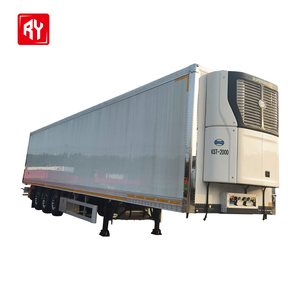
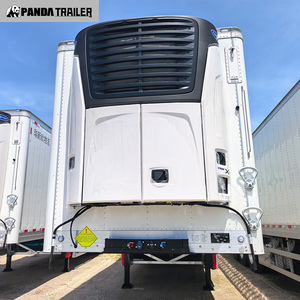
| 3-Axle Refrigerated Semi-Trailer | Reinforced Fiberglass Skin, GRP Sandwich | -20°C to +12°C Controlled | Meat, Dairy, Intermodal Transload | CE / ATP Class FRC |
| Port-Centric Bonded Consolidation Hub | Modular Climate Cells + Fast Dock Shelters | +2°C to +8°C / +15°C to +25°C | APIs, Specialty Chemicals, FMCG | CE / ISO 9001:2015 |
| Controlled Micro-Fulfillment Cells | High-Grade Polyurethane Insulated Core | +15°C to +25°C Controlled Room | Cross-Border Dropship, Bio-Tech | CE / GMP Cleanroom Class C |
Leveraging three decades of multimodal forwarding, specialized bonded facilities, and dedicated transport manufacturing to eliminate supply-chain fragility.
Our operations undergo rigorous third-party surveillance, obtaining the highest unannounced audit standards under the BRCGS Global Standard for Storage and Distribution. Complete operational traceability protects client accountability.
Situated immediately at primary maritime arteries—Port One, Felixstowe, Ipswich, and Liverpool docks—our physical proximity sharply cuts drayage fuel usage and prevents temperature loss during initial devanning steps.
Achieving carbon neutrality five years in advance of the UK 2030 target, our warehousing platforms integrate solar array microgeneration, zero-emission electric material handlers, and advanced shipment-level carbon accountability matrices.
Documented execution across complex project cargos, infrastructure builds, and temperature-sensitive distribution chains.
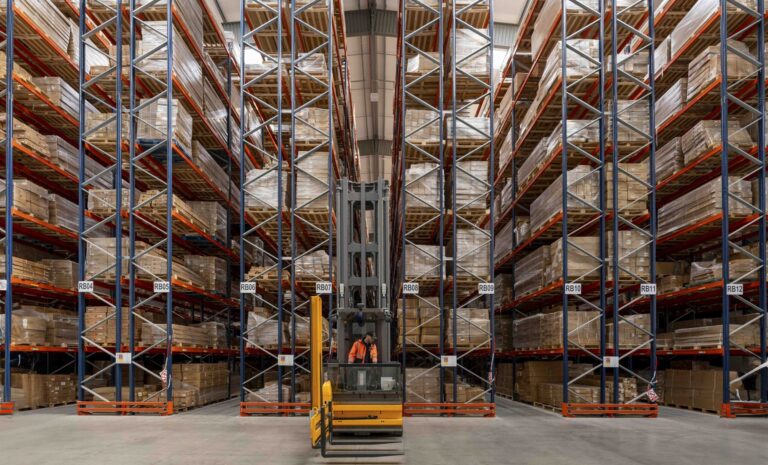
Integrated port-adjacent consolidation combined with dynamic dispatch protocols delivered sustained order scalability alongside reliable next-day delivery accuracy.

Executed end-to-end heavy haulage schedules across a 57-kilometer transmission line, coordinating tight on-site delivery windows with zero structural failures.
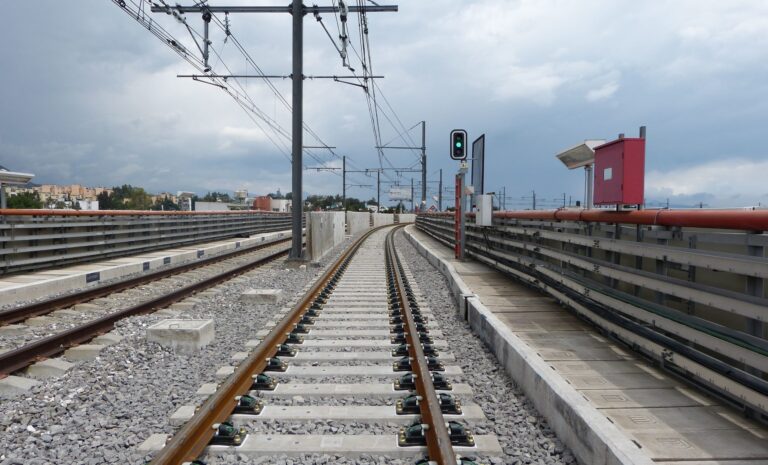
Coordinated complex maritime shipping parameters for specialized rail track components destined for the Mexico City Metro system under strict international clearances.
Essential strategic shifts transforming global investments in cold chain manufacturing, modular architecture, and environmental standards.
Accelerating phase-downs under the EU F-Gas Regulation are forcing manufacturers away from legacy R404A/R507 systems toward propane (R290) and transcritical CO2 (R744). Future-proof facility investments mandate factory-configured leak containment, safety ventilations, and ATEX electrical components integrated at the design stage.
Independent data loggers are giving way to live 5G, Bluetooth LE, and LoRaWAN sensor networks directly embedded into insulated wall cores and trailer chassis. Continuous monitoring delivers real-time thermal readings, predictive compressor vibration warnings, and immutable cryptographic chains of custody for compliance reviews.
Decentralized urban logistics and remote farm-gate staging demand rapidly deployable, self-powered micro-chambers. Emerging procurement specifications require integrated bifacial photovoltaic roof arrays paired with localized battery storage (BESS) capable of sustaining a 48-hour thermal holdover during grid outages.
Modern chillers are moving from reactive thermostat switching to predictive thermal balancing. Algorithms ingest external weather forecasts, scheduled door openings, and time-of-use electrical tariffs to execute thermal sub-cooling prior to peak utility rate periods, shaving operational expenditure by up to 28% annually.
Logistics operators are moving away from single-atmosphere storage. Future vehicle procurement favors multi-axle units engineered with longitudinal movable bulkhead bulkheads and dual/triple evaporator units, enabling simultaneous transport of ambient (+15°C to +25°C), chilled (+2°C to +8°C), and ultra-cold (-20°C) commodities in one transit.
Scope 3 emissions accounting is prompting buyers to examine insulated panel lifecycles. Leading specifications prioritize panels manufactured using bio-based polyols and recycled steel cladding, alongside modular cam-lock fasteners that allow rapid disassembly, expansion, and structural recycling without landfill penalties.
Direct technical and operational answers to support engineering reviews, contract negotiations, and customs clearance planning.
CE marking confirms adherence to essential European Union health, safety, and environmental protection directives. For temperature-controlled systems, this includes the Machinery Directive (2006/42/EC) for operational safety, the Low Voltage Directive (2014/35/EU), the Electromagnetic Compatibility Directive (2014/30/EU), the Pressure Equipment Directive (PED 2014/68/EU) for pressurized refrigeration circuits, and EN 12830 for data loggers.
Bonded cold storage allows imported cargo subject to customs duties or VAT to be safely stored under temperature-controlled conditions while fiscal payments remain suspended. Duty and taxes are incurred only when stock is released into domestic circulation. Re-exported or consolidated transit goods bypass domestic import duties entirely, significantly improving liquidity for high-value biological, chemical, or perishables stock.
We eliminate temperature spikes through sealed inflatable dock shelters, climate-controlled cross-dock vestibules maintained at +4°C to +8°C, and accelerated devanning workflows. Real-time infrared spot-checks accompany each pallet transfer, and all cargo is moved swiftly into verified high-bay racking under the supervision of audited BRCGS AA+ protocols.
Yes. As a dedicated manufacturer and supplier, we engineer bespoke configurations on heavy-duty 3-axle platforms. Options include dual-temperature longitudinal split chambers, remote roof-mount evaporators, tail-lift integration, reinforced interior scuff plates, air-chute ceiling networks, and complete telematics integration calibrated to client-specific transport corridors.
Whether you require CE-certified refrigerated transit assets, custom structural cooling installations, or audited UK port-adjacent bonded cold chain warehousing, our engineering and logistics specialists are on hand to support your technical specification.