
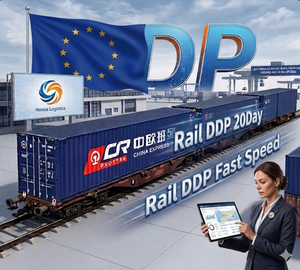
Years of Cross-Border Freight Experience
On-Time Customs Clearance & Compliance
BRCGS Accredited Cold & Dry Storage
End-to-End Multimodal Asset Control
Engineered intermodal hardware, specialized shipping containers, and streamlined door-to-door lines designed to eliminate intermediate handling risks and reduce landed shipping costs.

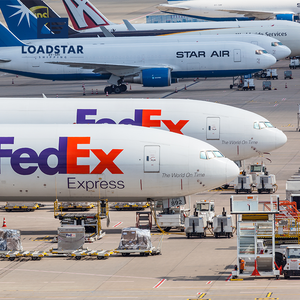
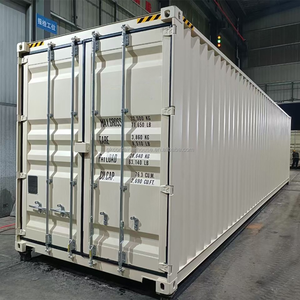
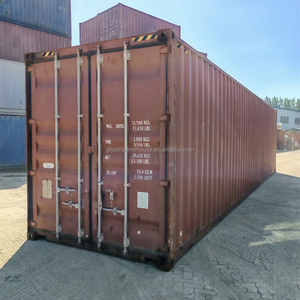
Combining 30+ years of operational heritage, port-centric bonded infrastructure, and an unyielding commitment to environmental and regulatory excellence.
Holding certified ISO 9001:2015 quality frameworks, audited BRCGS Storage & Distribution AA+ ratings, and standing as an elite IATA Accredited Agent. Our shipments clear customs under verified compliance protocols without costly terminal holds.
Strategically positioned across primary nodes including the Port of Ipswich, Felixstowe, London Heathrow, and Liverpool. Our off-dock container freight stations allow deferred duty structures, cross-dock devanning, and immediate drayage access.
From oversized power infrastructure (such as Hinkley Point C T-pylons) and railway system assemblies for the Mexico City Metro to temperature-controlled pharmaceuticals, we manage out-of-gauge permits, route clearances, and custom export crating.
In the contemporary supply chain environment, international trade requires moving beyond transactional freight forwarding toward integrated contract logistics. As global enterprises navigate geopolitical turbulence, dynamic tariff schedules, and tight maritime space allocations, selecting an accredited contract logistics exporter in China provides stability, margin preservation, and inventory predictability.
Contract logistics transcends standard spot booking by fusing customized inventory warehousing, bonded cargo management, intermodal procurement, and end-to-end data integration. When sourcing manufactured goods, industrial components, or raw materials out of Chinese production hubs, managing freight under fragmented shipping lines often causes costly demurrage, incorrect customs declarations, and uncontrolled inventory blind spots. High-performing contract exporters serve as single-point orchestrators—unifying origin quality control, factory consolidation, ocean/air legs, and port-side devanning within one traceable data ledger.
Importers are pivoting from pure Just-In-Time (JIT) to resilience-oriented Just-In-Case (JIC) frameworks. Bonded warehouses adjacent to major entry ports allow enterprises to hold bulk volumes under customs suspension, distributing small batches locally based on actual purchase orders.
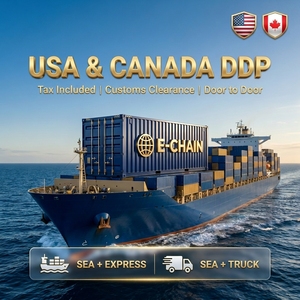
B2B buyers and omnichannel e-commerce sellers are demanding direct-to-warehouse DDP models. All customs duties, port charges, and last-mile trucking fees are fixed upfront, insulating purchasing departments from volatile terminal accessorial fees.
Enterprise procurement teams evaluate logistics vendors based on verified ESG milestones. By reaching carbon neutrality 5 years ahead of national 2030 targets and implementing electric handling machinery and rooftop solar arrays, contract logistics exporters furnish verifiable emission metrics for annual sustainability audits.
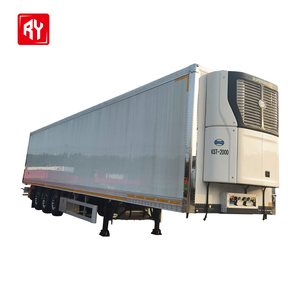
The future of contract logistics lies in asset-level intelligence. The standard shipping container has transformed from an inert steel shell into an active IoT tracking node. Smart side-opening units and 3-axle refrigerated semi-trailers now come equipped with telematics suites capable of transmitting internal humidity, structural vibration, GPS vector coordinates, and door-opening logs via satellite links.
This transparency allows procurement teams to identify handling anomalies long before freight reaches the discharge dock. Simultaneously, cloud-based EDI/API handshakes connect factory inventory databases directly to port customs engines, ensuring harmonized tariff code classifications, commercial invoices, and origin declarations align perfectly before the vessel leaves the berth.
Authoritative operational answers addressing the fundamental legal, procedural, and economic concerns of international freight buyers.
Traditional freight forwarders act merely as transactional intermediaries who book vessel or airline space on a spot basis. In contrast, a contract logistics provider assumes holistic accountability for your supply chain over a sustained duration. This involves deploying dedicated container assets, managing bonded warehouse reserves, handling value-added light manufacturing/repacking, executing complex customs origin documentation, and offering guaranteed service level agreements (SLAs) with fixed rate cards to insulate your procurement budget against market rate spikes.
Within a customs-approved bonded warehouse, all mandatory customs duty, excise taxes, and import Value Added Tax (VAT) remain legally deferred until products leave the perimeter into domestic circulation. If you re-export goods directly to third-party overseas markets, import levies are completely averted. This allows enterprise buyers to hold large volume inventories close to final markets without depleting operational working capital on premature tax obligations.
Full Container Load (FCL) becomes cost-optimal when cargo volumes reach approximately 13 to 15 cubic meters (CBM) or when cargo integrity is paramount. With FCL, your goods are sealed inside the container at the factory, eliminating risks associated with multiple cross-dock handling points. Less than Container Load (LCL) is suited for smaller, regular replenishment batches under 13 CBM where paying strictly for the volume footprint occupied makes economic sense.
For hazardous cargo, buyers must supply verified Material Safety Data Sheets (MSDS) updated under the latest UN classification, dangerous goods declarations (IMO/IATA), and packaging certificates verifying UN-approved spec containers. For abnormal and out-of-gauge loads, logistics planners require precise technical drawings highlighting centers of gravity, structural lifting points, total weight, and route clearance profiles to apply for specialized highway escorts and port crane assignments.
While many Chinese suppliers quote CIF or CFR, experienced purchasing directors typically opt for FOB (Free On Board) or DCA/DDP through their own nominated contract logistics partner. FOB grants you complete authority over carrier selection, oceanic transit routes, and detention/demurrage terms, preventing overseas suppliers from bundling inflated freight margins or using lower-tier shipping lines that experience extensive transshipment delays.
Connect with our supply chain architects today to analyze your route network, audit commodity codes, and deploy integrated contract logistics that optimize your total landed expenditure.