
Verified Supply Solutions
Integrated Equipment & Consolidation Freight Services
Explore factory-direct transport apparatus, cross-dock consolidation systems, and international logistics routes engineered for global B2B procurement networks.


Technical Architecture
The Engineering of Modern Less-Than-Container-Load (LCL) Freight
A systematic breakdown of vendor coordination, Container Freight Station (CFS) operations, volumetric calculations, and customs de-risking.
Multi-Tier Vendor Ingestion
Consolidating cargo across diverse Chinese manufacturing hubs (Ningbo, Shenzhen, Shanghai, Qingdao) requires systematic purchase order synchronization. Through factory pickup and unified receiving depots, individual batches are documented, checked for structural integrity, and verified for ISPM 15 timber treatment before physical container stuffings occur.
CBM & Volumetric Precision
LCL freight charges rely on the standard 1 CBM to 1,000 kg cargo density ratio (W/M Rule). Cargo engineering software optimizes container cubic utilization, pairing dense, high-mass raw materials with lightweight voluminous goods. This mathematically prevents dead freight while protecting fragile commodities from crush damage during maritime swells.
Automated Customs Decoupling
Traditional multi-shipper containers present high risk: one vendor's compliance failure can delay the entire container. Advanced CFS operations employ single-window customs decoupling with distinct Bill of Lading (HBL) sub-manifesting. Regulated, high-tariff, or inspectable cargo is segregated to maintain smooth transit pipelines.
30+
Years Industry Authority
99.4%
On-Time Port Release Rate
AA+
BRCGS Storage Accreditation
Net-0
Carbon Leadership Target
Enterprise Strengths
Why International Buyers Trust Our Consolidation Infrastructure
Combining three decades of freight forwarding excellence with company-owned port-centric logistics hubs and unannounced audited standards.
ISO 9001:2015 & BRCGS AA+
Operate with complete regulatory certainty. Our facilities hold the highest unannounced audit grades, ensuring food-grade cleanliness, rigorous security, and unbroken traceability from factory gate to distribution center.
Bonded Warehousing Hubs
Optimize company cash flow with customs-bonded depots in Suffolk (Port One, Ipswich), London Heathrow, and Liverpool. Defer import VAT and duty until cargo enters domestic free circulation or is re-exported.
Single Accountable Contract
Eliminate fragmented forwarder finger-pointing. We manage international collection, Chinese export clearance, ocean transit, destination devanning, and final-mile 3PL distribution under a single transparent SLA.
Verified ESG & Carbon Neutral
Meet international Scope 3 environmental compliance targets. Operating 5 years ahead of national decarbonization timelines with fully solar-powered warehouses and certified per-shipment carbon reporting.
Procurement Trends & Future Outlook
The Future of China Cargo Consolidation (2025–2030)
Strategic intelligence for procurement directors navigating geopolitical volatility, port disruptions, and automated supply chains.
| Strategic Dimension | Legacy Sourcing Paradigm | Next-Generation Consolidation Sourcing | Supply Chain Impact |
|---|---|---|---|
| Inventory Strategy | Bulk container purchase (Just-in-Case) leading to high capital tie-up | Dynamic multi-factory LCL consolidation (Precision Just-in-Time) | -28% Working Capital Lockup |
| Customs Architecture | FOB destination with fragmented vendor declarations | Unified DDP corridors with origin classification audits | Zero Port Demurrage Risk |
| Visibility & Tracking | Manual milestone pings via forwarder emails | IoT-tracked smart containers with humidity, shock & temp telemetry | Total Cargo Integrity Proof |
| Environmental Scope 3 | Unmonitored heavy diesel maritime routings | Alternative bio-fuel ocean corridors & solar port cross-docks | Audit-Ready ESG Filings |
| Hub Devanning | Inland container de-stuffing requiring multi-haulage legs | Port-centric devanning within 5 miles of maritime terminal | -42% Inland Drayage Costs |
Trend 1: Buyer's Consolidation (Direct Factory Groupage)
Global retailers increasingly bypass trading intermediaries, procuring directly from specialized tier-2 component factories across China. By establishing regional cross-dock consolidation hubs in Ningbo and Shenzhen, buyers merge shipments from up to 20 independent factories into single dedicated maritime units, eliminating intermediary markups while maintaining predictable factory production schedules.
Trend 2: Digital Port-Centric De-stuffing
Rising inland road transport costs and stricter driver work-hour enforcement across the UK, EU, and North America have accelerated the shift toward port-centric logistics parks. Devanning LCL cargo directly at port gates (such as Port One Suffolk or Rotterdam Gateway) enables instant palletization and automated SKU dispatch into domestic express networks without double-handling chassis costs.
Trend 3: Multimodal Route Diversification
Ongoing maritime corridor sensitivities (including Suez/Red Sea detours around the Cape of Good Hope) have made pure sea freight vulnerable to extended transit loops (up to 48+ days). Strategic procurement teams are turning to sea-air consolidation via Middle Eastern hubs (Dubai/Jebel Ali) and cross-Eurasian rail freight to balance transit speed against prohibitive pure-air freight expenses.
Strategic Clarity
Frequently Asked Questions on LCL Cargo Consolidation
Operational, regulatory, and cost-engineering answers for enterprise logistics managers and international trade buyers.
What is the exact financial breakeven threshold between LCL consolidation and FCL shipping?
As a standard industry baseline, Less than Container Load (LCL) is the most economically viable mechanism for cargo measuring between 1 and 13-15 CBM (Cubic Meters). Once your collective shipment volume crosses 15 CBM, the accumulated terminal handling, CFS consolidation, and devanning fees begin to converge with the fixed rate of a 20-foot Full Container Load (FCL). However, if your suppliers are geographically dispersed (e.g., one in Ningbo, one in Qingdao, and one in Foshan), running a regional buyer's consolidation to build an FCL unit at a centralized port hub remains dramatically cheaper than shipping separate regional LCL units.
How does buyer's consolidation mitigate the risk of customs holds caused by other shippers?
In standard co-loader LCL freight, your cargo shares container envelope space with unknown third-party shippers. If another party misdeclares hazardous goods, undervalues commercial invoices, or infringes intellectual property, customs authorities will place an X-ray or physical inspection hold on the entire container, delaying your inventory. Under a Buyer's Consolidation model, the container contains exclusively your company's goods gathered from your vetted vendors. You retain complete visibility and control over all documentation, Harmonized Tariff Schedule (HTS) codes, and packing declarations, completely insulating your supply chain from third-party non-compliance risks.
How does customs-bonded warehousing improve cash flow for high-volume import programs?
Placing consolidated imports into a certified bonded warehouse suspends payment of customs import duties, excise taxes, and Value-Added Tax (VAT) until the inventory is officially removed and enters domestic free circulation. For seasonal goods, slow-moving replacement parts, or volatile raw materials, this prevents upfront capital exhaustion. Furthermore, if you plan to re-export products into adjacent global markets (e.g., from a UK bonded facility into the European Union or the Middle East), zero domestic import duty is paid, eliminating cumbersome duty-drawback refund claims.
What documentation is required to initiate a multi-factory consolidation program in China?
To orchestrate seamless origin groupage, we require: (1) A complete Master Purchase Order list detailing supplier names, contact points, and production completion dates; (2) Detailed Commercial Invoices and Packing Lists per factory, detailing gross weight, net weight, outer carton dimensions, and verified CBM; (3) Relevant export licenses or declarations from Chinese suppliers (or authorization for our export clearance team to handle clearance under single-agency protocols); (4) Material Safety Data Sheets (MSDS) and UN test certificates if cargo contains lithium-ion batteries, chemicals, or magnetic materials; and (5) ISPM 15 compliance stamps on all wooden pallets or crating materials.
How do you protect cargo from physical damage during multiple handling and devanning stages?
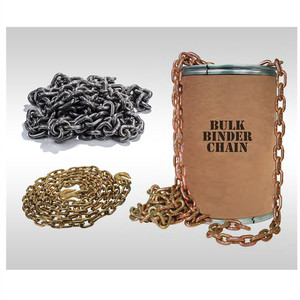
Because LCL cargo undergoes at least two handling events (loading at origin CFS and devanning at destination depot), we enforce industrial packaging protocols. All loose cartons must be standardized onto heat-treated four-way entry Euro or standard industrial pallets (1200x800mm or 1200x1000mm), shrink-wrapped with heavy-gauge film, edge-board protected, and top-capped. Within the container, heavier machinery, chains, and dense items are secured to the floor using Grade 70 transport binding chains, clevis hooks, and air dunnage bags to neutralize pitch-and-roll inertia on oceanic routes.
Transform Your Consolidation Pipeline Today
Consult with our international freight engineers to design a custom factory-consolidation program that lowers landed costs and accelerates inventory turnover.