Engineered for high-volume manufacturers, project developers, and international traders seeking verified origin-to-destination transport conduits between China, the UK, Europe, Australia, and worldwide ports.
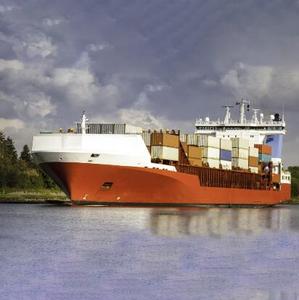

A rigorous examination of maritime asset deployment, contract architecture, and end-to-end multi-port stowage for heavy industrial project cargo and global wholesale raw materials.
Global manufacturers and infrastructure engineering EPC contractors face extreme supply chain unpredictability when reliant purely on standard ocean container alliances. Wholesale vessel chartering bridges the gap between fixed industrial production schedules and open-ocean maritime conveyance, allowing direct control over loading laycan windows, stowage configurations, derrick lift limits, and port rotation sequences.
By bypassing standard transshipment hubs, a factory direct vessel charter mitigates critical supply chain bottlenecks. Chartering services operating out of key Chinese commercial hubs—such as Shanghai, Ningbo-Zhoushan, Qingdao, Tianjin, and Guangzhou—connect directly into key British and European coastal corridors, including Felixstowe, Port of Ipswich, Liverpool, and London Thames gateways, avoiding intermediary demurrage risks.
Choosing the correct charter model dictates financial exposure, stevedoring responsibility, fuel bunker hedging, and operational liability. Our marine engineering and shipping advisory teams calibrate contracts to ensure shippers avoid unanticipated demurrage fees and cargo detention costs.
| Charter Party Agreement | Operational Framework | Bunkers & Port Disbursements | Ideal Procurement Scope | Risk Mitigation Level |
|---|---|---|---|---|
| Voyage Charter (Spot / Part Cargo) | Carriage of specific cargo tonnage from designated Chinese load port(s) to discharge berths. | Paid entirely by Shipowner; freight quoted per freight ton (w/m) or lumpsum. | Batch steel imports, oversized mining transformers, monolithic infrastructure shipments. | Low Market Risk |
| Time Charter (T/C Trip or Period) | Vessel chartered for a specified calendar duration or round-trip voyage route. | Charterer covers fuel (VLSFO / MGO), canal tolls, pilotage, and port dues. | Ongoing multi-month factory output delivery, seasonal consumer retail surges. | Balanced Control |
| Contract of Affreightment (COA) | Agreement to transport specified aggregate cargo volumes over long-term multi-voyage horizons. | Fixed freight structure with agreed bunker adjustment factors (BAF). | Large-scale renewable power installations, multi-year mineral and cement supply contracts. | Maximum Stability |
| Bareboat Charter (Demise) | Complete operational, technical, and crewing possession transferred to the charterer. | All vessel OPEX and CAPEX liabilities borne by commercial operator. | State engineering firms, maritime consortiums, captive energy project fleets. | High Capital Focus |
Combining three decades of international multi-modal mastery with strategically positioned, privately controlled UK maritime assets and carbon-neutral logistics facilities.
With strategic bases across Felixstowe (the UK's primary container harbor), Port One Logistics Park in Suffolk, Port of Ipswich, Liverpool, and London Heathrow, cargo transitions seamlessly from vessel discharge into secure warehousing, eliminating inland drayage lag.
Our approved customs bonded warehousing facilities allow international buyers to suspend immediate import VAT and duty liabilities until merchandise is deployed into active circulation or transshipped to EU territories, significantly optimizing operational cash reserves.
Holding unannounced AA+ BRCGS Storage & Distribution credentials alongside ISO 9001:2015 and IATA accreditation, we enforce strict compliance, zero-defect handling protocols, and rigorous custody verification for food-grade, high-tech, and hazardous cargo.
Key economic indicators, digital charter parties, and capacity booking dynamics transforming bulk and heavy industrial cargo flows between Chinese export hubs and Western destinations.
Procurement desks increasingly favor dynamic charter parties tied to Baltic Dry and Baltic Supramax Indices, enabling agile rate hedging across volatile spot markets and long-term supply cycles.
Tier-1 manufacturers are reducing exposure to common carrier blank sailings by reserving guaranteed vessel holds under 12-to-24-month multi-voyage volume commitments.
Automated telemetry, real-time AIS berth tracking, and digital Notice of Readiness (NOR) platforms eliminate contentious laytime disputes and streamline demurrage settlements.
Procurement teams increasingly require chartering contracts that seamlessly connect to destination port devanning, UK customs clearing, and inland heavy haulage under a single bill of lading.
Navigating strict IMO Carbon Intensity Indicators (CII), EU Emissions Trading System (EU ETS) surcharges, and green fleet modernizations.
Achieving carbon neutrality five full years ahead of the UK's statutory 2030 target, our operations combine massive warehouse rooftop solar arrays, all-electric materials handling fleets, and granular per-voyage Scope 3 emissions reporting for institutional buyers.
The International Maritime Organization's Carbon Intensity Indicator (CII) and Energy Efficiency Existing Ship Index (EEXI) have fundamentally altered vessel charter availability. Aging, inefficient general cargo vessels face mandatory engine power limitations or route speed reductions, impacting scheduled transit times.
Our chartering network prioritizes modern, high-efficiency bulk carriers and dual-fuel heavy-lift vessels capable of utilizing alternative fuels (biofuels, LNG, and green methanol). This minimizes EU ETS maritime allowance liabilities and ensures corporate compliance with global Scope 3 environmental disclosure mandates.
Authoritative technical guidance for shipping coordinators, commercial directors, and industrial procurement professionals.
Laytime terms (e.g., Weather Working Days of 24 Consecutive Hours, WWD) are explicitly fixed in the charter party. Once the Notice of Readiness (NOR) is tendered and accepted at load/discharge ports, the agreed laytime clock starts. Our port superintendents closely monitor stevedoring rates to ensure operations complete within terms, avoiding costly demurrage penalties.
A Full Charter allocates the ship's entire deadweight capacity and hold volume to your cargo, offering complete autonomy over load/discharge ports and schedules. For consignments between 1,000 and 15,000 tons that don't fill a full Handysize vessel, Part Cargo allows you to charter dedicated hold bays on a shared voyage, substantially reducing landed costs.
Yes. Our in-house customs compliance unit manages all UK customs declarations, tariff classifications, and duty deferments. Through our abnormal loads and heavy haulage divisions, we coordinate specialized multi-axle modular trailers, police escort permits, and bridge capacity surveys to transport cargo directly to your final project site.
To prepare an accurate charter quotation, our shipbrokers require the Cargo Description, total Stowage Factor (SF in cuft/mt or cbm/mt), packing format, unit dimensions/weights, preferred Laycan range (earliest to latest cargo ready date), loading/discharge port berths, and specific loading/discharging speed requirements.
Discharging an entire vessel load creates significant immediate customs tax liabilities. By moving goods into our HMRC-approved bonded facilities at Felixstowe or Port One, payment of import duty and VAT is suspended. Taxes are settled incrementally only as products are sold or processed, providing substantial working capital relief.
Every charter movement undergoes pre-loading condition surveys, certified marine lashing inspections (IMO Code of Safe Practice for Cargo Stowage and Securing), ultrasonic hatch-cover watertightness tests, and draft surveys conducted by accredited third-party surveyors to ensure complete cargo safety and documentation accuracy.
Consult with our senior maritime shipbrokers, port operations directors, and international logistics engineers. Secure customized laycan commitments, stable freight structures, and seamless terminal handling.
