
30+
Years Logistics Mastery
99.8%
Damage-Free Last Mile
ISO 9001
& BRCGS AA+ Certified
100%
Carbon-Neutral Operations
Verified Export Catalogue
Core Logistics Solutions & Precision Industrial Goods
Source directly from accredited facilities backed by automated track-and-trace, specialized heavy-haul crating, and white-glove destination handling.

Strategic Procurement Whitepaper
The Evolution of China Wholesale White Glove Delivery: Bridging Factory Automation and Final-Mile Placement
In contemporary global commerce, the transition of high-value commodities, sensitive technical equipment, and oversized industrial assets from Chinese manufacturing lines to institutional endpoints requires far more than legacy port-to-port maritime forwarding. White glove delivery has transcended its traditional domestic retail definition to become an integral B2B supply-chain methodology. It encompasses customized export crating conforming to ISPM 15 standards, specialized multi-modal transport with constant telemetric condition monitoring, comprehensive customs documentation under pre-cleared tariff regimes, and on-site room-of-choice assembly accompanied by dunnage remediation.
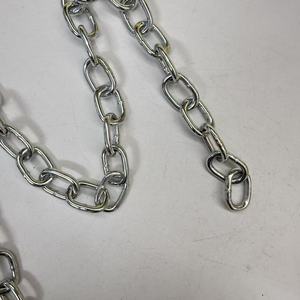
Procuring overseas logistical services demands strict adherence to operational integrity. Whether transporting marine-grade welded link chains requiring anticorrosive preservation, aerospace components, or delicate consumer lifestyle products, suppliers must combine manufacturing oversight with deep logistics orchestration. The convergence of Third-Party Logistics (3PL), bonded staging depots, and dedicated last-mile transport arrays eliminates the standard supply chain friction points that historically generated high claims ratios and operational downtime.
Defining the High-Touch Cross-Border Service Architecture
Enterprise cross-border white glove fulfillment differs fundamentally from conventional freight handling. Standard freight arrangements conclude when an abnormal load or containerized consignment is dropped at a commercial curbside, leaving the consignee responsible for inland rigging, unpacking, debris evacuation, and precision structural placement. In contrast, an end-to-end white glove model deploys trained installation engineers, specialized lifting machinery, and strict protocol-driven delivery teams.
Pre-Transit Engineering & Case Making
Custom-engineered timber packing, shock-absorption dampening, and moisture barrier vapor sealing designed specifically for severe maritime and high-altitude transit environments.
Bonded Staging & Duty Suspension
Strategic deployment of port-centric bonded warehousing allowing deferred fiscal taxation, container devanning, batch kitting, and timed final delivery without demurrage penalties.
Turnkey Site Placement & Commissioning
Direct uncrating, room-of-choice placement, technical structural assembly, electrical/mechanical readiness checks, and complete reverse logistics for zero client disposal burden.
Future Procurement Trends: The Next Horizon in Global Delivery Services
Global procurement teams are re-evaluating risk exposure within their vendor networks. Over the coming 36 to 60 months, international procurement managers will encounter several transformative shifts in the execution of cross-border white glove logistics originating from China:
- Integrated Sensor Telemetry (IoT-Enabled Visibility): Traditional track-and-trace portals that indicate macro-milestones (e.g., "Cargo Departed Origin Port") are obsolete. Procurement officers now demand continuous sensor data covering shock impacts (G-force), tilt angles, humidity thresholds, and ambient temperature throughout intermodal transfers.
- Decarbonization and Scope 3 Traceability: Leading multinational corporations require verifiable carbon tracking per metric ton-kilometer. Providers must actively deploy solar-powered consolidation hubs, route-optimization algorithms to eliminate deadhead transport, and electric last-mile delivery fleets to meet aggressive Net Zero targets.
- Port-Centric Micro-Hub Buffering: To buffer against geopolitical choke points and container schedule volatility, importers are switching from pure Just-in-Time (JIT) methods to strategic JIT-Buffer hybrids. Staging cargo in port-proximate facilities (such as Port One Suffolk or Edison New Jersey) provides regional agility and 24-to-48-hour delivery windows.
- Unified DDP Regulatory Architecture: Trade compliance volatility necessitates end-to-end Delivered Duty Paid (DDP) forwarders capable of handling classification shifts, tariff updates, and preferential origin certifications internally, shielding buyers from sudden audit liabilities.
Comparative Analysis: Cross-Border Logistics Execution Models
To assist international procurement directors in assessing risk against cost-efficiency, the matrix below contrasts traditional freight forwarding against high-touch white glove solutions:
| Service Dimension | Standard Freight Forwarding | Traditional 3PL Logistics | Enterprise White Glove Delivery |
|---|---|---|---|
| Transit Coverage | Port-to-Port / CFS-to-CFS | Terminal-to-Door (Curbside) | Factory Floor to Indoor Point-of-Use |
| Packaging Protocol | Basic Palletization & Film | Standard Box/Crate Packaging | ISPM 15 Engineering, Shock-Mount Skids |
| Customs Integration | Third-Party Brokerage Hand-off | Standard Import Filing | In-House Brokerage, Duty/VAT Optimization |
| Site Delivery Protocol | Tailgate Discharge Only | Threshold Delivery (Dock Only) | Room-of-Choice, Rigging, Assembly, Dunnage Clearance |
| Telemetry & Claims Rate | Milestone Based (>2.4% damage) | GPS Truck Tracking (>1.1% damage) | Continuous Environmental IoT (<0.05% damage) |
Industry Development Trends: Smart Logistics Infrastructure
The modernization of Chinese export logistics infrastructure has altered how global buyers engage with industrial clusters. Automated container handling at key coastal ports (Ningbo-Zhoushan, Shanghai, Shenzhen, and Qingdao) alongside integrated overland rail transport (TIR cross-border trucking corridors) allows direct movement of sensitive freight from inland manufacturing complexes across Central Asia directly into European hubs with minimal touchpoints.
Furthermore, the convergence of high-capacity bonded consolidation hubs provides foreign buyers with complete supply chain flexibility. Shippers can consolidate sub-assemblies from multiple component vendors into single shipping containers, conduct structural packaging engineering in a temperature-controlled environment, clear customs digitally before departure, and trigger downstream delivery only when regional demand conditions align.
Institutional Reliability
Our Enterprise Infrastructure & Technical Capabilities
Decades of audited international trade management, company-owned strategic port-centric facilities, and accredited procedural compliance.
30+ Years Proven Operational Track Record
Managing intricate supply chain ecosystems since the 1990s, resolving challenges internally across sea, air, rail, and road without third-party hand-offs.
Audited Quality: ISO 9001 & BRCGS AA+
Maintained to unannounced audit standards, ensuring rigorous chain-of-custody protocols for sensitive electronics, marine hardware, and consumer goods.
Port-Centric Owned Infrastructure
Facilities stationed at Felixstowe, Ipswich Port, London Heathrow, Liverpool, and Edison NJ provide streamlined devanning, storage, and direct intermodal connections.
Independent IATA Air Cargo Authority
Direct terminal air freight allocations for critical cargo, combined with dedicated bonded facilities to support express assembly and emergency distribution.
Buyer Due Diligence
Frequently Asked Procurement Questions
Direct technical answers addressing cross-border Incoterms, bonded warehousing, packing protocols, and liability management.
What specific operations distinguish "White Glove Delivery" from standard DDP shipping?
Standard Delivered Duty Paid (DDP) arrangements fulfill legal delivery obligations once the container or palletized shipment arrives at the destination dock or curbside. White Glove Delivery extends this boundary inside the receiving facility. Our service encompasses custom interior room-of-choice placement, specialized equipment de-crating, precision mechanical or architectural assembly, visual verification against engineering blueprints, and the complete removal and eco-friendly recycling of all packaging materials (dunnage).
How does utilizing a bonded warehouse structure improve cash flow for high-volume importers?
Bonded warehousing permits overseas suppliers and buyers to store imported goods with all import duties and Value Added Tax (VAT) suspended indefinitely until the goods are withdrawn for local consumption. If an enterprise imports forty containers of high-value equipment, stock can be staged at our port-centric bonded facilities and released in smaller batches as orders finalize. If items are subsequently re-exported to alternate continental jurisdictions, domestic import duty liabilities are entirely eliminated.
How are abnormal loads, heavy industrial link chains, and sensitive instrumentation protected against maritime transit corrosion?
Our specialized export packing operations deploy heat-sealed barrier bags infused with Vapor Corrosion Inhibitors (VCI), industrial-grade desiccant drying matrices, and customized ISPM 15 heat-treated timber cases tailored precisely to the cargo's center of gravity. For heavy-haul products such as marine welded chains, reinforced base pallets with custom chocks prevent internal movement and dynamic weight shifting within shipping containers during severe sea states.
Which Incoterms are most advantageous when sourcing complex shipments from China?
While many Chinese factories quote Ex Works (EXW) or Free on Board (FOB), enterprise buyers sourcing high-value commodities achieve greater supply chain control utilizing Cost and Freight (CFR) or Delivered Duty Paid (DDP) managed via a single accredited logistics operator. This structure establishes unambiguous operational accountability for damage, demurrages, customs classification disputes, and destination drayage costs, eliminating intermediary finger-pointing.
What telemetry and chain-of-custody verification do you offer for high-value or hazardous cargo?
We integrate multi-sensor cellular and satellite tracking units directly onto primary crating. These devices deliver continuous real-time telemetry charting geographical GPS coordinates, three-axis shock impacts, tilt anomalies, ambient humidity, and thermal variance. All physical touchpoints require digital cryptographic sign-offs, preserving an unassailable audit trail from factory uncoupling to room-of-choice sign-off.