Engineered shipping hardware, certified securing assets, and cross-border project transport lines custom-configured for industrial procurement officers and bulk freight forwarders.
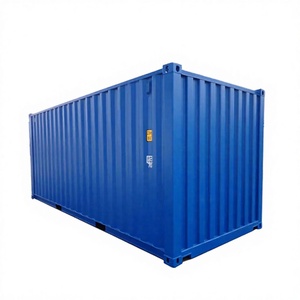
Factory-certified standard and high-cube dry containers for volume breakbulk, manufacturing export consolidation, and long-haul intermodal sea freight lines.
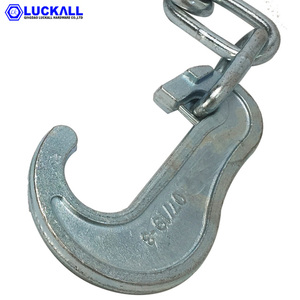
High-tensile Grade 80 alloy steel tie-down chains engineered for out-of-gauge heavy equipment, vessel deck tie-down, and industrial project cargo lashing integrity.
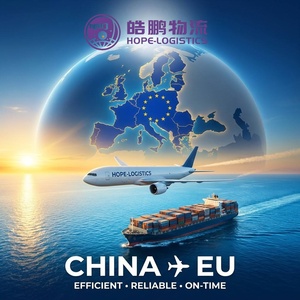
Dedicated multi-hub consolidation routes combining ocean LCL containers and priority air bridges into Rotterdam, Hamburg, Felixstowe, and Paris Charles de Gaulle.
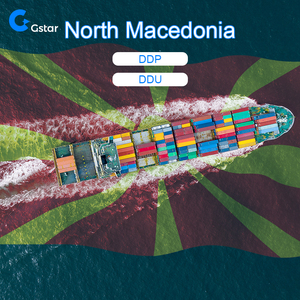
Custom engineered 3PL project logistics routing, multimodal route surveys, and factory-to-site clearance operations for infrastructure assemblies and capital equipment.
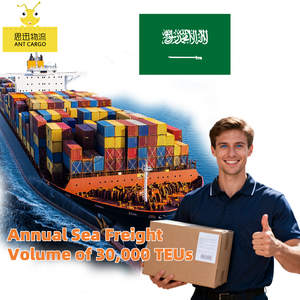
Full DDP clearance corridors connecting manufacturing origins with Jeddah and Dammam, complete with SABER conformity certification management and local yard delivery.
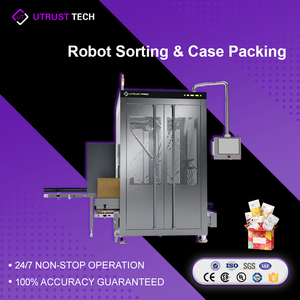
Factory-automated packaging and sorting cells designed for high-speed carton packing, export palletising, and heavy freight warehouse handling automation.
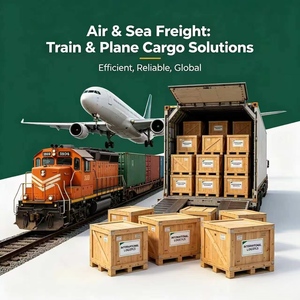
Direct charter capacity and bonded transshipment routes for transcontinental transit between Istanbul trade zones, Western Europe, and Far East hubs.
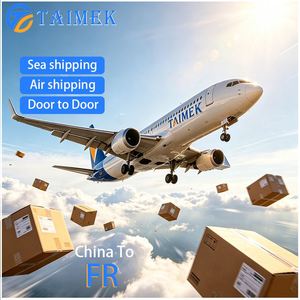
Scheduled freight capacity, bonded tarmac handling, and European regional trucking integration delivering mission-critical sub-assemblies directly to manufacturing facilities.
In modern industrial procurement, moving bulk cargo, oversized manufacturing equipment, and heavy industrial machinery is no longer a transactional trucking exercise. It is a highly engineered discipline requiring technical integration between manufacturing origins, export packing facilities, specialized sea freight charter vessels, and port-centric bonded warehouses. When shipping complex breakbulk or large-volume containerized industrial products, engineering procurement teams must navigate precise stowage planning, lifting lug stress calculations, dynamic sea-fastening analyses, and strict international customs regulatory barriers.
As a verified OEM cargo shipping factory and global exporter, our operational approach integrates ISO 9001:2015 quality frameworks and BRCGS AA+ accredited terminal warehousing directly with carrier vessel coordination. Whether dealing with full container loads (FCL) of standardized fabricated metal goods or multi-ton abnormal components such as power transformers, rail track segments, and energy turbine modules, managing landed costs requires total visibility of every variable: cargo center of gravity (CoG), deck load dispersion limits, ISPM 15-compliant wood packing, and multi-jurisdictional tariff classifications.
Every out-of-gauge shipment undergoes computerised load-securing calculations adhering to IMO/ILO/UNECE Code of Practice for Packing of Cargo Transport Units (CTU Code), guaranteeing zero dynamic shift during heavy sea states.
Our deep-water terminals across key maritime corridors eliminate expensive inland drayage by positioning crating, bonded staging, and container devanning directly at vessel berthing gates.
In-house compliance specialists handle direct digital customs links, origin certification, and tariff engineering to take advantage of preferential bilateral trade agreements, eliminating port detention.
Global supply networks are transitioning from volatile just-in-time approaches to resilient, digitized, and low-carbon multi-corridor frameworks. Procurement officers must align operations with three major industry developments.
Global manufacturers are increasingly adopting port-centric bonded storage models. Instead of releasing high-volume bulk cargo directly into taxable domestic distribution, international buyers hold inventory under bonded duty suspension near major ports like Felixstowe or Rotterdam. Tariffs, VAT, and customs duties are incurred only upon final downstream factory call-off, drastically improving operational working capital.
By 2026 and beyond, ESG disclosure compliance mandates transparent per-shipment emissions documentation. Enterprise buyers now require OEM logistics partners to provide auditable carbon accounting across ocean vessel legs, drayage transport, and bonded terminal handling. Forward-thinking providers leverage electric yard machinery, solar-powered cross-docks, and voyage speed optimization.
Geopolitical chokepoints and maritime canal restrictions have permanently ended reliance on single-mode transit lanes. The procurement paradigm favors single-source logistics integrators capable of seamlessly toggling cargo between standard ocean routes, sea-air multimodal bridges, and heavy overland rail/road corridors without renegotiating documentation or freight liability structures.
The handling of specialized heavy cargo and bulk manufactured components is undergoing rapid technological modernization. Legacy paper-based bill-of-lading protocols and manual lifting balance estimations are being replaced by high-precision, automated industrial technologies:
1. Robotic Automation & Sorting Integration: Inside high-throughput packaging depots, high-speed delta parallel robots and automated case-packing architectures (as demonstrated in our automated handling systems) ensure that delicate industrial components and precision assemblies are packed with uniform shock dampening, reducing transit vibration damages by over 92% compared to manual crating.
2. IoT Telematics & Digital Twin Cargo Tracking: Modern breakbulk charter shipping relies on satellite-linked IoT sensor nodes mounted directly to heavy machinery frames. Procurement teams receive real-time, tamper-proof streams capturing tri-axial g-force shock, relative ambient humidity, vessel pitch-and-roll cycles, and geo-fenced transit milestones.
3. Advanced Metallurgy & Composite Securing Assets: The deployment of Grade 80 and Grade 100 galvanized alloy steel drag chains, coupled with pre-stretched synthetic lashing belts, delivers unprecedented strength-to-weight ratios. These assets eliminate elongation risks under thermal shock, ensuring that multi-ton industrial cargo remains anchored to flat racks or vessel tween-decks even across North Atlantic winter voyages.
Leveraging more than three decades of end-to-end freight forwarding, customs brokerage, and bonded logistics infrastructure to secure your global industrial supply chain.
Certified ISO 9001:2015 quality management systems combined with the highest BRCGS AA+ Storage & Distribution rating, verifying verified procedural accuracy across every consignment.
Owned heavy warehousing and handling facilities located right beside Felixstowe container port, the Port of Ipswich, London Heathrow, and Liverpool maritime gateways for zero-delay operations.
Complete import and export customs clearance management, direct CDS/CHIEF electronic filing, preferential duty determinations, and bonded tariff deferment accounts.
Achieved enterprise carbon neutrality years ahead of the UK 2030 targets, offering our clients verified Scope 3 green freight emission audits and solar-powered bonded storage facilities.
Critical operational considerations addressed by our lead industrial logistics engineers.
Connect directly with our senior freight engineering and customs management team to calculate transit schedules, evaluate stowage feasibility, or structure port-centric bonded storage programs.
