Global Industrial Intermodal Ocean Logistics, Certified Port-Centric Fulfilment & Full Supply Chain Compliance Architecture
End-to-End Solutions
Verified OEM Freight Systems & Mission-Critical Cargo Catalog
Engineered shipping programmes, certified hardware lifting assemblies, and multimodal DDP trade line capabilities supporting global importers and manufacturers.
Engineering Custom OEM Ocean Freight: Procurement Dynamics & Global Horizons
A comprehensive analysis of evolving customs architecture, intermodal consolidation, landed-cost engineering, and maritime decarbonisation strategies.
The Shift to Port-Centric Logistics & OEM Deconsolidation
In classical supply chain design, ocean freight followed a fragmented trajectory: containers discharged at deep-water terminals, moved by long-haul drayage to inland dry ports, underwent delayed devanning, and entered regional distribution hubs. This structural disconnect generated exponential demurrage liabilities, chassis rental surcharges, and Scope 3 transport overhead.
Modern enterprise procurement mandates port-centric infrastructure. Placing de-stuffing, bonded warehousing, and cross-docking operations directly adjacent to primary maritime complexes—such as Felixstowe, Port of Ipswich, or London Gateway—eliminates inland deadhead miles. Consignees gain rapid container restitution, cutting per-box container turnaround cycles from 8 days down to under 36 hours.
Procuring custom OEM components demands strict control over trade compliance frameworks. The choice between Ex-Works (EXW), Free On Board (FOB), and Delivered Duty Paid (DDP) fundamentally shifts operational risk, insurance liability, and fiscal responsibility between manufacturer and buyer.
Operating under rigorous customs protocols requires precision auditing of World Customs Organization (WCO) 6-digit Harmonized System (HS) codes, national statistical suffixes, and preferential tariff mechanisms. By utilizing customs bonded warehousing (Type 1 or Type 2 private customs regimes), enterprise buyers achieve duty and VAT suspension until goods enter commercial circulation.
Preservation of corporate working capital through deferred tax liquidity
Inward Processing Relief (IPR) strategies for re-exported assemblies
Strict proof of origin management navigating unilateral and bilateral free-trade pacts
FCL vs. LCL Dynamic Break-Even Modeling
A persistent operational question in OEM manufacturing freight is identifying the definitive mathematical inflection point separating Full Container Load (FCL) bookings from Less than Container Load (LCL) consolidation programs. The decision balances raw freight cubic meter (CBM) rates against handling, inland devanning, and temporal inventory depreciation.
Empirical freight modeling shows the break-even threshold consistently settles between 13.0 and 15.5 CBM for dry general cargo across Asia–Europe and Trans-Pacific trade lanes. Below this boundary, consolidated ocean shipping isolates the buyer from fixed equipment liabilities; beyond it, dedicated standard 20ft General Purpose (GP) or 40ft High Cube (HC) units yield superior unit landed economics.
FCL eliminates multi-consignee dwell times and destination depot manipulation
LCL allows agile inventory turnover without capital lockup in high-volume buffer stocks
Maritime Decarbonisation: IMO 2030/2050 & EU ETS Mandates
The ocean carriage matrix is experiencing regulatory transformation. The international maritime sector must operate under the Energy Efficiency Existing Ship Index (EEXI), the operational Carbon Intensity Indicator (CII), and the phased integration of maritime emissions into the European Union Emissions Trading System (EU ETS).
Corporate procurement is now accountable for Scope 3 emissions under evolving CSRD (Corporate Sustainability Due Diligence) rules. Shippers must measure route-specific greenhouse gas outputs using GLEC Framework-compliant analytics. Forwarders operating modern, low-emission carrier allocations, slow-steaming initiatives, and alternative fuels (Bio-LNG, e-Methanol) offer crucial carbon-reduction advantages.
Verified voyage carbon auditing provided at bill-of-lading granularity
Port handling with renewable-powered electric container gantry and reach stackers
Standard container logistics represents only a fraction of global manufacturing logistics. Heavy industrial installations, energy components (e.g., T-pylons, wind power assemblies, substations), and modular plant engineering require specialized Breakbulk, Out-Of-Gauge (OOG), and roll-on/roll-off (RoRo) transport planning.
Heavy freight engineering involves marine warranty surveys, bespoke lashing calculations adhering to IMO CSS Code Annex 13, and customized export packing matching ISPM 15 timber phytosanitary rules. Moving these components overland requires route sweeping, bridge structural assessments, utility adjustments, and coordinated police and private escort convoys.
Special equipment utilization: Flat Racks, Open Tops, and hydraulic modular axles
Port lifting operations via heavy-lift floating cranes and specialized shore gantries
Comprehensive method statements, stress analyses, and cargo securement blueprints
Digital Visibility & Event-Driven EDI/API Architecture
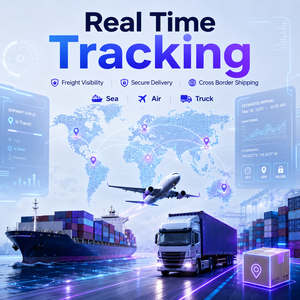
The standard freight forwarding workflow, once hampered by manual paper documents and fragmented tracking portals, is now driven by event-based digital integration. Real-time predictive visibility connects ocean carrier AIS telematics directly to enterprise Warehouse Management Systems (WMS) and ERP platforms.
Through modern EDI (Electronic Data Interchange) ANSI X12 / EDIFACT standards and web API connectors, stakeholders receive automated notifications on critical transit milestones—Container Gate-In, Vessel Departure, Transshipment Discharge, Customs Clearance Status, and Delivery Completion. This connectivity minimizes buffer inventory needs and improves cross-dock throughput.
Digital customs manifest validation preventing dock clearance bottlenecks
Dynamic transit variance alerts that protect critical manufacturing lines
Operational Foundations
Enterprise Advantages: 30+ Years of Supply Chain Mastery
Operating from core UK deep-water gateways and international hubs, our infrastructure removes third-party friction and establishes single-source accountability.
Certified Standards & AA+ Quality Audits
Our facilities operate under ISO 9001:2015 quality management and hold the highest unannounced BRCGS AA+ Storage and Distribution grade. We ensure certified chain-of-custody protocols across every SKU, whether handling delicate electronics, industrial components, or consumer goods.
Port-Centric Infrastructure Footprint
Strategically positioned facilities across Felixstowe, Port One, the Port of Ipswich, London Heathrow, and Liverpool ensure rapid cargo transitions. Direct deep-water terminal connections eliminate unnecessary drayage costs, reduce inland lead times, and optimize turnaround times.
In-House UK & International Customs Authority
Our dedicated brokerage teams manage declarations, direct CDS filings, and preferential tariff mechanisms in-house. We provide specialized bonded storage and expert advisory on commodity classifications, helping clients resolve customs compliance hurdles smoothly.
Proven Decarbonisation & Green Practices
We achieved carbon neutrality five years ahead of the UK's 2030 national target and are on path toward Net Zero by 2050. From roof-mounted solar installations to electric handling fleets and transparent Scope 3 carbon reporting, we support our clients' ESG goals.
Specialist Heavy-Lift & Engineering Logistics
Our capabilities extend beyond standard container freight. We handle specialized Out-of-Gauge (OOG) machinery, energy infrastructure, and oversized fabrications with in-house structural engineers, custom export packing, and comprehensive route and transit permits.
Single Point of Accountability & Long-Term Trust
With multi-decade client partnerships—including over 12 years with major enterprises like BiGDUG—we eliminate the friction of juggling multiple sub-tier vendors. Our partners work directly with one dedicated, knowledgeable logistics team.
Procurement Advisory
Frequently Asked Questions: Global Sea Freight & OEM Logistics
Clear, direct guidance on the technical, legal, and operational questions commonly raised by international enterprise buyers.
How does bonded warehousing improve financial liquidity for high-volume ocean imports?
Bonded warehousing permits imported ocean cargo to enter storage with all customs duties, tariffs, and Import VAT fully suspended until the cargo is released for domestic consumption. For corporate importers, this defers substantial capital outlays, aligning tax commitments directly with downstream commercial sales. Furthermore, if the goods are re-exported or shipped to alternate international jurisdictions, domestic duties are waived entirely—eliminating duty drawback delays.
What criteria decide whether ocean cargo should move via FCL or LCL?
The tipping point between Less than Container Load (LCL) and Full Container Load (FCL) generally centers around volume, cargo density, and handling fragility. From a landed-cost standpoint, when total cargo volume approaches 13 to 15 cubic meters (CBM), an FCL 20-foot container is typically more economical than paying consolidated per-CBM ocean rates alongside origin and destination handling fees. FCL also provides sealed security, eliminating transshipment touchpoints and minimizing transit times.
How should shippers select between EXW, FOB, and DDP terms for overseas freight?
Ex Works (EXW) gives buyers total routing control but places all origin inland transportation risks, documentation duties, and export customs handling on them. Free On Board (FOB) is the global standard for ocean procurement; the manufacturer pays origin inland costs and loads the vessel, while the buyer maintains full visibility over carrier selection, transit speed, and destination terms. Delivered Duty Paid (DDP) places all delivery responsibilities on the seller, but often conceals logistics markups and limits the buyer’s direct customs control.
What documentation is necessary to ensure fast UK and EU customs clearance?
Compliant customs entries require an itemized Commercial Invoice with exact currency declarations and correct terms of sale; a detailed Packing List specifying individual box and pallet dimensions and gross/net weights; a verified Master or House Bill of Lading (B/L); and explicit 6-to-10 digit HS commodity codes. Depending on the product, you may also need Certificates of Origin, EUR.1 movement certificates, test compliance documentation (CE/UKCA), or dangerous goods material safety data sheets (MSDS).
How do port-centric distribution models protect importers against port demurrage and detention?
Demurrage accrues when containers remain on terminal quays beyond standard free-time allowances (often 3 to 7 days), while detention fees build up when empty containers are returned late to shipping lines. Operating with facilities directly adjacent to major port gates ensures containers can be collected, destuffed, and returned quickly. This swift turnaround protects shippers from costly daily container penalties.
Transform Your Ocean Supply Chain Dynamics
Connect directly with our senior intermodal logistics architects for custom landed-cost modeling, route optimization, and dedicated enterprise freight support.