OEM/ODM Freight Rate Management Manufacturer & Factories

Precision Landed-Cost Architecture, Real-Time Tariffs, Port-Centric Bonded Infrastructure, and Predictive Supply Chain Logistics for Enterprise Global Exporters and OEM Partners.

Factory Freight Portfolio

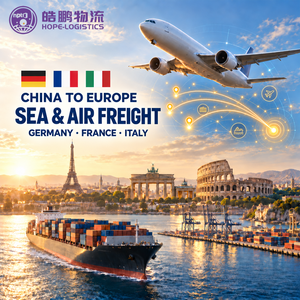
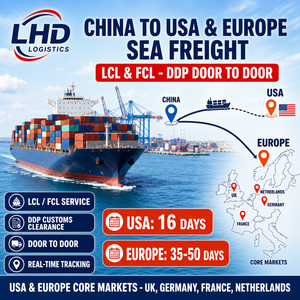
Standardized Multi-Route Solutions for OEM/ODM Shipments

Engineered logistics schedules balancing freight rate volatility, volume density, transit windows, and comprehensive door-to-door customs clearance across critical global corridors.
Operational Superiority

Over Three Decades of Multi-Facility Logistics Infrastructure

Operating as an OEM/ODM freight management enterprise requires more than digital booking brokering; it mandates direct custody of physical port-adjacent assets, audited compliance standards, and specialized heavy engineering support. Backed by over 30 years of end-to-end logistics execution, our infrastructure bridges overseas manufacturing lines with primary consumer delivery networks.

30+
Years International Logistics Experience
6
Strategic Port & Airside Hubs in the UK
AA+
BRCGS Storage & Distribution Rating
5 yrs
Ahead of 2030 Carbon Neutral Target

Our footprint is rooted directly at prime transit arteries, ensuring zero container drayage friction. With flagship facilities situated across Port One (Suffolk), Felixstowe, Port of Ipswich (Westbank), London Heathrow, and Liverpool, we control the entire lifecycle of industrial and consumer stock. Shipments clear UK and European waters with uninhibited vessel devanning, immediate bonded cross-docking, and high-throughput palletization, completely eliminating intermediate third-party yard surcharges.

ISO 9001:2015 & BRCGS AA+ Certified

Audited operational rigor governing temperature-controlled warehousing, pharmaceutical storage, and consumer product distribution. Highest available grade for unannounced warehouse inspections.

Customs Bonded Warehouse Buffers

Duty and VAT liability suspended upon terminal transfer. OEM and ODM customers defer import tax liabilities until product batches enter commercial circulation or execute re-exportation duty-free.

IATA Accredited Air Operations

Direct allocations on London Heathrow (LHR) schedules for time-critical engineering parts, rapid sample production, and production-line-down spares with integrated CDS customs filing.

Pre-Negotiated Tier-1 Carrier Alliances

Volume-backed slot commitments across ocean alliances (Ocean Alliance, 2M, THE Alliance), locking contract rates and protecting against peak season Blank Sailings and General Rate Increases (GRI).

ISPM 15 Industrial Export Packing

In-house case-making, bespoke timber fabrication, out-of-gauge barrier wrapping, and machinery preservation handling heavy capital equipment directly at the Port of Ipswich Westbank complex.

Freight Matrix Analysis

OEM/ODM Modal Dynamics: Transit Reliability vs. Landed Cost

Procuring freight across contract manufacturing chains demands algorithmic mode selection. When calculating total landed cost, logistics directors must evaluate container space utilization, volumetric weight ratios, carbon impact metrics, and buffer inventories.

Shipping Mode Volume / Weight Sweet Spot Avg. Transit (Far East to UK/EU) Rate Mechanism & Volatility Demurrage / Detention Risk Regulatory Requirement
Ocean FCL (20'/40' HC) > 15 CBM or > 12,000 kg 30 – 42 Days (Suez / Cape) Indexed Monthly / Quarterly (BAF + CAF Hedged) Low (Direct Bond Depot Dray) Bill of Lading, Verified Gross Mass (VGM)
Ocean LCL Groupage 1.5 CBM – 14 CBM 35 – 48 Days (Inc. CFS Devanning) W/M (Weight or Measurement Ratio) Zero (Handled at Port CFS) Individual Commercial Invoices / Packing Lists
Air Freight (Direct / Consolidated) < 300 kg or Time-Critical Spares 2 – 5 Days (Terminal to Terminal) Volumetric (1:6000 Ratio) / Dynamic Fuel Index High (Air Dwell Fees after 48h) IATA Air Waybill, Dangerous Goods Dec (DGD)
Multimodal Sea-Air Hybrid 500 kg – 3,000 kg Balanced Run 14 – 18 Days (via Middle East Hub) Flat Tiered Rate per Kilogram Minimal (Managed Cross-Dock) Transshipment Manifest, Bonded T1 Docs
Project Out-of-Gauge (OOG) Heavy Machinery, Modular Assemblies Custom Charter Schedule Lump-Sum Contract per Engineering Phase Engineered (Direct Discharge) Route Surveys, Police Escorts, Lifting Permits
Strategic Whitepaper

Future Procurement Trends in Global Freight Rate Management (2025–2030)

The paradigm of securing enterprise freight rates is shifting from reactive transactional spot-market bidding to predictive, programmatic procurement architectures. As OEM and ODM production nodes decentralize across mainland China, Southeast Asia (Vietnam, Malaysia, Indonesia), and India, multinational brand owners face complex supply chain topologies. Forward-thinking procurement leaders must adapt to five foundational structural trends:

1. Dynamic Index-Linked Contract Hedging

Fixed 12-month ocean contracts are increasingly vulnerable to geopolitical disruptions, canal bottlenecks, and carrier capacity manipulation. Procurement teams are moving toward Hybrid Rate Agreements combining fixed baseline capacity buffers (60–70% of annualized volume) with automated index-linked corridors (indexed against SCFI or Drewry WCI) with guaranteed ceiling and floor collars to absorb extreme volatility.

2. Total Landed Cost (TLC) Algorithmic Auditing

Leading factories no longer evaluate freight purely on pure port-to-port container ocean rates. Modern procurement frameworks evaluate secondary risk vectors including: demurrage & detention (D&D) penalties, port congestion surcharges, chassis splits, and inland haulage dwell charges. Integrating digital customs brokerage early saves up to 18% of unexpected terminal costs.

3. Scope 3 Decarbonization & EU/UK ETS Compliance

With maritime freight integrated into the European Union Emissions Trading System (EU ETS) and stricter corporate sustainability disclosure requirements (CSRD), freight rate quotes now feature granular carbon liability calculations. OEM/ODM buyers demand authenticated Scope 3 greenhouse gas reports per TEU, rewarding logistics partners utilizing carbon-neutral port facilities and biofuel-assisted vessels.

4. Upstream Consolidation at Industrial Hubs

Rather than managing fractional LCL shipments from ten independent Tier-2 component suppliers, ODM factories utilize centralized origin consolidation hubs (Buyer’s Consolidation). Goods from disparate production lines are combined into high-density 40ft High Cube containers at origin, drastically reducing destination customs clearance charges and UK port handling devanning overheads.

Industry Evolution

Technology Architectures Transforming Freight Factory Operations

The modernization of freight forwarder rate management hinges on eliminating manual spreadsheets and asynchronous email requests. Enterprise supply chains now operate within integrated digital environments characterized by four major advancements:

Direct API Tariff Integrations

Direct connectivity between factory ERPs (SAP, Oracle, NetSuite) and forwarder Transportation Management Systems (TMS). Enables instant quotation, immediate bill-of-lading data validation, automated milestone triggers, and electronic delivery order (EDO) issuance without human clerical delay.

Automated HTS/Commodity Auditing

Algorithmic classification engines match complex BOMs (Bills of Materials) against international Harmonized Tariff Schedules, ensuring correct tariff codes, identifying UK/EU free-trade preferential origins, and eliminating compliance penalties or overpayment of customs duties.

IoT End-to-End Cargo Telemetry

Autonomous sensor tracking deployed inside containers provides minute-by-minute visibility into shock, tilt, temperature variations, humidity spikes, and geofenced coordinate checkpoints for sensitive electronic, automotive prototype, and pharmaceutical shipments.

Procurement Guidance

Frequently Asked Questions: OEM/ODM Freight Rate Management

Detailed technical, contractual, and regulatory answers addressing common complexities encountered by overseas manufacturing plants, global brand importers, and supply chain managers.

How do Incoterms (EXW vs. FOB vs. DDP) fundamentally affect freight rate liabilities?
Under EXW (Ex Works), the buyer assumes maximum risk and cost from the factory floor, including overseas origin pickup, export documentation, and terminal handling. Under FOB (Free on Board), the factory manufacturer covers all domestic origin handling, export export clearance, and loading onto the ocean vessel, with the buyer managing the main-leg maritime rate and import clearance. Under DDP (Delivered Duty Paid), the seller or their contracted logistics partner manages everything—main freight, port handling, customs brokerage, and local duties/VAT—providing fixed landed costs to the buyer. For OEM/ODM partnerships, negotiating FCA or FOB provides the buyer control over freight consolidation, while DDP offers absolute price predictability for downstream retail distributors.
What strategies successfully prevent unexpected port demurrage and detention charges?
Demurrage occurs when loaded containers exceed terminal free-time at the port quay, while detention occurs when empty equipment is not returned to the carrier's depot within the agreed timeframe. Strategies to prevent these fees include: (1) Pre-clearing customs declarations 5 to 7 days prior to vessel arrival using accurate electronic commercial paperwork; (2) Pre-negotiating extended combined free-time (e.g., 14 to 21 days rather than standard 3 to 5 days) within your primary contract; and (3) Utilizing direct off-dock transport to an adjacent bonded facility (such as our Port One and Felixstowe operations) where containers are devanned immediately, releasing equipment back to the shipping line within 24 hours.
How does bonded warehousing provide financial leverage for large manufacturing runs?
A customs bonded warehouse is a secured area where imported commercial goods are stored without the immediate payment of import duties, excise taxes, and Value Added Tax (VAT). For OEM/ODM brands importing seasonal runs or high-value components, this mechanism defers fiscal liabilities until product batches are officially withdrawn for UK/EU domestic sale. If goods are stored and subsequently re-exported to non-domestic jurisdictions, import taxes are fully avoided, drastically enhancing cash liquidity, protecting working capital, and lowering bank inventory financing costs.
How are volumetric and chargeable weights calculated across air and LCL modes?
Freight carriers charge based on density rather than gross weight alone. For Air Freight, the standard volumetric ratio is 1:6000 (1 cubic meter equals approximately 167 kg chargeable weight). The formula is: Length (cm) × Width (cm) × Height (cm) ÷ 6000. For Ocean LCL, shipping operates on a Weight or Measurement (W/M) convention, where 1 CBM is equivalent to 1,000 kg (1 metric ton). Carriers charge whichever numerical value is higher between total volume (CBM) and total weight (tons). Calculating precise carton palletization during OEM packaging design ensures you never pay for shipping empty air.
What documents are non-negotiable for zero-delay customs clearance in the UK and EU?
To ensure rapid cargo clearance through the UK Customs Declaration Service (CDS) and European customs authorities, shipments must include: (1) A clean Commercial Invoice detailing seller/buyer EORI numbers, Incoterms, and exact transaction currency; (2) An itemized Packing List referencing itemized net/gross weights and dimensions; (3) Authenticated Commodity Codes (HS/HTS codes); (4) A valid Sea Waybill or Bill of Lading (B/L) / Air Waybill (AWB); (5) Proof of Preferential Origin (such as EUR.1, REX statements, or bilateral trade agreement certs); and (6) Specialized certifications where applicable, including ISPM 15 compliance for wooden pallets or MSDS for cargo containing batteries.
Can multi-supplier OEM orders be consolidated into a single factory-direct container?
Yes. This is termed "Buyer’s Consolidation." When an importer sources structural steel, injection plastics, and electronic packaging from different manufacturing plants across Shenzhen, Ningbo, and Shanghai, our team coordinates origin collection, buffers the cargo in a centralized port CFS (Container Freight Station), inspects packaging, and consolidates the cargo into a single 40ft High Cube container. This eliminates fractional LCL terminal devanning fees, slashes customs declaration processing costs down to a single customs entry, and guarantees synchronized factory arrivals.
How do BRCGS AA+ and ISO 9001:2015 certifications protect supply chain integrity?
BRCGS AA+ represents the highest standard attainable under the Global Standard for Storage and Distribution, evaluated via unannounced third-party facility audits. For food-contact packaging, pharmaceuticals, retail consumer products, and high-value manufactured components, it verifies absolute hygiene, pest control, traceability, cross-contamination prevention, and operational security. Coupled with ISO 9001:2015 Quality Management Systems, these certifications provide procurement directors with verifiable institutional accountability, eliminating compliance risk during corporate supplier reviews.
What verified capabilities support abnormal, out-of-gauge (OOG), and infrastructure cargo?
Handling non-standard industrial machinery, heavy pylons, rail assemblies, or oversized manufacturing lines requires dedicated project logistics teams. Our engineering capabilities encompass structural route surveys, bridge-load calculations, police escort coordination, flat-rack/open-top container rigging, port heavy-lift stevedoring, and ISPM 15-certified heavy bespoke timber crating at the Port of Ipswich Westbank facilities. We manage the technical move directly from origin dock to heavy industrial foundation.

Lock Competitive Freight Rates & Streamline Factory Logistics

Consult with our supply chain specialists to assess your current landed-cost structures, book audited route trials, or establish scalable bonded warehousing for your upcoming production calendar.

Inquire Now