
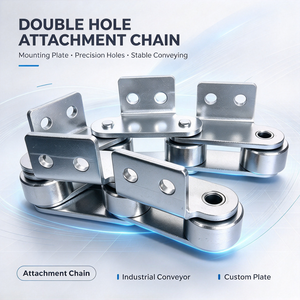
Precision-engineered transport equipment, multi-tier supply chain agency services, and heavy industrial integration tailored for Tier-1 OEMs, project cargo directors, and international logistics contractors.
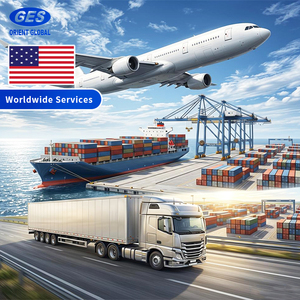

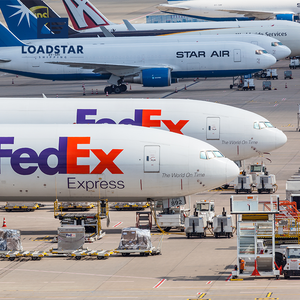
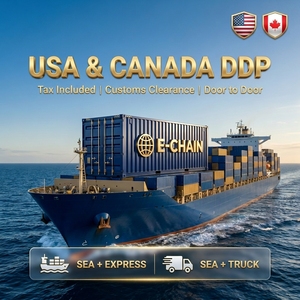

Roll-on/Roll-off (RoRo) marine logistics has evolved far beyond traditional automotive ferrying. Today, it operates as the pinnacle of precision out-of-gauge (OOG) multimodal engineering, providing dedicated pathways for self-propelled machinery, tracked heavy equipment, breakbulk modules on MAFI roll trailers, and pre-commissioned industrial vehicles. The modern supply chain demands high resilience against the severe physical stresses induced by open-ocean voyages, requiring rigorous load-distribution analytics, lashing angle calculations, and strict adherence to international maritime safety frameworks.
When selecting an OEM/ODM RoRo partner, procurement executives must look beyond vessel capacity. True maritime capability lies in the seamless integration between engineering, quay handling, deck lashings, and port-centric bonded infrastructure. Every piece of machinery—whether an ultra-heavy excavator or an aerospace structural assembly—undergoes precise gravitational center of gravity (CoG) modeling, dynamic load factor assessment (accounting for six degrees of vessel motion: roll, pitch, yaw, heave, sway, and surge), and custom tie-down engineering verified against IMO CSS Code Annex 13 standards.
Technical Advisory: OEM breakbulk freight transitioned on heavy-duty roll trailers (MAFI system) achieves up to 45% lower handling-shock compared to conventional Lift-on/Lift-off (LoLo) crane operations. By mitigating vertical impact stress, engineering tolerances for delicate internal mechanical systems remain uncompromised.
Bespoke lashing patterns utilizing certified high-tensile chains and turnbuckles, designed to withstand roll angles exceeding 30 degrees during transoceanic crossings.
Port-centric marshaling yards aligned with vessel laydays to eliminate demurrage and quay storage penalties across key international maritime terminals.
Class-approved facilities equipped to handle Class 9 Lithium batteries, specialized traction fuels, and sensitive machinery in climate-controlled environments.
Procurement teams operating in global manufacturing hubs face rapid transformation driven by three core catalysts: structural nearshoring, electrification (EV/Battery logistics), and digital maritime tracking networks.
The explosive export expansion of battery electric vehicles (BEVs) and hybrid heavy utility machinery has necessitated a complete redesign of RoRo vessel fire management and thermal detection protocols. Forward-thinking exporters are integrating continuous battery telemetry during transit, utilizing dedicated thermal imaging on vehicle decks, and engineering specialized isolated deck spaces equipped with state-of-the-art aerosol and deluge fire suppression systems.
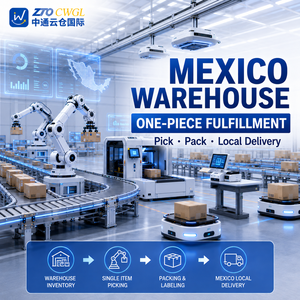
As illustrated by cross-border trade shifts toward Mexico, Eastern Europe, and Southeast Asia, manufacturers are no longer relying on single-leg deep-sea shipping. Modern RoRo procurement demands flexible hubs where sea legs seamlessly interface with bonded rail wagons and road haulage networks. This approach minimizes border holding times and maintains uninterrupted supply line integrity for lean automotive manufacturing assemblies.
With tightening international emission frameworks (such as IMO 2030/2050 directives and the EU Emissions Trading System), OEM cargo owners face strict Scope 3 greenhouse gas reporting requirements. Maritime partners must now provide real-time fuel burn verification, optimized slow-steaming voyage planning, and low-emission alternative-fuel RoRo vessel allocation to ensure strict ESG compliance.
Leveraging over three decades of engineering and global freight forwarding leadership, our comprehensive infrastructure delivers total accountability across the entire logistics lifecycle. Unlike transactional brokerage agents, we operate our own port-centric hubs, technical lashing divisions, and bonded storage facilities.
Fully compliant with ISO 9001:2015 Quality Management standards, BRCGS AA+ Storage and Distribution status, and fully accredited IATA cargo certification.
Direct infrastructure positioned adjacent to Felixstowe, Port of Ipswich, London Heathrow, and Liverpool, reducing drayage transit time and handling risk.
Complete customs clearance solutions, managing complex tariff codes, EORI registrations, temporary import reliefs (ATA carnets), and duty deferment schemes.
Technical guidance compiled by our senior maritime transport engineers and supply chain compliance specialists.
Roll-on/Roll-off (RoRo) utilizes internal vessel ramps and mechanical roll trailers (MAFI), allowing wheeled or tracked cargo to be driven or towed directly into covered vehicle decks. This completely eliminates vertical crane hoisting, dramatically lowering the risk of shear damage to lifting eyes, sling failure, or weather delays. In contrast, Lift-on/Lift-off (LoLo) relies on shore or vessel cranes, exposing cargo to higher acceleration forces and environmental elements on open decks.
Our transport engineers perform computer-assisted dynamic lashing calculations based on cargo mass, center of gravity, friction coefficients, and the vessel's metacentric height (GM). All lashing schemes adhere to IMO CSS Code Annex 13 standards, utilizing high-tensile Grade 80 lashing chains, custom pneumatic chocks, and anti-slip load pads to guarantee absolute cargo immobilization under high heave, surge, and roll conditions.
In addition to standard Commercial Invoices and Packing Lists, static project machinery requires accurate Technical Specification Sheets, ISPM 15 Phytosanitary certificates for timber dunnage, non-hazardous fuel de-vanning certifications (or IMO Dangerous Goods Declarations if containing remaining fluids/batteries), accurate HS Tariff code classifications, and a clear statement of origin to leverage bilateral trade preferences.
Yes. OEM components and infrastructure assemblies are regularly consolidated via multimodal networks. Sub-assemblies are secured on customized heavy-load pallets or roll units, transported via deep-sea RoRo or container vessels, processed through port-centric bonded warehousing, and dispatched via heavy haulage directly to installation jobsites with synchronized just-in-time (JIT) deliveries.
Bonded warehousing suspends the payment of import customs duties and value-added tax (VAT) until the goods are released into free domestic circulation. For global manufacturers and distributors, this means capital is preserved until final customer delivery is completed, or entirely waived if the cargo is subsequently re-exported to third-party countries.
Connect directly with our senior logistics planning desk to evaluate route feasibility, technical lashing design, and guaranteed global ocean space allocations.