

Reliable Dropshipping Fulfillment Partner Warehouse Storage
Pick, pack, and fast 5-8 day delivery servicing EU, US, CA, and AU destinations with integrated cloud inventory synching.
Explore our verified high-velocity air freight routes, robotic fulfillment stations, door-to-door (DDP) multimodal pipelines, and precision-engineered cross-border supply lines.
Pick, pack, and fast 5-8 day delivery servicing EU, US, CA, and AU destinations with integrated cloud inventory synching.

One-piece micro-parcel fulfillment node executing rapid order intake, sorting, bonded staging, and final-mile regional Mexican dispatch.
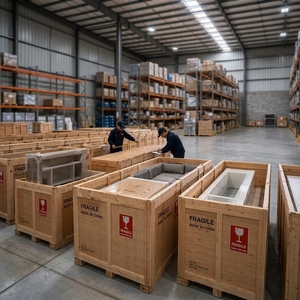
Project out-of-gauge carriage coupled with high-priority final mile UK ground fulfillment managed via DHL, UPS, and FedEx.
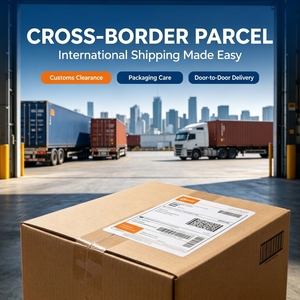
End-to-end bespoke international freight orchestration providing continuous origin-to-destination visibility and compliant customs handling.

High-efficiency maritime forwarding combined with direct terminal clearance into France, Germany, Italy, and UK hubs.
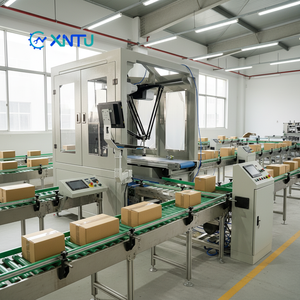
High-precision parallel robotic automation engineered for rapid carton packaging, palletizing, and metal/paper processing lines.

Precision component contract packing, heat-sealed plastic enclosures, retail blister processing, and export case labeling.

Fully compliant Delivered Duty Paid (DDP) logistics ensuring zero recipient customs friction across the European internal market.
Evaluating operational resilience, ULD container management, cold-chain integrity, and time-critical aviation infrastructure in modern global logistics.
In modern industrial commerce, procuring air cargo services from elite manufacturers and logistics consolidators represents an essential strategic vector. The modern global aviation freight matrix no longer operates purely as a fast-transit alternative to ocean freight; it functions as an essential fail-safe for lean manufacturing frameworks, just-in-time (JIT) production facilities, and ultra-high-velocity consumer technology distribution.
Tier-one global air logistics operators distinguish themselves through comprehensive access to chartered wide-body freighter capacities (such as Boeing 747-8F and 777F operations), dedicated slots within key sovereign gateways, and proprietary ground terminal handling infrastructure. For procurement executives managing high-consequence cargo—spanning pharmaceutical formulations to aerospace turbine components—the technical criteria for vetting top air cargo manufacturers focus squarely on regulatory certifications, cold-chain consistency, and automated EDI customs gateway integration.
| Logistics Capability Index | Legacy Freight Brokerage | Standard Airline Cargo Carrier | Tier-1 Factory Logistics Partner (HFS Standard) |
|---|---|---|---|
| Direct Port-Centric Warehousing | Outsourced third-party docks | Terminal apron storage only | Owned Free-Trade & Bonded Facilities |
| Regulatory Standards Audit | Variable / Non-standardized | IATA Part-Cargo only | ISO 9001:2015 & BRCGS AA+ Certified |
| Customs Declaration Velocity | 24 to 72-hour manual queues | Consignee-side processing | Direct In-House CDS / CHIEF Integration |
| Scope 3 Carbon Tracking | Not supported | Fuel index approximation | Verified Shipment-Level GHG Reporting |
Procurement directors and supply chain engineers face an evolving macro environment marked by volatile fuel indices, airspace geopolitical routing challenges, and tightening environmental mandates. The coming half-decade demands a pivot from reactive chartering to algorithmic capacity procurement. The primary structural evolutions include:
Predictive Block Space Allocation (BSA): Elite enterprises are shifting away from spot-market volatility by forging synthetic, algorithm-backed BSA agreements with IATA cargo agents. By linking factory ERP forecasting directly to carrier capacity systems, enterprises reduce deadhead exposures and secure volumetric priority during seasonal demand spikes.
Sustainable Aviation Fuel (SAF) Auditing & Scope 3 Compliance: With the implementation of the EU Corporate Sustainability Due Diligence Directive (CSDDD) and tightening global corporate reporting mandates, freight procurement protocols must substantiate emissions metrics. Tier-1 air freight forwarders now deliver verifiable carbon offsetting regimes and direct SAF bunkering credits, providing auditable emission statements directly linked to individual airway bills.
The convergence of robotics, AI-driven customs clearance engines, and specialized Unit Load Device (ULD) tracking systems is revolutionizing air handling safety and operational throughput:
Autonomous ULD Load Planning & Robotic Induction: Warehouse infrastructure adjacent to primary hub airports (such as London Heathrow, Frankfurt, and Hong Kong) is deploying high-speed parallel Delta robotics and automated guided vehicles (AGVs) to accelerate container build-up and break-down processes. This eliminates dock delays and mitigates cargo impact damage.
Active Cryogenic & Temperature-Controlled Packaging: High-value biological payloads and microelectronic components mandate uninterrupted environmental stability. Next-generation air freight protocols integrate real-time 5G IoT telemetry trackers providing continuous sensory reports on barometric variation, tilt, shock, temperature, and atmospheric pressure.
Over three decades of uncompromised supply chain execution, owned port-centric infrastructure, and audited compliance standards.
Fully verified under ISO 9001:2015 Quality Management standards and awarded an exceptional BRCGS AA+ rating for storage and distribution facilities, delivering complete operational peace of mind.
Positioned as one of the UK's premier independent IATA cargo agents with an active, dedicated ground hub at London Heathrow, guaranteeing rapid tarmac handover and preferred carrier allocations.
Strategic sites across Felixstowe, Ipswich Port One, Westbank, and Liverpool allow long-term duty and VAT suspension, preserving business cash flow on high-value imported inventory.
Validated carbon neutrality achieved five years ahead of the UK's 2030 targets. Warehouses utilize extensive solar power, electric handling equipment, and precise carbon footprint reporting.
Our dedicated fiscal compliance division eliminates clearance delays, manages EORI and preferential origin tariffs, and oversees complex controlled goods documentation directly.
Single-point-of-contact logistics managers who understand your product lines, manufacturing targets, and commercial priorities from initial collection to final client handover.
Direct answers to the regulatory, economic, and logistical questions enterprise supply directors evaluate prior to tender submission.
Air cargo utilizes the volumetric ratio established by IATA standards, defined typically as 1:6000 (1 cubic meter = 167 kg). Chargeable weight is determined by comparing the actual gross weight against the volumetric dimensional weight (Length x Width x Height in cm divided by 6,000). Whichever number is higher constitutes the chargeable weight billing metric. Our load optimization specialists work with shippers to engineer custom packaging and pallet configurations to prevent paying for empty space.
Air transport of hazardous items requires comprehensive alignment with the ICAO Technical Instructions and IATA Dangerous Goods Regulations (DGR). Essential documentation comprises a verified Shipper’s Declaration for Dangerous Goods (DGD), an accurate and updated Safety Data Sheet (SDS) reflecting correct UN Numbers, Proper Shipping Names, Hazard Classes, and Packing Group designations. Furthermore, physical shipments must utilize tested UN-certified specification packaging with approved warning labels and orientation indicators.
Bonded warehousing permits commercial importers to defer customs duty and Value Added Tax (VAT) until goods are released into domestic circulation. If goods arrive via high-speed air cargo and are staged for subsequent re-exportation to secondary international markets, UK import duty is completely mitigated. This significantly preserves operating capital and smooths cash-flow demands on expensive stock lines.
Pure air freight is typically reserved for cargo where transit time represents the primary commercial value driver (e.g., product launches, high-value electronics, manufacturing line-down situations). When inventory transit elasticity allows a 12 to 18-day window instead of 3 to 5 days, a hybrid Sea-Air program (such as maritime into Middle Eastern logistics hubs followed by expedited air transport into Europe) yields savings of up to 45% compared to direct air shipping while trimming 50% of the transit time compared to pure maritime shipping.
To avoid fluctuating baseline estimations, procurement departments must provide: exact cargo dimensions and piece counts; accurate gross and tare weights; the designated Incoterm (e.g., EXW, FOB, CIF, DDP); airport origin and destination postal codes; cargo readiness date; and commodity description including Harmonized Tariff Schedule (HS) classifications to establish duty applicability and terminal inspection protocols.
Consult directly with our IATA-accredited logistics engineers. Optimize transit lead times, integrate bonded warehousing solutions, and secure global space capacity.
Get Catalog