Precision-engineered reefers, multi-axle thermal trailers, and cold-chain intermodal transit networks designed to eliminate microbial deterioration, moisture migration, and active temperature drift.
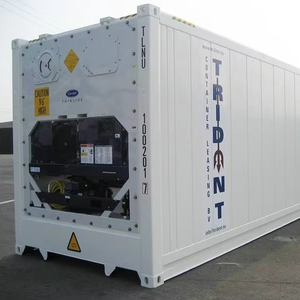
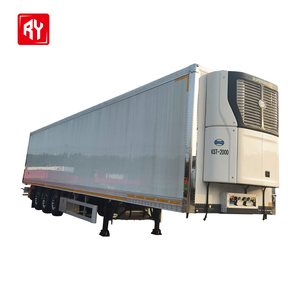
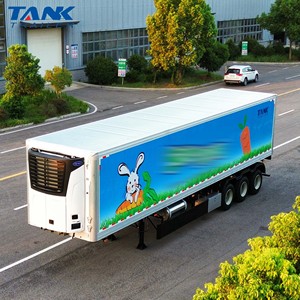
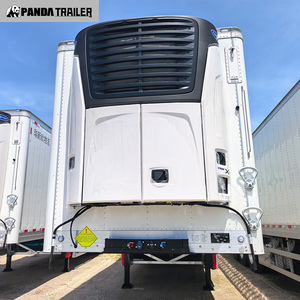
The transport of temperature-sensitive and perishable cargo—spanning fresh horticulture, frozen biologics, active pharmaceutical ingredients (APIs), vaccines, and protein commodities—is governed by thermodynamics, microbial latency thresholds, and structural insulation integrity. Within global cold-chain logistics, cargo spoilage rarely originates from systemic refrigeration plant mechanical failure; rather, it manifests through insidious microscopic thermal bridging, air infiltration via compromised door seals, thermal layering caused by inadequate static backpressure in floor ducting, and erratic defrost-cycle telemetry.
Selecting an Tier-1 OEM perishable cargo transport manufacturer demands an evaluation beyond surface-level tare weight and aesthetic FRP wall cladding. Procurement engineers must audit thermal transmittance values ($K$-values, ideally maintaining $\le 0.35\text{ W/m}^2\text{K}$), structural shear strengths of vacuum-bonded polyurethane (PU) sandwich panels, cyclically tested multi-lip epichlorohydrin elastomer door gaskets, and onboard compressor coefficient of performance (COP) metrics under severe ambient temperature deltas (+45°C down to -25°C).
Modern production facilities specialize in automated continuous PU high-pressure injection molding alongside vacuum-assisted resin transfer processes (VARTM). By executing zero-metal-contact construction between the inner and outer composite shells, leading factories eradicate direct conductive heat transfer paths. This thermal decoupling safeguards the structural integrity of the reefer body against cyclic atmospheric freezing and thawing cycles, which otherwise cause interior skin delamination and accelerated moisture uptake in aged insulation cores.
| Manufacturer / Cluster | Primary Equipment Specialization | Insulation & Wall Technology | Refrigeration Integration | ATP / BRCGS Status |
|---|---|---|---|---|
| 1. CIMC Vehicles (Group) | ISO Intermodal Reefers, 40ft-53ft Road Trailers | K-Pro Sandwich Panels (VARTM Polyurethane) | Carrier Transicold, Thermo King, Daikin | ATP Class FRC / BRCGS |
| 2. Schmitz Cargobull AG | Ferroplast Box Semi-Trailers, Pharma Reefers | FERROPLAST® Metal-Faced Polyurethane | Schmitz Cargobull S.CU In-House Inverter | PharmaNet / DIN EN 12642 |
| 3. Great Dane Trailers | Heavy-Duty Highway Reefers, Multi-Temp Vans | ThermoGuard Antimicrobial Composite Liner | Carrier Vector / Thermo King Precedent | FSMA Rule Compliant |
| 4. Utility Trailer Mfg. Co. | 3000R Series Ultra-Light Refrigerated Vans | Foamed-in-Place High-Density Modular Polyurethane | Thermo King Whisper Pro / Dual-Temp | EPA SmartWay Verified |
| 5. Krone Commercial Vehicle | Cool Liner Duoplex Steel Cold-Storage Trailers | Continuous Steel Outer Layer with PU Core | Carrier Vector 1550 / TK Advancer A-500 | ATP Certified Class FRC |
| 6. Singamas Container Holdings | Custom Specialized Cold-Storage Containers & Reefers | Cortec Composite Cladding, Stainless Food Grade | Daikin LXE Series, Carrier ThinLINE | ISO 1496-2 Accredited |
| 7. Lamberet SAS | Urban Distribution & Long-Haul Semi-Trailers | Multicomposite CX Vacuum-Injected Panels | Kerstner Electric / Thermo King Undermount | HACCP & ATP Certified |
| 8. Chereau SAS | Heavy Hydrogen Refrigerated Transport & Reefers | Inogel Aero-Gel Enhanced Polyurethane Foam | Cryo/Electric Multitemperature Compressors | ATP FRC -20°C Certified |
| 9. RUIYUAN Vehicle Industrial | 3-Axle 80-Ton Heavy-Duty Frozen Semi-Trailers | Epoxy Gel-Coat GRP with High-Tack PU Injection | Integrated Genset High-Output R404A/R452A | ISO 9001 / GCC Conformity |
| 10. Hemisphere Logistics Intermodal | Integrated End-to-End Multimodal Cold Chains | Port-Centric Bonded Automated Controlled Reefers | Dedicated IATA Air / Deep-Sea Multi-Temp Marine | BRCGS AA+ Storage / IATA |
Global regulatory tightening, electrification mandates, and deep-tier supplier audits are transforming cold chain equipment procurement from capital expenditure purchases into long-term lifecycle reliability partnerships.
Legacy mechanical diesel-driven refrigeration plants are being replaced by high-voltage electric vector units and axle-mounted kinetic recovery generators (KERS). Fleet operators achieve zero localized emissions at distribution terminals while lowering maintenance overheads by up to 34%.
Under tightening F-Gas directives and Kigali Amendment phases, manufacturers are shifting rapidly away from R-404A toward R-452A and natural refrigerants like R-744 (CO₂ transcritical loops) and R-290 (propane), drastically curbing greenhouse warming potential during lifecycle operation.
Next-generation reefers incorporate independent microprocessor boards running predictive defrost algorithms. Instead of timing-based defrost cycles that induce thermal cycling, AI models evaluate evaporator coil delta pressures to defrost solely when frost density requires it.
Demand for mixed-payload distribution has made longitudinal and transverse movable bulkhead systems standard. Modern reefer trailers feature automated multi-evaporator ceilings that independently sustain frozen (-20°C), chilled (+4°C), and ambient (+18°C) compartments simultaneously.
To reduce tare weight while increasing internal volumetric capacity, premier factories integrate aerogel-infused polyurethane cores. This achieves superior structural rigidity and insulation efficiency with wall panel thicknesses reduced from 85mm to just 45mm.
Procuring entities now mandate independent unannounced inspection ratings, like BRCGS AA+, to assure compliance from factory gate to destination. Cold-chain visibility systems require verifiable cryptographic data logs for customs entry and insurance underwriting.
Combining world-class manufacturing equipment with over 30 years of end-to-end UK port-centric warehousing, customs compliance, and dedicated multimodal freight forwarding.
Operating strategic terminals adjacent to the UK’s premier container hub at Felixstowe, Port One, the Port of Ipswich, London Heathrow, and Liverpool. Cargo moves directly from berth into climate-controlled secure storage without demurrage risk.
Achieving the highest standard for unannounced hygiene, storage, and distribution audits. We maintain pharmaceutical and food-grade cold-chain storage with active multi-point calibration and secondary backup generator grids.
Direct CDS electronic customs links with HMRC. Our bonded warehousing lets international traders suspend import duty and VAT on high-value cold-chain stock until release, optimizing working capital and cross-border cash flow.
Certified carbon-neutral operations five years ahead of UK governmental targets. Our facilities leverage industrial rooftop solar installations, electric handling plant equipment, and accurate Scope 3 emissions reporting for corporate ESG compliance.
Technical guidance and compliance answers for supply chain directors, fleet managers, and procurement officers.
Under the international ATP Agreement (Agreement on the International Carriage of Perishable Foodstuffs), a transport unit certified as Class FRC (heavily insulated with mechanical refrigeration capable of maintaining internal temperatures between -20°C and +12°C at +30°C external ambient) must possess an overall heat transfer coefficient ($K$-value) equal to or less than $0.40\text{ W/m}^2\text{K}$. Leading engineering manufacturers build to an internal factory tolerance of $\le 0.35\text{ W/m}^2\text{K}$ to account for minor insulation aging and seal wear over an 8-to-12 year operational lifespan.
Bonded cold storage allows imported perishable and temperature-controlled commodities to enter the destination territory with customs import duty and Value Added Tax (VAT) suspended. Rather than paying substantial fiscal tariffs immediately at the container discharge terminal, importers can store goods in temperature-validated facilities and clear smaller consignment batches on demand. In the event of re-exportation or regional European redistribution, domestic customs duties are fully averted, drastically optimizing operational working capital.
Airflow stratification represents the leading cause of localized spoilage in bulk perishable transport. Equipment must be configured with an extruded aluminum duct-type T-floor capable of supporting minimum 10,000 kg forklift axle ratings while sustaining continuous return-air channels beneath pallets. Furthermore, the installation of ceiling-mounted vinyl or composite air chute delivery ducts guarantees that conditioned supply air is carried to the rear door threshold before circulating back through the cargo load, mitigating stagnant boundary layer pockets.
Temperature-controlled air logistics for pharmaceuticals mandates compliance with the IATA Perishable Cargo Regulations (PCR) and Temperature Control Regulations (TCR), verified by CEIV Pharma standards. Essential documentation includes the Air Waybill (AWB) clearly bearing the standardized IATA Time and Temperature Sensitive Label, an active or passive packaging validation protocol (such as ISTA 7D/7E thermal mapping test certificates), a calibrated NIST-traceable continuous temperature data logger certificate, and complete Good Distribution Practice (GDP) carrier chain-of-custody transfer records.
Multi-temperature vehicles use lightweight movable insulated transverse or longitudinal bulkhead walls fitted with heavy-duty perimeter compression seals. The primary nose-mount refrigeration unit powers a front compartment (typically frozen down to -20°C), while one or more secondary slimline ceiling-recessed evaporators circulate refrigerant to the rear compartment (holding chilled +2°C to +4°C or dry ambient). Each evaporator is tied to independent digital thermostat sensors and variable-speed pulse fans regulated by the central telematics control box.
