

Combining proprietary cross-border compliance with specialized handling, multi-modal transport infrastructure, and high-frequency delivery capabilities worldwide.
In contemporary cross-border trade, customs compliance is no longer a clerical after-thought—it represents the critical operational friction point that separates agile multinational enterprises from those plagued by demurrage penalties, cargo seizures, and crippling audits. As fiscal authorities transition toward algorithmic surveillance architectures (including the UK’s CDS, the EU’s ICS2 Release 3, and the US CBP Automated Commercial Environment), real-time data integrity forms the prerequisite for frictionless market access. A premier customs compliance services supplier and exporter must operate at the convergence of legal trade jurisprudence, advanced tariff engineering, and real-world port terminal logistics.
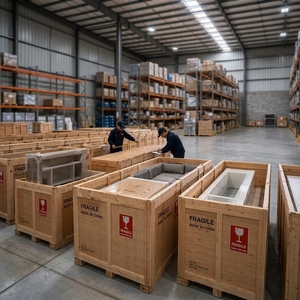
Achieving compliance integrity demands profound subject-matter command across Harmonized System (HS) multi-level classification, rules of non-preferential and preferential origin determination, custom valuation methodologies (Transaction Value vs. Computed Valuation), and statutory duty suspension regimens. At our port-centric hubs in Felixstowe, Ipswich, and London Heathrow, our in-house compliance brokers analyze physical bills of lading, packing manifests, and chemical/technical schematics well in advance of vessel berthing or flight touchdown, proactively mitigating clearance impediments before they manifest at border control posts.
Our audited framework eliminates the standard industry reliance on fragmented third-party subcontractors, executing all customs declarations, warehousing, and drayage under one roof.
We maintain unannounced-inspection AA+ certification under BRCGS Storage and Distribution alongside ISO 9001:2015 standards, validating uncompromising storage integrity for food, consumer pharmaceuticals, and precision technology.
Strategically situated facilities at Felixstowe, Port One, the Port of Ipswich, and London Heathrow minimize internal transit miles, allowing rapid devanning, bonded storage, and instant customs release into free circulation.
Consistently ranked among the UK's leading independent IATA air cargo brokers, our direct Heathrow operations expedite time-critical pharmaceutical logistics, emergency industrial parts, and temperature-governed LCL consolidations.
Duty and import VAT suspension via our approved customs warehouses enables global traders to preserve liquidity, process re-exports without local tax liability, and defer charges until exact commercial release cycles.
Recognized as an environmental pacesetter achieving operational carbon neutrality 5 years ahead of national 2030 objectives, delivering granular greenhouse gas emissions telemetry on each commercial bill of lading.
Eliminate buck-passing between carriers, freight handlers, and brokers. A dedicated compliance director oversees your accounts, integrating cargo movements directly with tax-clearing administrative portals.
Enterprise procurement executives must navigate a shifting regulatory topography. The following structural shifts will dictate supplier selection across the 2025–2030 trade cycles.
Customs agencies are phasing out reactive post-clearance reviews in favor of synchronous telemetry. Importers must procure compliance partners whose enterprise systems ingest electronic commercial invoices directly via RESTful APIs, eliminating human re-keying discrepancies that trigger customs holds.
With the gradual enforcement of CBAM across European ports and mirroring UK carbon mechanisms, customs filings must legally encompass certified embedded emissions metrics. Sourcing partners failing to supply verified lifecycle CO2 declarations will expose buyers to prohibitive supplementary customs levies.
Procurement teams are moving away from Just-In-Time (JIT) direct imports toward resilient 'Port-Centric Bonded Buffering'. Storing high-turnover inventory within customs-bonded warehouses adjacent to deep-sea container terminals shields corporate cash reserves from upfront tariff draining while hedging against maritime canal disruptions.
The global customs ecosystem is undergoing an unprecedented technological metamorphosis. Driven by World Customs Organization (WCO) standards, customs administrations are deploying automated neural networks to evaluate commercial invoice descriptions against millions of past tariff declarations. Minor lexical ambiguities (such as identifying precision electronic equipment as "computer hardware") immediately generate red-flag indicators, elevating an importer's institutional risk rating.
In response, modern customs compliance exporters are deploying Cognitive Trade Documentation Systems. These systems leverage optical character recognition (OCR) paired with natural language processing to audit commercial documentation against live tariff schedules, export restriction lists (such as dual-use goods under the Wassenaar Arrangement), and multilateral trade sanctions prior to border transmission. Furthermore, the integration of distributed ledger protocols ensures tamper-proof Chain of Custody tracking, satisfying Tier-1 Authorised Economic Operator (AEO-F) criteria and unlocking trusted green-lane clearance status across the world's primary trading junctions.
Addressing critical regulatory, fiscal, and logistical concerns encountered by procurement directors, global supply chain heads, and foreign trade managers.
Initiate direct communication with our senior customs compliance directors to review tariff schedules, establish bonded storage facilities, or audit your ongoing supply chain lines.
Contact Us