
Precision-Engineered Freight Consolidation, Intermodal Integrity, and Resilient Global Supply Chain Infrastructure
Explore our core infrastructure assets, refrigerated intermodal reefers, cross-border customs solutions, and port-centric distribution hardware configured for modern Less Than Truckload (LTL) and LCL ecosystems.

Combining over three decades of port-centric UK infrastructure, audited international compliance frameworks, and multimodal coordination under a singular operational banner.
Our operations are independently certified under ISO 9001:2015 Quality Management and hold the unannounced BRCGS Storage & Distribution AA+ credential. Furthermore, as an established IATA Accredited Cargo , critical aerospace, cold-chain, and high-value cargo adhere to verified global security protocols.
With major UK operating facilities stationed across Felixstowe, Port One (Suffolk), Westbank Ipswich, London Heathrow, and Liverpool, we drastically reduce domestic drayage. Inbound Less Than Container Load (LCL) and LTL movements are stripped, palletized, bonded, and cross-docked immediately off the quay.
Achieving carbon neutrality five years ahead of the national 2030 target, we equip B2B shippers with real-time carbon emissions accounting across line-haul movements. Combining solar-powered distribution hubs with smart consolidation algorithms ensures maximum trailer cube utilization and measurable ESG gains.
A masterclass for global supply chain leaders, procurement officers, and enterprise freight dispatchers on optimizing partial-load efficiency, freight class metrics, and intermodal transitions.
In high-velocity supply chain management, Less Than Truckload (LTL) freight shipping operates as the vital connective tissue between fragmented regional assembly lines and final consumer markets. Unlike Full Truckload (FTL) transport, where a single enterprise secures exclusive trailer space, LTL utilizes hub-and-spoke logistics models. Consignments from multiple shippers share line-haul trailers, demanding rigorous computational balance between volumetric footprint (CBM) and freight density (pounds per cubic foot).
Modern enterprise suppliers must navigate the nuances of the National Motor Freight Classification (NMFC) standard, which stratifies commodities into 18 distinct freight classes ranging from Class 50 (dense, durable, low-liability items such as steel hardware) to Class 500 (low-density, high-value, or exceptionally fragile cargo). Misdeclaring freight class or failing to optimize palletization dimensions invariably creates demurrage penalties, re-weigh surcharges, and inter-terminal delays. By working with an infrastructure-equipped carrier possessing port-centric bonded warehousing, enterprise shippers can dynamically re-box, consolidate, and palletize breakbulk consignments to lock in optimum density ratings prior to terminal line-haul entry.
Carriers enforce linear-foot thresholds (often spanning 10–14 feet) where LTL rates morph into Spot-Volume or Partial-Truckload quotes. Algorithmic pre-routing avoids punitive cubic-capacity charges.
Each terminal handling event escalates freight claim risks. Premium LTL forwarders leverage localized port hubs to devan ocean boxes directly into designated line-haul cross-docks, eliminating intermediate transfer touches.
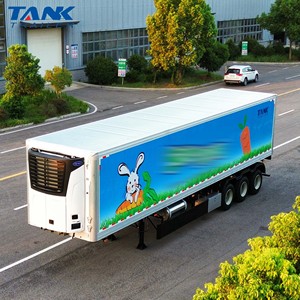
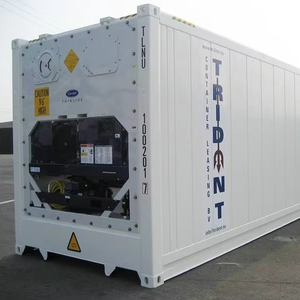
Operating multi-temp reefer trailers with multi-zone digital partitions allows chilled (2°C to 8°C) and deep frozen (-18°C) partial freights to co-load efficiently without compromising HACCP or BRCGS chain-of-custody protocols.
Decoupling transit lead times and landed-cost structures demands a thorough evaluation of intermodal options. The table below delineates the core operational criteria and technical thresholds required to choose between primary consolidation vectors when sourcing across key international lanes (e.g., Far East to UK, North American interstate corridors, and Pan-European DDP routes).
| Freight Methodology | Volume / Weight Range | Typical Transit Window | Terminal Touch Points | Primary Risk Factors | Procurement Strategy |
|---|---|---|---|---|---|
| Ocean LCL (Less than Container) | 1.0 to 15.0 CBM (< 10,000 kg) | 30 – 45 Days (Trans-Eurasian) | High (CFS Origin & Port CFS Devanning) | Port congestion, devanning dwell times, demurrage | Ideal for non-perishable planned stock; requires early ISF and Customs filing. |
| Hub-and-Spoke Road LTL | 1 to 6 Pallets (150 – 4,500 kg) | 1 – 5 Business Days (Intra-Regional) | Moderate (Origin Hub, Break-Bulk, Delivery) | Terminal re-handling damage, missed delivery appointments | Specify lift-gate, residential delivery, or inside drop-off accessorials in advance. |
| Consolidated Air Freight | 45 to 1,200 kg (Chargeable Weight) | 3 – 7 Days (Global Airport-to-Airport) | Low-Moderate (IATA Master ULD Consolidation) | Volumetric dimensional weight ratio (1:6000), peak surcharges | Crucial for high-turn automotive spares, electronics, and clinical pharmaceutical runs. |
| Dedicated Line-Haul Partial (PTL) | 7 to 18 Pallets (3,500 – 11,000 kg) | Direct Line Transit (No Hub Stop) | Minimal (Loaded at Origin, Dispatched Direct) | Inflexible cancellation terms, strict dock appointment times | Bypasses intermediate LTL cross-docks; drastically cuts cargo claim likelihood. |
Enterprise procurement departments are transitioning away from static annual general rate adjustments (GRIs) toward dynamic API-driven spot-bidding architectures. As shippers integrate TMS (Transportation Management Systems) with suppliers' WMS nodes, real-time cubic dimension scanners evaluate precise skid geometry at origin docks, generating immutable cryptographically-verified packing records.
Furthermore, international carbon border adjustment mechanisms (such as the EU CBAM and impending UK environmental disclosures) penalize empty linear trailer space. Less Than Truckload consolidation hubs are rapidly deploying 3D load optimization algorithms to eliminate "air shipping." In parallel, modern reefers equipped with IoT cellular telematics deliver second-by-second geo-fenced temperature, humidity, and vibration feeds directly to the cloud. Shippers no longer simply buy transportation; they acquire continuous, verifiable integrity throughout the goods' journey.
In-depth responses covering freight classification, bonded warehousing, customs protocols, and cold-chain compliance.
LTL carriers calculate invoice rates based on whichever is greater: the actual gross weight or the volumetric dimensional weight. The standard LTL density baseline is commonly set between 10 to 12 pounds per cubic foot (PCF). To establish PCF, the cubic volume of the packaged skid (Length × Width × Height in inches divided by 1,728) is divided into the shipment's total gross weight. When low-density cargo (such as hollow industrial extrusions or insulation materials) occupies disproportionate trailer deck space, it is rated at a higher freight class (e.g., Class 250 through Class 500), triggering higher tariffs per hundredweight (CWT). Integrating precision case-making and nesting at the warehouse minimizes dead volume, preserving higher operational margins.
Under a verified bonded warehousing regime (such as Hemisphere's specialized UK customs hubs), import customs tariffs, excise taxes, and Value Added Tax (VAT) remain legally suspended while cargo rests in storage. Instead of incurring massive upfront tax outlays when ocean consolidation containers land at port, businesses can store inventory in bond indefinitely. Duty and VAT are settled incrementally only when specific LTL consignments are cleared for domestic release and dispatch. If the goods are re-consigned or transhipped to continental Europe or non-domestic entities, UK import duties are avoided entirely, directly optimizing cash flow cycles for slow-moving or capital-intensive industrial products.
Accessorial charges represent carrier billing surcharges for services extending beyond standard dock-to-dock transit. Common accessorials include: Lift-gate service (required when pickup or delivery facilities lack an elevated loading bay), Inside Delivery (moving consignments beyond the exterior threshold of the facility), Residential / Limited Access delivery (navigating restricted zones, construction sites, or university campuses), Pre-appointment notification fees, and Detention fees (charged when driver dwell time exceeds the standard 15–30 minute complimentary window). Omitting these prerequisites at the time of initial rate agreement triggers automated re-billing penalties and freight delays.
Hazardous cargo consolidation requires compliance with ADR (European road regulations), IMDG (ocean freight), and IATA (air freight) codes. Consignors must provide a fully executed Material Safety Data Sheet (MSDS) alongside a verified Shipper's Declaration for gerous Goods, displaying the four-digit UN number, proper shipping name, hazard class, and packing group (PG I, II, or III). Within shared LTL trailers, strict segregation tables govern hazardous compatibility (e.g., Class 3 flammable liquids cannot sit adjacent to Class 5.1 oxidizers). Certified forwarders handle UN-approved packaging, hazardous labeling, and route licensing to guarantee statutory transport compliance.
The tipping point for converting an ocean LCL shipment into a dedicated Full Container Load (FCL 20ft box) generally settles between 13 to 15 cubic meters (CBM), depending on the specific trade corridor. Beyond this threshold, the combined costs of LCL handling, container freight station (CFS) devanning, and consolidation fees surpass the flat rate of a dedicated ocean container. In road haulage, consignments occupying more than 6 standard pallet spaces (roughly 12 linear feet of trailer space or 4,500+ kg) frequently yield lower landed costs and lower handling-damage risk when converted into a Partial Truckload (PTL) or dedicated dedicated trailer.
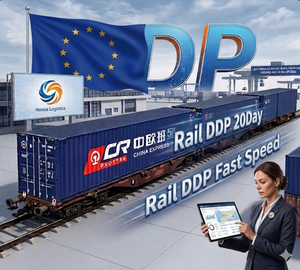
Delivered Duty Paid (DDP) places full fiscal and operational burden on the seller. Executing this without delays requires: an authentic Commercial Invoice (stipulating accurate 8- to 10-digit HS/Commodity codes, currency, terms of sale, and explicit valuation breakdown), a detailed Packing List specifying individual package dimensions and weights, the exporter and importer EORI numbers, verified Certificates of Origin (to capitalize on preferential trade agreements), and proof of compliance with regional environmental or technical standards (such as UKCA or CE marks). In-house customs brokers audit paperwork pre-departure to ensure zero dwell time upon border arrival.
Connect directly with our senior freight consolidation team. From customized spot quotes and project consolidation to comprehensive bonded warehouse fulfillment, we align your global cargo operations with audited industry standards.
Contact Us