
Explore our industrial-grade, certified transport systems, container options, and integrated supply chain services tailored for complex transit between manufacturing hubs and Austrian industrial centers.

A deep engineering overview of structural load securing, dynamic deceleration forces, and legal conformity according to EN 12195, VDI 2700, and the European Machinery Directive (2006/42/EC).
Any specialized heavy lifting gear, spreader beam, spreader frame, or bespoke trunnion manufactured for transit must carry unambiguous CE marking. We deliver comprehensive technical construction files (TCF), risk assessments under EN ISO 12100, and third-party notified body verifications required by Austrian safety authorities (AUVA).
Austria’s alpine topography enforces rigorous cargo securing audits. Under EN 12195-1, securing systems must resist dynamic inertia forces: 0.8g forward deceleration, 0.5g lateral force, and 0.5g backward force. Our engineered rigging calculations prevent cargo shifting on severe gradients along the Brenner and Tauern corridors.
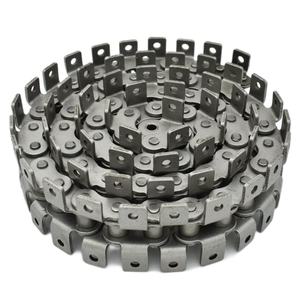
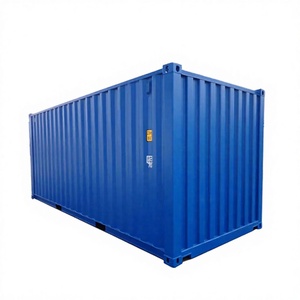
Every certified lashing point, ISO high-cube module, heavy roller chain, and welded bracket is produced from audited structural steels (S355J2+N or higher). Full mill test certificates (EN 10204 3.1) are archived and linked via digital manifests for frictionless customs audits by Austrian Federal Authorities.
| Regulatory Framework | Austrian Operational Scope | Required Verification / Documentation | Compliance Status |
|---|---|---|---|
| EN 12195-1:2010 | Load restraint systems on road vehicles (Heavy haulage via A1, A10, A12) | Dynamic lashing calculations, friction coefficients (μ) verified | 100% Certified |
| Directive 2006/42/EC | Lifting equipment, custom spreader beams, mechanical handling units | Declaration of Conformity (DoC), CE Plate, Technical Dossier | Factory Audited |
| ASFiNAG Special Transit | Heavy transport exceeding legal dimensions (>40t, width >2.55m) | Permits under §101 KFG (Kraftfahrgesetz) & Bridge Load Calculations | Standard Procedure |
| ISPM 15 Standard | Export solid wood packaging, custom crating, heavy machinery skids | Heat treatment (HT) stamps, debarked wood compliance certificate | Verified |
Alpine Transit Note: Transiting through Austria imposes some of the most rigorous axel-load limitations in the European Union. Road operators must coordinate with ASFiNAG regarding specific bridge loading formulas and seasonal alpine bans, necessitating advanced multi-axle modular transporters (THP/SL configurations) calculated to millimeter precision.
Delivering turn-key, project-specific cargo solutions directly tailored to Austria’s world-leading specialized manufacturing, hydropower, and high-tech sectors.
The epicenter of Austria's mechanical engineering, steelworks, and automotive clusters. Specialized transit includes large-scale stamping machines, industrial furnace segments, and heavy casting assemblies requiring direct multimodal transport via the Danube Port of Linz (Ennshafen) and heavy rail connections.
Austria’s alpine terrain drives global leadership in pumped-storage hydropower. Moving multi-ton Francis and Pelton runner turbines, generator rotors, and heavy penstocks into narrow mountain valleys requires engineered route clearance, specialized police escorts, and custom hydraulic platform trailers.
Home to the ACstyria automotive cluster. The rapid transition toward electrification demands high-volume, precision delivery of assembly lines, giant robotic cells, battery pack manufacturing presses, and industrial conveyor chains under rigorous JIT/JIS constraints.
Modernization of pharmaceutical production lines, renewable district heating turbines, and chemical plant expansion. Demands seamless connection from international maritime hubs to local freight consolidation centers with clean, carbon-neutral inland distribution.
Understanding the intersection of environmental decarbonization mandates, alpine transit restrictions, and multimodal network shifts across Central Europe.
Due to stringent Austrian sectoral driving bans (Sektorales Fahrverbot) in the Inntal corridor (A12 motorway), industrial procurement is shifting heavily toward RoLa (Rollende Landstraße) rail networks and barge consolidation via the Danube waterway. Utilizing Enns and Vienna ports significantly mitigates road transport restrictions for heavy project units.
The commissioning of the Koralm railway and Semmering Base Tunnel will dramatically reshape freight flow across southern Austria. Heavy breakbulk movements entering through southern European gateways (Koper, Trieste) now reach Carinthia and Styria faster, reducing dependency on congested northern ports.
Austrian enterprises adhere to rigorous Corporate Sustainability Reporting Directive (CSRD) obligations. Shippers are required to supply verified per-shipment carbon calculations. Our certified green warehousing and advanced carbon reporting supply the exact data audited enterprises in Austria require for sustainability audits.
Combining proprietary infrastructure, verified quality credentials, and multi-sector engineering capability into single-source project execution.
For more than three decades, our organization has managed out-of-gauge, heavy-lift, and critical multimodal consignments. From massive infrastructure pylon projects (Hinkley Point C) to metro rail track assemblies and industrial manufacturing plants, our solutions are engineered without leaving anything to chance.
We maintain full ISO 9001:2015 Quality Management standards alongside the prestigious BRCGS AA+ rating—the highest achievable benchmark for warehousing, distribution, and storage. Our accredited operations ensure rigorous governance across all handovers.
Our strategically situated facilities provide immediate deepwater access, extensive container devanning, duty-suspension bonded storage, and dedicated export packing workshops adhering to ISPM 15 standards for maximum transit protection.
Expert answers addressing the technical, regulatory, and procedural questions commonly encountered by procurement managers and logistics directors shipping into Austria.
Connect with our technical routing engineers and customs compliance directors. We review your blueprints, load securing requirements, and transit routes to deliver a turn-key quotation designed for the Austrian market.