
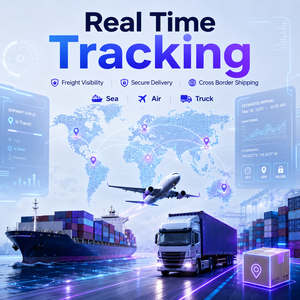
Seamlessly consolidate industrial, electronic, automotive, and commercial parcels across global transit hubs with verifiable documentation, DDP capabilities, and certified safety handling.
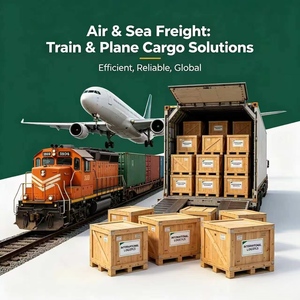
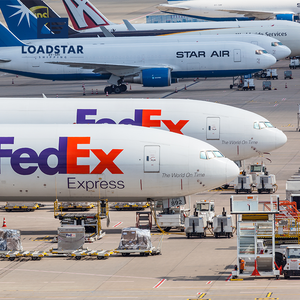
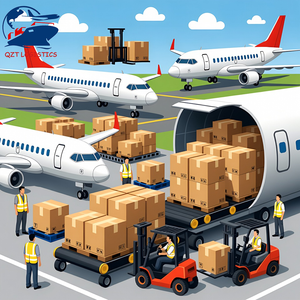
Navigating Less-than-Container Load (LCL) consolidation into Singapore requires strict synchronicity with both international engineering standards and local statutory frameworks. Because Singapore serves as the premier maritime transshipment node across the Malacca Straits, cargo landing at the Jurong Port, Pasir Panjang, or Keppel Terminals often transitions directly into advanced domestic fabrication lines, pharmaceutical cleanrooms, or regional bonded hubs (Free Trade Zones - FTZs).
When importing industrial equipment, automated assembly cells, precision instrumentation, or commercial electrical assemblies into Singapore, engineering compliance is governed by stringent declarations. While Singapore utilizes Singapore Standards (SS) and adopts international ISO/IEC criteria, industrial procurements heavily mandate CE Certification (Conformité Européenne) covering the Machinery Directive (2006/42/EC), Low Voltage Directive (LVD 2014/35/EU), and Electromagnetic Compatibility Directive (EMC 2014/30/EU). This certification serves as absolute empirical evidence of structural integrity, risk analysis, and operational safety.
| Consolidation Parameter | Standard Non-Regulated LCL | CE Certified High-Spec LCL Consolidation | Singapore FTZ / TradeNet Impact |
|---|---|---|---|
| Crating & Dunnage Protocols | Generic mixed-pallet stacking, non-standard timber | ISPM-15 heat-treated timber, CNC bespoke internal blocking, zero cross-contamination barrier | Zero quarantine hold times at PSA terminals; instant NParks clearance. |
| Documentation & Declarations | Basic Commercial Invoice & Ocean Bill of Lading | Full EU Declaration of Conformity (DoC), Technical Files, Harmonized HS Validation | Facilitates flawless Singapore Customs & Enterprise Singapore regulatory approvals. |
| Cross-Dock Cargo Cohabitation | Unregulated co-loading with liquids or reactive chemicals | Strict segregation matrix avoiding electromagnetic, chemical, or volatile exposure to delicate components | Guarantees zero micro-damage to precision aerospace and semiconductor machinery. |
| Tax & Duty Handling | Ex-Works / CIF uncoordinated customs handoff | Integrated TradeNet declaration, GST suspension via bonded FTZ warehousing | Optimizes corporate working capital and prevents double taxation on re-exports. |
Our consolidated CFS (Container Freight Station) networks in key international distribution centres assemble, pack, and secure disparate consignments under strict segregation rubrics. This ensures sensitive European-certified machinery, medical devices, and automated technologies are never subjected to cargo taint, moisture migration, or improper load balance during oceanic carriage.
Customized, sector-specific LCL consolidation engineering deployed into Singapore's industrial corridors and high-tech campuses.
Continuous LCL delivery of CE-certified cleanroom sensors, stainless fluid control valves, and diagnostic instrumentation. Direct customs clearing via TradeNet with specialized white-glove transport directly to Tuas Biomedical Park cleanrooms.
Aircraft On Ground (AOG) and maintenance scheduled parts require certified air-sea multimodal combinations. We consolidate structural fasteners and avionics possessing CE / EN9120 quality documentation directly to hangars at Seletar Aerospace Park.
Out-of-gauge valves, spark-resistant CE ATEX-certified tools, and heavy pumps consol-shipped for shipyard overhauls. Bonded storage allows prompt dispatch onto maritime repair berths across Jurong Island with zero unverified demurrage.
How the green transition, port automation, and digital customs transformation govern modern consolidated imports.
As PSA migrates container handling to the fully automated Tuas Port, paperless documentation via electronic Bills of Lading (eBL) anchored on TradeTrust frameworks has become essential. Our consolidation streams interface programmatically with local digital customs manifolds, reducing dwell times to under 12 hours.
Singaporean corporations are subject to intensified SGX climate disclosures. Our LCL routes utilize audited carbon-offset containerization, solar-powered cross-docking warehouses, and transparent ISO-verified emissions reporting per cubic metre (CBM), giving importers verified Scope 3 data.
International OEMs are increasingly using Singapore not just as an end-market, but as a zero-GST redistribution staging ground for ASEAN. Consolidated LCL cargo is de-vanned in bonded FTZ warehouses, matched with CE documentation, and re-exported seamlessly to Malaysia, Indonesia, or Vietnam.
Operating across global trading hubs, our forwarding and contract logistics structure provides end-to-end accountability. With over thirty years of audited domain experience, we do not simply act as freight intermediaries; we manage owned port-centric warehouses, provide in-house customs clearance, and execute bespoke export packing adhering strictly to BS and ISPM-15 standards.
Operate under strict ISO 9001:2015 Quality Management Systems and BRCGS Storage & Distribution AA+ accreditations. Every CE-marked cargo consolidated through our terminals maintains unbroken chain-of-custody documentation.
Extensive warehousing complexes situated immediately adjacent to premier international ports and major air terminals, preventing multiple cartage handoffs, cutting transit wear, and driving down overall landed shipping costs.
Certified Carbon Neutral operations five years ahead of national benchmarks. We engineer sustainable consolidating pathways, electric CFS handling, and low-emissions vessel slot procurement for future-facing procurement leaders.
Direct, actionable answers addressing TradeNet, GST handling, CE marks, and LCL cost structures.
While Singapore's primary statutory authorities—such as Enterprise Singapore (Safety Authority) and the Ministry of Manpower (MOM)—enforce Singapore Standards (SS) and IEC equivalents, a European CE mark accompanied by a valid Declaration of Conformity (DoC) and test reports is globally acknowledged. It expedites equipment safety approval, proving conformity with the Machinery Directive, LVD, and EMC. In the absence of a localized standard, Singapore regulators routinely accept CE documentation as primary compliance evidence during import verification.
Singapore levies a 9% GST on all imported commercial goods. When shipping through our CE-certified LCL streams, cargo destined for immediate re-export or regional storage can be directly admitted into a Licensed or Bonded Warehouse in Singapore's Free Trade Zones (FTZ), such as those at Pasir Panjang or Keppel. Under Major Exporter Scheme (MES) or zero-GST warehouse structures, payment of GST is suspended, significantly maximizing operating liquidity and cash flow for engineering firms and regional distributors.
Ocean LCL operates on a Weight/Measurement (W/M) pricing ratio. The standard formula equates 1 Cubic Metre (CBM) to 1,000 kilograms (1 Metric Tonne). Forwarders assess both the total volume in CBM and the gross weight in tonnes, charging whichever figure is greater. For example, if a consolidated shipment of CE electrical panels measures 3.5 CBM but weighs 800 kg, the chargeable measure is 3.5 CBM. Conversely, dense machinery measuring 1.2 CBM and weighing 2,400 kg is billed on 2.4 Revenue Tonnes (RT).
Our CFS consolidation operations enforce strict load segregation. Delicate CE-certified electronics and industrial machinery are never consolidated underneath heavy breakbulk or adjacent to hazardous liquids. All consignments undergo verification of center of gravity, are crated with ISPM-15 compliant wooden frameworks, blocked and braced inside the container using high-tensile composite strapping, and shielded with desiccant barriers to prevent condensation during equatorial voyages.
To clear Singapore TradeNet without bureaucratic delays, the required documentation includes: a detailed Commercial Invoice (with clear currency, unit price, and Incoterms), an itemized Packing List (with net/gross weights and exact CBM), the Ocean Bill of Lading / Sea Waybill, correct 8-digit Harmonized System (HS) Codes, and when dealing with certified machinery, the CE Certificate of Conformity and relevant test certificates. For timber crating, an ISPM-15 phytosanitary stamp is mandatory.
Connect with our senior ocean consolidation engineers to analyze your bills of lading, calibrate your CE declarations, and establish a scheduled, cost-efficient LCL freight corridor into the Lion City.