Industrial Whitepaper • Doha Supply Chain Solutions

Custom OEM Port-Centric Logistics Warehousing Manufacturers & Supplier for the Doha Market

Engineering specialized port-centric infrastructure, thermal-isolated storage frameworks, and integrated intermodal transshipment systems designed specifically for Hamad Port, Ras Bufontas, and the wider Qatar Free Zones ecosystem.

30+
Years Logistics Lineage
50°C+
Desert Thermal Tolerance
<6ms
Power Transfer Redundancy
100%
Incoterm Compliance
Precision Hardware & Operational Nodes

Standardized & Bespoke Logistics Solutions for Doha Gateways

Explore our integrated deployment matrix comprising structural logistics centers, heavy cargo handling systems, containerized modular nodes, and mission-critical warehouse automation hardware.
Whitepaper Chapter 1

Engineering Paradigm: Port-Centric Logistics in the Doha Maritime Corridor

The logistics infrastructure across the state of Qatar has undergone an unprecedented transformation driven by the comprehensive Qatar National Vision 2030 (QNV 2030). Central to this economic maturation is the decisive shift away from traditional inland staging depots toward modern, integrated port-centric logistics warehousing directly aligned with deepwater facilities at Hamad Port (Umm Al Houl) and the free trade zones of Ras Bufontas. For international OEM manufacturers and industrial suppliers, supplying this market requires engineering solutions capable of withstanding distinct hyper-arid coastal environments while fulfilling hyper-automated operational parameters.

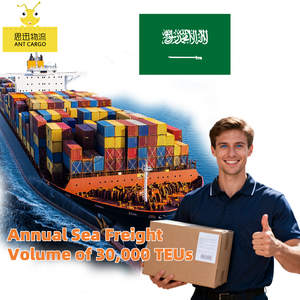
Port-centric warehousing fundamentally changes supply chain economics by eliminating unnecessary inland container drayage. In standard logistics models, imported ocean containers are trucked through dense metropolitan corridors like Doha and Al Rayyan to distant inland logistics parks, only to be unpacked and routed back to coastal or urban consumer hubs. By commissioning custom-engineered pre-engineered steel structure logistics centers directly within the terminal gate radius, devanning, cross-docking, bonded storage, and automated fulfillment occur at the port threshold. This direct interface drastically reduces carbon emissions per TEU, circumvents port demurrage, and cuts local drayage charges by up to 38%.

Hamad Port Intermodal Drayage

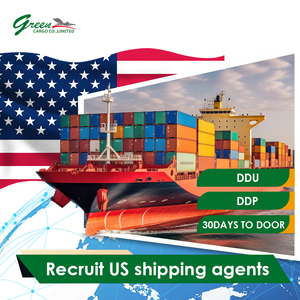
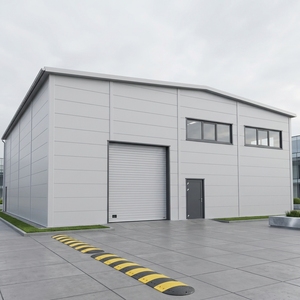
Operating directly within the port concession zone, facilities demand structural heavy-gauge steel distribution centers paired with side-opening intermodal containers. This enables swift discharge of project cargo, high-value consumer goods, and industrial assemblies directly onto custom low-bed trailers without congesting terminal transfer berths.

QFZA Bonded Tech Storage

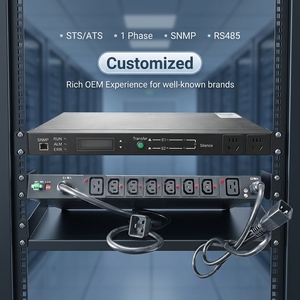
Within the Ras Bufontas Special Economic Zone, precision electronics, semiconductor equipment, and high-density computing servers demand temperature-controlled environments backed by 19-inch rack-mounted STS/ATS dual-bus PDUs. Fast transfers under 6 milliseconds ensure zero disruption during grid transitions in mission-critical automated sorting hubs.

Energy Project Rigging Depots

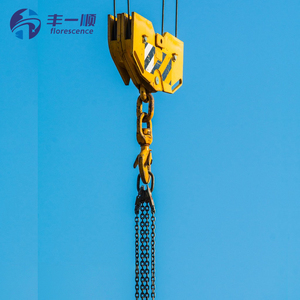
North Field East (NFE) expansion materials demand robust breakbulk staging. The implementation of NACM-certified Grade 43 alloy steel link chains ensures safe tie-down, container lifting, and heavy transport rigging under intense sea-spray salinity and dynamic maritime loading operations without tensile degradation.

Technical Engineering Whitepaper

Environmental Mitigation & Structural Architecture for the Arabian Gulf

Thermal Dissipation, Corrosion Protection & Seismic Integrity

Developing port-centric storage in Doha presents acute physical engineering challenges. Ambient summer temperatures regularly exceed 48°C to 52°C, coupled with relative humidity reaching 90% along the coastal fringe of the Arabian Gulf. This microclimate accelerates electrolytic galvanic corrosion on exposed structural steel and compromises internal thermal retention.

Our custom OEM steel warehouse fabrication protocols solve this through strict material science adjustments:

  • Structural Steel Coatings: All structural I-beams and cold-formed secondary purlins receive hot-dip galvanization conforming to ISO 1461, supplemented by a high-build epoxy intermediate coat and a cross-linked aliphatic polyurethane topcoat. This achieves a minimum protective barrier of 280-320 μm, rated for C5-M extreme marine corrosive zones.
  • PIR Sandwich Panel Envelopes: High-density polyisocyanurate (PIR) insulated core panels (100mm to 150mm) deliver exceptional thermal resistance (U-values ≤ 0.18 W/m²K), meeting Qatar Civil Defense (QCD) fire safety standards with Class B-s1, d0 flame retardancy.
  • Thermal Bridging Elimination: Proprietary composite EPDM thermal break gaskets decouple the structural frame from outer cladding, eliminating dew-point condensation inside humidity-controlled pharmaceutical and electronics storage modules.
Macro Market Trajectory

Logistics Trends Shaping the Qatar Industrial Landscape

01. Cold Chain Transformation

Driven by national food security strategies, demand for temperature-controlled port-centric warehouses (ranging from multi-temperature frozen to cold pharmaceutical staging) has surged. OEM designs must incorporate high-speed insulated dock levelers, airtight inflatable dock seals, and energy-efficient ammonia or CO2 cascade refrigeration tie-ins.

02. Cloud-Integrated Automation

With the rapid expansion of localized e-commerce platforms across Doha, Lusail, and Al Wakrah, high-bay warehouses are integrating automated storage and retrieval systems (ASRS), autonomous mobile robots (AMRs), and smart telemetry PDUs providing sub-cycle circuit-level power metrics.

03. Carbon Neutral Decarbonization

Following global corporate ESG commitments, modern facilities around Hamad Port prioritize solar-ready roof designs. Reinforced rafters are pre-engineered to bear 25 kg/m² dead loads for photovoltaic solar arrays, enabling facilities to achieve net-zero power generation five to ten years ahead of regional schedules.

Enterprise Authority

Proven Global Engineering Backed by Three Decades of Operational Excellence

Drawing on an established international supply chain lineage, we bridge OEM production capacity with international compliance standards.

ISO 9001 & BRCGS AA+

Audited manufacturing and storage operational frameworks guaranteeing certified weld seams, dimensional tolerances, and unannounced BRCGS storage compliance.

End-to-End Multimodal Lineage

Over 30 years managing intricate ocean FCL, chartered breakbulk, air express, and heavy haulage routes spanning Europe, North America, East Asia, and the GCC.

In-House Technical Advisory

Dedicated customs, engineering, and Incoterm consultants resolving technical duty classifications, preferential trade certificates, and site construction plans.

Sustainable Fabrication

Certified carbon-neutral corporate practices, integrating solar-powered manufacturing lines, low-VOC coatings, and fully recyclable steel profiles.

Procurement Intelligence

Frequently Asked Questions: Port-Centric Logistics in Qatar

How do port-centric storage centers at Hamad Port optimize customs clearance and demurrage charges?
By operating directly within the port-centric perimeter, containers transition instantly from the quay crane discharge apron into bonded devanning facilities via specialized internal terminal haulage. This completely bypasses public highway permit delays and port gate dwell times. In-house customs brokers submit electronic import and transshipment manifests via the 'Al Nadeeb' single-window system prior to vessel berthing. Duty suspension within the free zone environment mitigates upstream capital lock-in, enabling goods to clear customs on a batch-release basis matching local domestic consumption.
What engineering specifications are mandatory for steel warehouse structures under Qatar Civil Defense (QCD) rules?
Under QCD fire safety regulations, structural logistics warehouses must utilize certified non-combustible building materials. Steel frame structural members must achieve 2-hour or 3-hour fire ratings achieved through intumescent paint systems or mineral fiber encasement. Cladding must incorporate FM Global-approved or QCD-listed high-density PIR (Polyisocyanurate) sandwich panels with Class B-s1, d0 flame spread index ratings. In addition, roof drainage systems must handle sudden, intense flash rainfall with internal siphon discharge networks preventing roof overload.
Why are STS/ATS rack-mounted PDUs necessary for automated fulfillment centers in the Doha Free Zones?
Automated fulfillment facilities in locations like Ras Bufontas rely on uninterrupted high-density computing clusters, RFID scanning arrays, and automated conveyor systems. The 19-inch rack-mounted Static Transfer Switch / Automatic Transfer Switch (STS/ATS) PDU provides dual-bus power redundancy. In the event of primary utility fluctuation or transition to facility diesel back-up generators during peak summer grid demand, the system transfers power between independent circuits in under 6 milliseconds (<6ms)—far faster than the hold-up time of standard power supplies—preventing system reboots, data loss, or sorting line shutdowns.
Can customized OEM heavy equipment like side-open containers and G43 alloy chains be delivered directly DDP Doha?
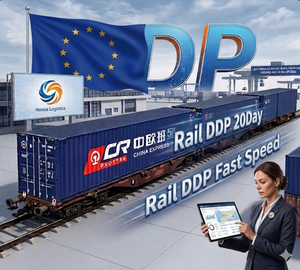
Yes. Through our door-to-door multimodal freight infrastructure, full side-open intermodal containers, G43 alloy chains, structural assemblies, and warehouse components can be quoted on DDP (Delivered Duty Paid) terms. Our operational scope includes factory crating, container stuffing, export clearance, ocean transit to Hamad Port, payment of Qatar import tariffs, port terminal handling charges (THC), and direct specialized transport delivery to your designated worksite in Mesaieed, Ras Laffan, or central Doha.
What anti-corrosion protection is specified for seaside logistics infrastructure near the Gulf?
Due to elevated levels of atmospheric sodium chloride and sulfur compounds present in Gulf coastal areas, standard primer coatings fail prematurely. We engineer all exposed steel frames utilizing hot-dip galvanizing to ASTM A123 / ISO 1461 (minimum 85 μm zinc layer), followed by a 2-coat epoxy-polyurethane duplex system delivering total dry film thickness (DFT) exceeding 280 μm. Fasteners, rigging loops, and chain assemblies utilize Grade 43 or high-test alloy steel with electro-galvanized or hot-dip coatings certified to withstand 1,000+ hours in salt spray testing per ASTM B117.
What documentation is required by Qatari authorities for the import of custom steel logistics structures?
Importation requires an authenticated Commercial Invoice, Packing List, Certificate of Origin (endorsed by the relevant Chamber of Commerce and authenticated by the Qatar Embassy at the country of origin), and an intact Bill of Lading. Furthermore, structural steel structures require full Mill Test Certificates (MTCs) EN 10204 Type 3.1 verifying chemical composition and mechanical properties, alongside structural calculation sheets stamped by an independent certified structural engineer to obtain local municipal and Civil Defense building approval.

Plan Your Port-Centric Logistics Deployment in Doha

Connect directly with our senior logistics architects and structural OEM manufacturing team. We provide complete site layout optimization, thermal engineering reviews, and end-to-end multimodal project delivery for operations in Hamad Port, Ras Bufontas, and across Qatar.