Explore our industrial hardware, specialized temperature-regulated trailers, and bonded air-sea transport modules engineered for complete French and trans-European regulatory clearance.

Combining three decades of international multi-modal logistics with certified port-centric facilities, direct French Douane API EDI integration, and independently validated security clearances.
We maintain full end-to-end quality assurance across all freight and bonded warehousing nodes, holding the highest unannounced audit grades for storage and temperature-integrity chains.
Consistently ranked among the elite independent cargo agents, executing expedited time-critical cross-channel clearance directly synchronized between UK gateways and Paris-Charles de Gaulle.
Seamless direct transit via our Port One and Felixstowe consolidation yards connecting Le Havre, Dunkirk, and Marseille-Fos, eliminating redundant demurrage and dwell charges.
Certified implementation of France's mandatory reverse-charge import VAT (Autoliquidation de la TVA à l'importation - ATVAI), preserving upstream enterprise working capital liquidity.
Achieved enterprise carbon neutrality years ahead of regulatory targets. We provide verified Scope 3 GHG emissions data per shipment, compliant with EU CSRD transparency directives.
Direct electronic clearing with the Direction Générale des Douanes et Droits Indirects (DGDDI). Automated pre-lodgement, ensuring zero border disruption for RoRo and container maritime cargo.
A comprehensive examination of statutory import mechanisms, cross-border clearance channels, and risk mitigation frameworks for international industrial manufacturers exporting to France.
The Direction Générale des Douanes et Droits Indirects (DGDDI) has fundamentally overhauled cross-border clearance processing with the roll-out of DELTA-IE (Import-Export), aligning French administrative pathways directly with the EU Union Customs Code (UCC). For foreign industrial manufacturers, compliance is no longer a paper-handling routine. Declarations require strict harmonized data sets matching EU CDM (Customs Data Model) standards.
Our infrastructure leverages direct API connectivity into the DGDDI portal. By initiating automated pre-lodgement prior to vessel berthing at Le Havre or Marseille-Fos, or prior to freight arrival via the Calais-Dover Smart Border (Frontière Intelligente), consignments obtain green-routing permissions before wheels touch French soil. Mismatches in tariff item classifications or incorrect valuation baselines (CIF vs. FOB discrepancies) trigger instantaneous orange or red flags; our verified classification pre-check guarantees non-stop transit.
Regulatory Standard: UCC Regulation (EU) No 952/2013A major structural reform implemented across France is the mandatory self-assessment mechanism for import VAT, governed under the ATVAI regime. Administered directly by the Direction Générale des Finances Publiques (DGFiP) rather than collected at border release by customs officers, this mechanism allows qualifying French and international non-resident entities with an active French VAT identification to report and deduct import VAT simultaneously on their periodic CA3 returns.
The commercial impact cannot be overstated: working capital drag is reduced to zero. Previously, enterprise importers had to advance 20% standard French VAT upon cargo arrival, waiting months for fiscal reimbursement. As your dedicated French customs representative, we facilitate compliance by matching your French intra-community VAT identification, EORI records, and DELTA-IE declarations, ensuring seamless cashflow acceleration without triggering scrutiny under Article 293 A of the Code Général des Impôts (CGI).
Financial Impact: 0% Immediate Cashflow Drain on ImportFor industrial hardware manufacturers—such as producers of heavy-duty link chains, welded marine chain systems, or raw structural alloys—France exercises aggressive trade surveillance. Under EU CBAM mandates, importers of embedded carbon-intensive materials must document actual emissions produced during manufacturing. Failure to provide accurate default value benchmarks or accredited emission monitoring reports exposes purchasing consortia to substantial punitive assessments.
Simultaneously, anti-dumping surveillance targeting Chinese alloy steel and fasteners demands exhaustive proof of origin, verified factory melt certificates, and Mill Test Certificates (MTC). Our customs brokerage department cross-verifies all technical bill-of-materials (BOM) against the TARIC database prior to cargo dispatch, shielding industrial buyers in France from retroactive duty liabilities.
Compliance Focus: EU Regulation 2023/956 (CBAM) SurveillanceHow our clearance and transport assets interface with regional French economic powerhouses, port hubs, and supply chains.
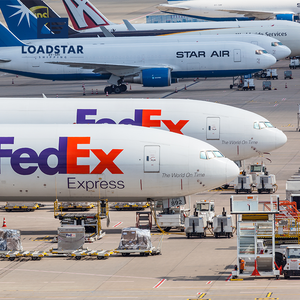
Full Container Load (FCL) deep-sea clearance directly connecting Mediterranean and Atlantic sea lanes. Synchronized terminal handling and bonded container yard transfers with zero port dwell time.
Continuous RoRo crossing via Calais, Dunkirk, and Eurotunnel. Barcode-based pairing between transit Accompanying Documents (T1/T2), ENS security forms, and physical vehicle license plates.
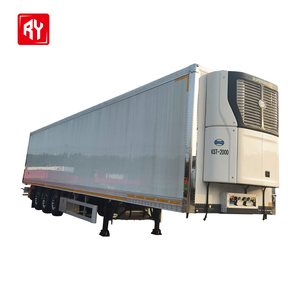
Integration of our 3-axle refrigeration semi-trailers under ATP regulations, operating alongside automated SIVEP (veterinary/phytosanitary) sanitary inspections for perishables arriving in France.
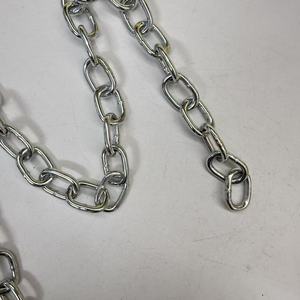
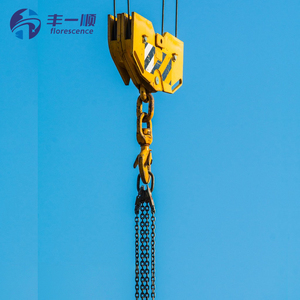
Direct supply line clearance for heavy-load infrastructure, deploying NACM certified G43 lifting chains and welded marine hardware directly to naval shipyards in Saint-Nazaire and Toulon.
Essential intelligence for manufacturers and sourcing directors seeking sustained competitive advantage across the European Single Market.
Full implementation of safety and security Advance Cargo Information (ACI) across maritime, road, and rail sectors. Complete H7 / ENS datasets must be submitted prior to origin loading, requiring automated EDI coordination across global manufacturing facilities.
The roll-out of mandatory electronic invoicing (Facturation Électronique) via accredited Partner Dematerialization Platforms (PDP) directly impacts customs valuation documentation. Imported commercial invoices must align natively with French e-reporting protocols.
French customs authorities maintain rigorous audits on dual-use commodities, industrial electronics, and structural hardware. Clear origin traceability, end-user certificates (EUC), and complete export compliance documentation are essential to prevent asset impoundment.
In-depth procedural clarity addressed by our licensed customs brokers and European trade compliance specialists.
Consult with our licensed customs brokerage team. We ensure frictionless compliance, 100% automated VAT reverse-charge setup, and predictable transit corridors across all French ports and border gateways.
Send an Inquiry