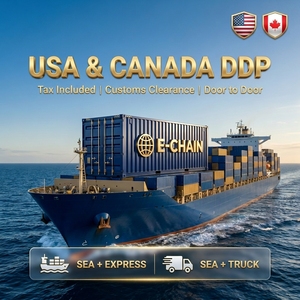
Explore our active inventory of ocean dry freight containers, specialized side-access equipment, and customs-bonded logistics corridors managed through Port of Barcelona gateways.
Years of International Freight & Multimodal Supply Chain Operations
TEUs Handled via South European Deep-Sea Gateways & Hubs
Certified Quality Management & BRCGS AA+ Storage Standards
Pioneering 100% Scope 1 & Scope 2 Carbon Neutral Operations
In global trade economics, containerized export performance hinges directly on geographic positioning, intermodal infrastructure, and customs velocity. The Mediterranean basin serves as a linchpin for global routing, and Barcelona stands prominently as Spain’s industrial engine and Southern Europe's primary sea gateway. Operating as an FCL freight shipping factory and export specialist in Barcelona demands far more than basic vessel slot procurement; it necessitates precision engineering across container drayage, railhead integration, bonded staging, and stringent maritime regulatory compliance.
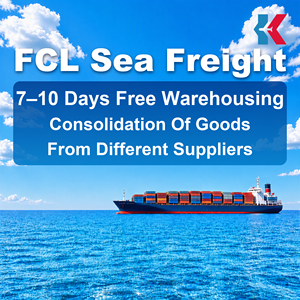
Full Container Load (FCL) transport represents the definitive standard for industrial shippers moving cargo volumes exceeding 13 to 15 cubic meters. Unlike Less than Container Load (LCL) configurations—which undergo multiple manual transfers, inland hub sortation, and prolonged devanning cycles—FCL shipments remain sealed from origin stuffing to destination consignee release. When operating out of Barcelona’s primary export clusters such as the Zona Franca, Martorell, Vallès Occidental, and Baix Llobregat, direct access to Port of Barcelona's deep-water terminals (including BEST - Hutchison Ports and APM Terminals) guarantees seamless transshipment onto major trade lanes encompassing the Transatlantic, Mediterranean-Middle East, and Far East loops.
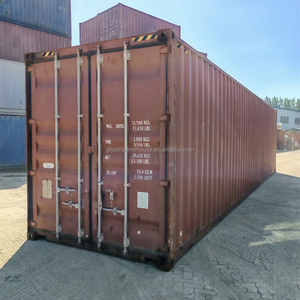
By bypassing mid-transit transshipment handling, industrial manufacturers mitigate physical damage, reduce maritime cargo insurance claims, and compress door-to-door transit schedules. For high-velocity exporters dealing in automotive parts, packaged chemical compounds, specialized machinery, or certified pharmaceutical shipments, securing dedicated 20GP, 40GP, and 40HQ steel dry containers remains the most capital-efficient strategy for cross-border distribution.
How international manufacturers and tier-one suppliers leverage localized FCL container configurations across Catalonia's key industrial corridors.
Situated within proximity to major automotive manufacturing hubs like Martorell and Santa Perpètua de Mogoda, our FCL solutions manage high-cadence Just-In-Time (JIT) components. Standardized 40HQ containers fitted with heavy-duty dunnage provide secure transit for transmission systems, stamping dies, chassis hardware, and specialized lithium-ion battery packs requiring Class 9 ADR compliance.
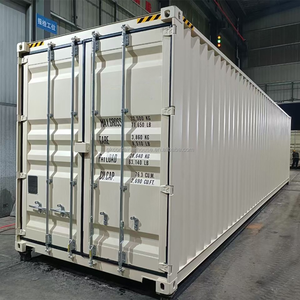
Catalonia's engineering corridor demands robust container solutions for complex industrial equipment. Utilizing 20ft and 40ft side-open containers alongside heavy-duty flat racks, manufacturers export oversized industrial packaging machinery, textile equipment, and printing hardware directly via Barcelona's port terminals without relying on breakbulk disassembly.
Connecting the industrial petrochemical corridor of Tarragona and Barcelona's Baix Llobregat pharma clusters, our FCL operations provide rigorous containment protocols. Shipments undergo dedicated verification under ADR, IMO, and BRCGS AA+ distribution guidelines, guaranteeing non-contaminated cross-border transits for APIs, industrial lubricants, and cosmetics.
Emerging infrastructural and regulatory shifts defining modern container shipping throughout the Western Mediterranean.
Expansion of standard European gauge (UIC) tracks directly into Port of Barcelona terminals enables high-capacity dry-port linkages into Zaragoza (plaza), Madrid, and Southern France, cutting drayage truck emissions by over 60%.
Barcelona’s CZFB logistics zone leads Europe in zero-emission bonded warehouses, on-site PV generation, and electric terminal tractor trials, directly supporting Scope 3 emissions reductions for multinational supply chains.
Global manufacturers increasingly choose Catalonia over Northern European gateways to shorten ocean transits from Suez and North Africa, realizing 4-to-7 day transit advantages on outbound Transatlantic routes.
Integration of the EU Single Window Environment for Customs and the Port Authority of Barcelona’s Portic platform automates pre-arrival declarations, reducing container dwell time at terminal gates to historic lows.
Drawing on three decades of logistics execution, Hemisphere Freight Services delivers verified compliance, port-centric storage, and strategic freight engineering.
Backed by strict ISO 9001:2015 management frameworks and BRCGS Storage & Distribution AA+ certification, our cargo management protocols safeguard high-value consignments from origin stuffing to final drop-off.
Take advantage of comprehensive bonded storage mechanisms (DDA - Depósito Distinto del Aduanero). Suspend VAT and import duties on transshipment inventories, streamline export batching, and improve corporate cash flow dynamics.
Integrated port gateways across Barcelona, Valencia, Felixstowe, Liverpool, and London Heathrow ensure end-to-end multi-modal routing, single-invoice accountability, and zero reliance on disconnected brokerage chains.
Essential guidance covering customs protocols, container load planning, documentation, and local port operations.
FCL offers distinct operational advantages once your consignment volume reaches roughly 13 to 15 CBM, or when your cargo integrity requires dedicated space. By securing an exclusive 20ft (33 CBM capacity) or 40ft (67-76 CBM capacity) container, goods remain completely isolated inside a factory-sealed box from the supplier's warehouse to the destination facility. This eliminates multi-stop devanning, lowers handling-induced damage rates, avoids cross-contamination risks, and significantly reduces ocean freight fees per cubic meter compared to consolidated groupage rates.
Export clearance at the Port of Barcelona requires a comprehensive documentation package. Shippers must present a Commercial Invoice, a detailed Packing List, an Ocean Bill of Lading (B/L) or Sea Waybill, and an Export Single Administrative Document (DUA - Documento Único Administrativo). Furthermore, non-EU destinations often require a Certificate of Origin (such as EUR.1 or ATR), Verified Gross Mass (VGM) certification adhering to SOLAS regulations, and relevant Material Safety Data Sheets (MSDS) if goods are categorized under the IMDG code.
Under the International Maritime Organization (IMO) SOLAS amendment, no packed export container may be loaded onto a vessel without a certified VGM. In Barcelona, shippers can determine VGM via Method 1 (weighing the sealed container on a certified weighbridge) or Method 2 (weighing all packages and contents, adding the container tare mass, and documenting the total via an approved calculation process). Terminals such as Hutchison Ports BEST and APM Terminals Barcelona also offer on-dock weighbridge certification services during gate-in to prevent non-compliance roll-overs.
Yes. By utilizing bonded warehousing infrastructure (including Depósito Distinto del Aduanero - DDA and Depósito Aduanero - DA regimes), enterprises can stage cargo, assemble multi-vendor export shipments, and delay or suspend VAT and duties until final maritime export manifests are issued. This provides significant working capital relief for trading companies sourcing components across the EU prior to consolidation and re-export to the Americas, Asia, or the Middle East.
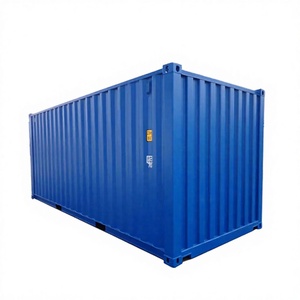
Cargo profile dictates equipment selection. A standard 20GP container is optimal for dense, heavy commodities such as industrial ceramics, metal castings, liquids, and chemicals, maximizing weight thresholds (up to ~28,000 kg payload) before exceeding cubic volume. Conversely, for high-cube, low-density cargo—such as automotive textiles, retail goods, and light machinery—the 40HQ (High Cube) container is the industry benchmark, providing an internal height of 2.70m and a total volume capacity of approximately 76.4 CBM.
Coordinate container allocations, evaluate local port logistics costs, and discover how our integrated supply chain architecture enhances your cross-border trade margins.