Years Supply Chain Mastery
GDP & ISO 9001:2015 Compliant
Active Temperature Control Range
Primary South African Hubs
Precision-engineered transport hardware, temperature-controlled containers, and turnkey cargo services vital for medical device deployment, hospital power installations, and safe multimodal transit across Southern Africa.


Importing advanced biomedical systems, point-of-care diagnostics, and high-value clinical devices into the Republic of South Africa presents a nuanced convergence of regulatory stringency, port-centric bottlenecks, and intricate territorial geographies. As medical technology advances toward high-precision biosensors, cryogenic pharmaceuticals, and delicate imaging modalities (including magnetic resonance imaging, computerized tomography scanners, and linear accelerators), logistics providers must shift from standard freight forwarding to precision cold-chain lifecycle custody.
Under the governance of the South African Health Products Regulatory Authority (SAHPRA) and the Medicines and Related Substances Act (Act 101 of 1965), medical technology cross-border distribution mandates an unbroken audit trail conforming to Good Wholesaling Practices (GWP) and Good Distribution Practices (GDP). Global suppliers and manufacturers require logistical pipelines designed to mitigate the risks associated with clearance delays at the Port of Durban, maritime temperature spikes along the Atlantic corridor, and structural road shocks encountered on trunk routes connecting Gauteng with provincial healthcare nodes.
Examining operational deployment profiles across South African metropolitan corridors, rural clinics, and regional healthcare networks.
Deployment of magnetic resonance imaging (MRI), CT systems, and hemodialysis units within major private healthcare networks (such as Netcare, Life Healthcare, and Mediclinic) located throughout Johannesburg, Pretoria, Cape Town, and Durban.
Delivering portable point-of-care diagnostics, solar-powered blood storage reefers, and vaccine shippers into remote clinics across the Eastern Cape, Limpopo, and KwaZulu-Natal interior.
Logistical continuity for clinical pathology reagents, automated immunoassay analyzers, and genomic sequencing platforms with rigorous continuous temperature requirements (-20°C to +4°C).
Logistics requirements change dynamically according to the classification of medical equipment. The matrix below defines essential operational parameters required for South African regulatory clearance and operational deployment:
| Equipment Category | Typical Technologies | Primary Cold-Chain Range | SAHPRA Documentation Mandate | Recommended Shipping Topology |
|---|---|---|---|---|
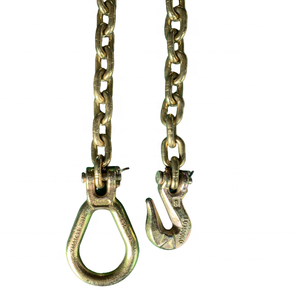
| Class D (High Risk) Modalities | MRI, Linear Accelerators, CT Scanners | Controlled Ambient (+15°C to +25°C) | Section 22C Device Establishment Licence & Import Permits | Direct Air Charter or Special Reefer Flat Rack with G70 Tiedowns |
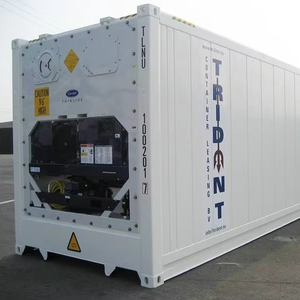
| In Vitro Diagnostics (IVD) | Reagent Kits, Microplate Readers, Assay Cartridges | Strict Cold Storage (+2°C to +8°C / -20°C Cryo) | Batch Release Certifications & ISO 13485 Conformity | Dedicated 20FT Active Reefers with Telemetry Tracking |
| Surgical & Critical Care | Ventilators, Anesthesia Workstations, Autoclaves | Ambient (Shock & Tilt Restricted) | Letter of Authority (LOA) & Electrical Safety Verification | Full Container Load (FCL) Ocean Freight with ISPM 15 Crating |
| Point-of-Care (POC) Infrastructure | Rapid Diagnostic Systems, Portable Ultrasound | Protected Dry Bulk (+5°C to +30°C) | Customs Tariff Code (HS 9018/9027) Free Circulation Filing | Consolidated Air Express (DDP Door-to-Door) |
Critical structural shifts altering procurement behavior, supply chain compliance, and distribution architecture across the SADC region.
The phased rollout of National Health Insurance (NHI) is centralizing public procurement tenders, demanding scalable freight consolidation models for secondary and tertiary clinical centers.
Post-pandemic public health strategies emphasize rural testing capabilities, necessitating rapid air-road freight integration for small-batch diagnostics across South Africa's nine provinces.
Unstable national power grids (load shedding) drive medical facilities to procure logistics solutions backed by battery storage and dedicated substation switchgear to safeguard refrigeration reliability.
SAHPRA oversight is tightening around temperature logging compliance, moving South African buyers away from uncertified multi-tier handlers toward accredited 3PL single-custody providers.
Backed by over three decades of international freight forwarding, port-centric facilities, and accredited storage infrastructure, we deliver complete reliability from factory origin to bedside.
Operating under audited international protocols including ISO 9001:2015 Quality Management and the elite BRCGS Storage & Distribution AA+ standard. Our medical distribution adheres to stringent Good Distribution Practices (GDP), offering validated cleanliness, climate verification, and zero cross-contamination risks.
As one of the UK's leading independent IATA-accredited cargo agents with physical air hubs adjacent to London Heathrow, we ensure high-priority medical equipment, clinical trial material, and emergency components achieve expedited tarmac transfer directly into Johannesburg (OR Tambo International Airport).
Leveraging deep logistics hubs across Felixstowe, Ipswich, and Liverpool, backed by duty-suspension customs bonded warehousing. Consolidate your European and Asian medical supplies safely, defer taxes until dispatch, and route goods cleanly into Durban, Cape Town, and Port Elizabeth without unexpected delays.
Detailed insights on SAHPRA registration, customs valuation, cold chain verification, and equipment commissioning logistics.
To successfully import medical devices into South Africa, the local importer of record must hold an active SAHPRA Medical Device Establishment Licence (MDEL) under Section 22C of Act 101 of 1965. Custom clearance through the South African Revenue Service (SARS) requires the Commercial Invoice, detailed Packing List, Certificate of Origin, Bill of Lading / Air Waybill, relevant Letter of Authority (LOA) for electrical machinery, and complete manufacturer Conformity Certificates (CE / ISO 13485).
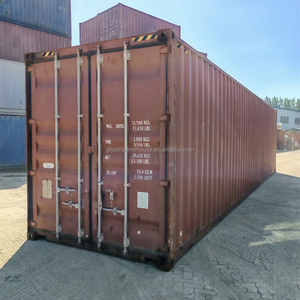
Port dwell periods represent a substantial vulnerability. We deploy active refrigerated containers (Reefers) equipped with autonomous diesel generator sets (gensets) for inland road transit, paired with cellular/satellite IoT data loggers. In the event of port berth delays, automated temperature escalation alerts notify our team to initiate proactive re-icing or connect containers to continuous shore-power monitoring yards.
Full Container Load (FCL) shipping via ocean is standard for large-footprint capital equipment—such as inpatient hospital beds, heavy steam sterilizers, and bulk IV solutions—providing the lowest landed cost per unit. Conversely, high-value sensitive diagnostic machinery (e.g., MRI consoles, ultrasound systems) and perishable reagent diagnostics should move via scheduled air freight into OR Tambo, which curtails transit exposure from 35-45 days down to 3-5 days.
Our heavy freight and project logistics divisions implement custom wooden casing built in accordance with ISPM 15 standards, equipped with interior shock-absorbing elastomers, tilt indicators, and calibrated impact loggers. Heavy loads are secured on low-bed air-suspension trailers using US-grade G70 high-tensile alloy binding chains to isolate delicate components from road vibration.
Consult with our international freight experts to optimize your clinical equipment distribution, secure temperature-controlled container availability, and achieve predictable clearance into South Africa.
Send an Inquiry