
Engineering End-to-End Cold Chain Integrity, Multimodal Reefer Logistics, and Industrial-Grade Climate-Controlled Fleet Solutions Across the Indian Ocean Gateway
From intermodal refrigerated ISO units to heavy-duty multi-axle climate transport systems, our manufacturing facilities and global forwarding lines engineer continuous thermal stability for the Sri Lankan corridor.
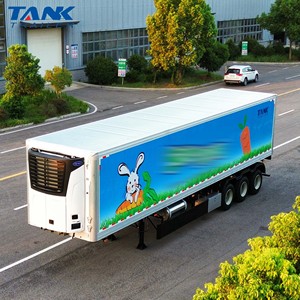
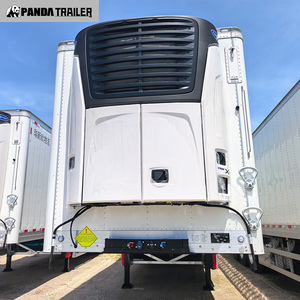

A comprehensive analysis of cold chain equipment manufacturing, microclimate mitigation in equatorial corridors, and end-to-end multi-modal routing through Port of Colombo and Hambantota.
Transporting temperature-sensitive perishable cargo across tropical trade routes terminating in or transiting through Sri Lanka introduces profound physical and logistical hurdles. The South Asian island nation operates under high average ambient temperatures (often fluctuating between 28°C and 34°C) paired with atmospheric humidity profiles routinely surpassing 85% to 92% RH across Colombo, Galle, and Trincomalee. Standard insulated transport mechanisms fail under these relentless hydrostatic pressures, leading to catastrophic vapor transmission, polyurethane insulation saturation, and localized hotspots within the payload volume.
Specialized perishable cargo transport factories engineering equipment for Sri Lanka focus explicitly on thermal bridging prevention and thermal inertia preservation. By integrating multi-layered fiberglass-reinforced polymer (FRP) skin structures paired with closed-cell polyisocyanurate (PIR) foam blown with zero-ODP blowing agents, modern reefer bodies achieve an exceptional thermal transmission coefficient (K-value) below 0.32 W/(m²·K). This structural barrier drastically diminishes heat ingress during protracted dwell periods at container terminals, bonded freight stations, and remote transshipment yards across the island.
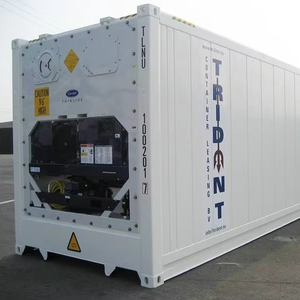
Perishable freight departing or entering Sri Lanka encompasses dynamic respiration categories—from Ceylon Black Tea leaves vulnerable to moisture degradation, to marine aquaculture (yellowfin tuna, mud crab, and black tiger prawns) demanding deep-freeze temperatures below -25°C, to high-respiration horticultural varieties including papaya, passion fruit, and rambutan. Factories specialized in supplying reefer containers and semi-trailers configure variable-speed scroll compressors coupled with advanced digital economizer injection loops.
These advanced refrigeration units provide microclimate stabilization capable of dynamically adjusting airflow via ducted T-bar floor profiles. By maintaining positive pressure beneath the load floor and ensuring bottom-air delivery, the system circulates cold air evenly throughout cargo stacks, neutralizing the sensible heat produced by agricultural respiration. Furthermore, controlled atmosphere (CA) modules equipped with hollow-fiber membrane nitrogen separators suppress ethylene production, extending post-harvest shelf life across multi-day oceanic journeys between Sri Lanka, Europe, the Middle East, and East Asia.
Navigating Sri Lanka's inland terrain requires severe structural reinforcement. Transporting cargo inland from the Port of Colombo across the Western Province toward Kandy, Nuwara Eliya, or the dry plains of Anuradhapura challenges tractor-trailer platforms with steep road gradients, sharp hairpin turns, and varied road surfaces. Perishable cargo transport equipment factories respond by delivering chassis constructed of high-tensile Q345B steel or DOMEX 700 structural steel, augmented with anti-torsion crossmembers and mechanical air-suspension configurations with heavy-duty lifting axles.
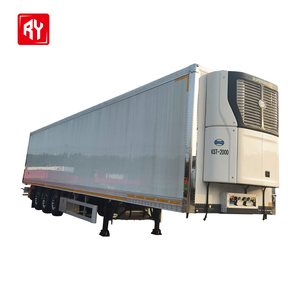
These reinforced designs, showcased in heavy-duty 3-axle 80-ton platforms and 40ft reefer chassis, feature electronic braking systems (EBS) with integrated roll-stability support (RSS). Such active safety architecture safeguards valuable perishable consignments against catastrophic rollovers during emergency braking or sharp cornering along winding central highland routes, where perishable dairy, fresh produce, and export-grade botanicals originate.
Comparative design engineering parameters benchmarked against Sri Lankan operating regulations and severe tropical weather standards.
| Equipment Specification | Standard Export Configuration | Tropical Marine Adaptation (Sri Lanka Spec) | Compliance & Operational Benefit |
|---|---|---|---|
| Insulation Composition | Standard Rigid Polyurethane (PU) 60-80mm | High-Density Vacuum-Bonded Polyisocyanurate (PIR) 100-120mm | K-Value ≤ 0.32 W/m²K Prevents wall sweat in >90% RH |
| Cooling Unit Architecture | Reciprocating Single-Speed Compressor | Digital Inverter Scroll / Micro-Channel Condensers | 35% Fuel Economy Reduction; ±0.2°C Variance |
| Internal Air Distribution | Standard Front Wall Evaporator Blow | Extruded Aluminum T-Floor with Duct Flow Return | Eliminates cargo hotspots; uniform bottom-up airflow |
| Chassis Structural Steel | Standard Carbon Steel Channels | Submerged Arc Welded Q345B / T700 High-Yield Alloy | Torsional resistance on central highland switchbacks |
| Telematics & Monitoring | Analog Datalogger / Manual USB Retrieval | 4G/GPS Dual-Sensor Cloud IoT with Auto Power Alarms | BRCGS AA+ & GDP Traceability for Biotech & Seafood |
Custom-engineered thermal solutions targeted at Sri Lanka's most vital economic engines, from deep-sea aquaculture to high-altitude pharmaceutical cold logistics.
Sri Lanka's premier seafood exporters operating in Negombo, Beruwala, and Galle rely on 40ft deep-freeze reefers and heavy-duty 3-axle refrigeration trailers calibrated to -25°C to -30°C. These systems safeguard high-value Yellowfin Tuna and Black Tiger Prawns destined for European, American, and Japanese sushi-grade markets, eliminating cold-chain degradation during transit to Bandaranaike International Airport (CMB) or the Colombo Port Reefer Yard.
From central pharmaceutical storage facilities around Colombo to regional hospital complexes in Jaffna, Badulla, and Batticaloa, maintaining validated +2°C to +8°C environments is critical. Our pharmaceutical-grade ISO containers and air DDP services ensure continuous thermal data-logging, multi-sensor verification, and compliance with the World Health Organization Good Distribution Practices (GDP) without temperature excursion.
The temperate highlands of Nuwara Eliya and Welimada yield sensitive crops—strawberries, exotic cut flowers, bell peppers, and artisanal dairy. Bridging the dramatic climate change from 14°C mountain air to 33°C tropical sea-level heat requires insulated semi-trailers equipped with micro-step throttling and modulated dehumidification to prevent fungal bloom, condensation, and mechanical shock over winding descents.
Market modernization, port-centric hub expansions, and global regulatory developments are redefining how Sri Lankan enterprises procure, operate, and scale perishable transport assets.
Handling over 7.2 million TEUs annually, the Port of Colombo is solidifying its role as the preeminent deep-water transshipment nexus in South Asia. Inflow and outflow of transshipped frozen meat, dairy, and fruits between India, the Arabian Gulf, and the Far East require high-cycling intermodal reefers equipped with dual-voltage capabilities (380V/440V 3-phase) and autonomous monitoring to meet demanding transshipment dwell times.
Sri Lankan fleet operators and shipping lines are moving away from passive record-keeping toward active satellite and cellular telemetry. Modern factories integrate real-time sensor architectures that transmit supply air, return air, ambient temp, defrost cycling, and compressor discharge pressures directly to cloud dashboards. This real-time intelligence alerts operations managers before an equipment malfunction triggers cargo spoilage.
With local fuel prices impacting operational margins, transport fleets are investing in aerodynamic reefer semi-trailers fitted with thin-film roof-mounted photovoltaic solar arrays. These arrays trickle-charge the trailer's auxiliary battery banks and power digital telematics, reducing diesel consumption during prolonged idling at highway checkpoints or loading ramps across the Western and Southern provinces.
Combining three decades of precision transport engineering with audited international accreditations, port-centric facilities, and turnkey freight capabilities.
Our manufacturing and logistical workflows operate under the world's most rigorous third-party certifications. Holding the prestigious BRCGS Storage & Distribution AA+ rating alongside ISO 9001:2015 quality frameworks, we ensure every perishable cargo unit and transport leg adheres to verifiable, uncompromised safety and sanitary standards.
We eliminate subcontractor fragmentation by managing every transport touchpoint under one single contract. From direct factory manufacturing to ocean reefer booking, air charters, and full destination customs clearance through the Sri Lanka Customs Revenue Services, our clients enjoy complete door-to-door transparency.
With operational hubs across key maritime channels, including direct shipping connections linking Europe, East Asia, and the Colombo Port terminals, we minimize transit delays, mitigate demurrage exposures, and maintain structural supply lines for time-sensitive, life-critical shipments.
Essential guidance covering technical configurations, import documentation, compliance standards, and operating best practices.
Whether you require standard 20ft/40ft ISO reefer containers, heavy-duty 3-axle refrigeration semi-trailers, or end-to-end multimodal cold shipping to Colombo, our engineering team is available 24/7 to structure your project specifications.