Verified manufacturing equipment, temperature-controlled trailers, multimodal containers, and end-to-end logistics solutions customized for the Spanish import-export corridor.
Spain stands as the agricultural garden of Europe and a leading transatlantic hub. Supplying specialized refrigerated containers (reefers) to this market requires strict alignment with local product physiology, regional transportation corridors, and EU sanitary inspection frameworks.
Over 3.5 million metric tons of greenhouse vegetables (tomatoes, peppers, cucumbers) and stone fruit transit through the Mediterranean highway annually. High-cube 40ft reefer containers equipped with high-airflow T-bar floors and modulated fresh-air exchange (25–45 m³/h) prevent ethylene buildup and moisture accumulation, preserving post-harvest vitality during multimodal transit to Northern Europe and the Americas.
Exporting frozen pork belly, jamón, and offal to China, Japan, and the Philippines demands deep-freeze performance down to -30°C. Containers deployed via the Port of Barcelona must integrate high-efficiency scroll compressors, vacuum-insulated polyurethane foam panels, and hermetic door seals to prevent thermal bridges that could trigger microbiological recalls.
Northwestern Spain is Europe’s primary wild-catch and aquaculture hub. Preserving tuna, hake, squid, and octopus requires super-freezer units capable of holding sustained core temperatures of -60°C. Fast pull-down rates and dual microprocessors ensure that wild-caught marine proteins maintain cellular integrity without protein degradation during intercontinental voyages.
Citrus exports (oranges, clementines, lemons) subject to strict quarantine treatments in destination countries (e.g., USA, South Korea, China) require precise Cold Treatment (CT) protocols. Our reefer machinery features 3-to-4 calibrated USDA pulp probes ensuring temperatures remain continuously between +0.5°C and +1.5°C for 16–22 consecutive days without frost accumulation.
Spain is a top-five European producer of bio-pharmaceuticals and active pharmaceutical ingredients (APIs). GDP-compliant reefer containers deployed here operate with redundant backup refrigeration circuits, secondary telematics sensors, and certified thermal validation reports holding +2°C to +8°C and +15°C to +25°C ranges under summer ambient extremes exceeding 42°C.
Strawberries, blueberries, and raspberries have extremely fast respiration rates and low tolerance for moisture. Deploying Controlled Atmosphere (CA) reefers with active N2 injection and O2/CO2 scrubbing (lowering oxygen to 3% and controlling CO2 at 10–12%) delays ripening, suppresses fungal growth (Botrytis cinerea), and doubles the commercial shelf life across export markets.
As manufacturers and exporters supplying the Spanish market, our refrigeration equipment is engineered to conquer the demanding environmental challenges of the Iberian Peninsula—from the arid heatwaves of Andalusia to the saline coastal routes of the Cantabrian Sea. A marine reefer container is not merely an insulated box; it is a high-precision thermodynamic envelope governed by international maritime codes, ATP (Agreement on the International Carriage of Perishable Foodstuffs), and strict European Union food contact mandates.
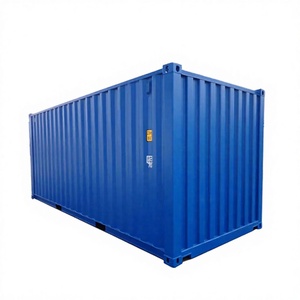
Corten Steel Chassis & Aerodynamic Stainless Linings: The outer framework is built from SPA-H atmospheric corrosion-resistant Corten steel, sandblasted and coated with marine-grade zinc-rich primer and polyurethane topcoats (total minimum dry film thickness of 120μm). Internally, wall linings utilize food-grade stainless steel (MGSS 304) or acrylic-coated aluminum sheeting, joined with sanitary food-grade sealant resistant to high-pressure hot water sanitization. Floor systems feature heavy-duty extruded 6061-T6 aluminum T-bar profiles engineered to support 7,260 kg forklift axle loads (ISO 1496-2 compliant), optimizing bottom-air return dynamics across densely stacked Euro pallets (800x1200mm) and industrial pallets (1000x1200mm).
| Technical Parameter | 20ft ISO Marine Reefer | 40ft High Cube (HC) Marine Reefer | Pallet-Wide Intermodal Reefer (45ft) |
|---|---|---|---|
| External Dimensions (L×W×H) | 6,058 × 2,438 × 2,591 mm | 12,192 × 2,438 × 2,896 mm | 13,716 × 2,500 × 2,896 mm |
| Internal Volume Capacity | 28.3 m³ (999 cu.ft) | 67.5 m³ (2,383 cu.ft) | 84.2 m³ (2,973 cu.ft) |
| Euro-Pallet Capacity (800×1200mm) | 10 Pallets (Non-Overlapping) | 23–24 Pallets | 33 Pallets (Full Double Floor) |
| Temperature Regulation Range | -35°C to +30°C (±0.25°C) | -35°C to +30°C (Opt. -60°C) | -30°C to +25°C |
| Thermal Insulation (K-Factor) | ≤ 0.38 W/m²·K (Class FRC ATP) | ≤ 0.36 W/m²·K (Class FRC ATP) | ≤ 0.35 W/m²·K (High-Density PU) |
| Power Consumption / Motor Specs | 380/440V, 3-Phase, 50/60Hz, 15kW | 380/440V, 3-Phase, 50/60Hz, 15kW | Hybrid Electric / Integrated Diesel Genset |
| Atmosphere Control Options | Standard Dehumidification | TransFresh / EverFresh CA/MA | Ventilated Fresh Air Modulator |
Thermodynamic Insulation Architecture: Thermal efficiency depends directly on polyurethane foam integrity. Our containers utilize high-pressure cyclopentane-blown polyurethane foam insulation injected at a density of 42 to 45 kg/m³. This eliminates micro-cavities, suppresses water absorption (< 1% by volume), and achieves a thermal transmission coefficient (K-value) lower than 0.36 W/m²·K. This exceeds the strict ATP "Reinforced" (FRC) benchmark required for overland transit across Spain and the European Union, saving up to 28% in electrical consumption under Spanish summer ambient temperatures of 45°C.
Spain is modernizing its port infrastructure and transportation policies in response to the EU Green Deal, decarbonization targets, and digital transformation.
With EU F-Gas Regulation (EU 2024/573) accelerating the phase-down of hydrofluorocarbons (HFCs), Spanish ports and operators are rapidly retiring R-134a and R-404A systems. Fleet buyers are shifting to ultra-low Global Warming Potential (GWP) alternatives such as R-513A and natural CO2 (R-744) units. These refrigerants comply with upcoming carbon tax thresholds while preserving refrigeration capacity under extreme high-ambient conditions.
Spain’s Ministry of Transport (MITMA) is heavily incentivizing rail freight via specialized rail motorways ("Autopistas Ferroviarias"). Key corridors linking Algeciras–Madrid–Zaragoza and Valencia–Madrid now handle P400 intermodal reefer pocket wagons. Spanish fleet operators require reefer containers and trailers reinforced with ISO lift-grappler pockets and integrated acoustic low-noise gensets to enable seamless intermodal rail transitions.
Autonomous monitoring has transitioned from an optional service to a strict regulatory mandate. Modern reefers bound for Spanish shipping consortia integrate 4G/5G NB-IoT hardware, continuous GPS geofencing, and remote temperature monitoring. Two-way communication enables dynamic pre-trip inspections (PTI), automated defrost cycles, and instant alerts for compressor phase failure or fuel depletion.
The incorporation of shipping into the EU Emissions Trading System (EU ETS) since 2024 has introduced direct carbon costs on voyages touching Spanish ports (Valencia, Algeciras, Barcelona, Las Palmas). Ports are rolling out Onshore Power Supply (OPS) cold-ironing systems. Reefer containers must support dynamic dual-voltage connections and smart energy management to cut dwell-time auxiliary engine run times to zero.
We combine heavy industrial manufacturing, verified international freight forwarding, and end-to-end cold chain infrastructure into a single point of accountability.
Our manufacturing and operational facilities operate strictly under audited ISO 9001:2015 Quality Management, BRCGS Storage & Distribution (AA+ Unannounced Audit Grade), and official IATA Cargo accreditations. Every container leaving our staging hubs undergoes a mandatory automated Pre-Trip Inspection (PTI) with documented sensor recalibration.
Avoid punitive demurrage and detention charges at Spanish and European transshipment gates. We operate extensive port-centric bonded warehousing networks (including Port One and Felixstowe in the UK, linked via short-sea feedering to Bilbao and Valencia). Duty and VAT suspension lets you store reserve stock, devan cargo, and deliver across the EU without early capital lockup.
Operating a fleet verified as carbon-neutral five years ahead of standard regulatory schedules, we offer certified Scope 3 emissions reporting per TEU/kilometer. Solar-powered dry/cold depots, electric material handling equipment, and optimized sea-rail routing help Spanish exporters fulfill corporate ESG mandates with full transparency.
Clear, technical, and regulatory answers addressing customs compliance, machinery interfaces, and inspection processes across Spain.
Under the international ATP agreement, all refrigerated transport equipment carrying perishable goods across Spain and the EU must hold a valid ATP certificate (typically Class FRC: Reinforced Refrigerated Equipment with -20°C capability). Our containers undergo thermal chamber testing by accredited testing stations (such as CEMAF or equivalent notified bodies) to guarantee an overall heat transfer coefficient (K-value) ≤ 0.40 W/m²·K. Certificates are provided alongside the physical classification plate affixed to the front bulkhead.
Marine reefer units manufactured for Spain conform to standard ISO 1496-2 dual-voltage parameters: 380/440V AC, 3-Phase, 50/60 Hz ±10%. They come equipped with standard marine 32-Amp 4-pin CEE-17 (earth pin at 3 o'clock position) water-resistant power plugs and a minimum 18-meter marine cabtyre power cable. When mounted on semi-trailers for overland Spanish transit, units can be powered directly by an undermount or clip-on diesel generator set (genset) producing stable 460V power.
Shipments of perishable foodstuffs and equipment entering ports such as Valencia, Algeciras, Barcelona, or Bilbao require clearance via the Border Inspection Post (PIF) and the Official Service of Commercial Quality Inspection (SOIVRE). Our in-house compliance team coordinates filing the Unified Administrative Document (DUA), preliminary declarations through the VUA (Ventanilla Única Aduanera), pre-validating phytosanitary documentation, and ensuring that container temperature logs are accessible to Spanish customs health inspectors.
Yes. As an independent equipment manufacturer and engineering exporter, our reefer containers can be fitted with any leading marine refrigeration machinery based on your fleet standardization preference: Carrier Transicold (PrimeLINE with digital scroll), Thermo King (Magnum Plus), Daikin (Zestia with inverter scroll), or MCI Star Cool (integrated variable frequency drive). This ensures local technical service support and spare parts availability across all major Spanish commercial ports.
For destinations requiring certified cold treatment (such as the USDA for Spanish citrus, or protocols for Australia/Japan), units are pre-fitted with USDA 3-pin calibration receptacles and certified pulp sensor leads. Before cargo loading, our certified refrigeration technicians conduct a documented ice-water bath sensor calibration (0.0°C ±0.1°C). During transit, microprocessors log readings at hourly intervals, generating tamper-proof downloads accepted by import authorities without transit quarantine delays.
We handle all standard Incoterms 2020. For equipment purchasing, we regularly execute CIF (Cost, Insurance and Freight) or DAP (Delivered at Place) directly to your designated depot or industrial park in Spain (e.g., Mercamadrid, Mercabarna, PLAZA Zaragoza). For freight cargo logistics, we provide complete DDP (Delivered Duty Paid) service, managing international ocean carriage, Spanish terminal handling charges (THC), import DUA customs filing, and final delivery via road haulage or rail.
Consult with our cold chain engineering and international forwarding specialists. We will analyze your cargo profile, seasonal volumes, temperature thresholds, and port routings to deliver a cost-efficient, ATP-compliant solution.