Explore our industrial-grade cold storage prefabricated systems, international reefer distribution routes, and end-to-end supply chain integration tailored for high-ambient South Asian corridors.




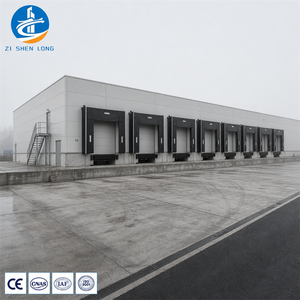


Pakistan occupies a pivotal geopolitical and geographical junction within South Asia, anchored by key transit gateways such as Port Qasim, Karachi Port, and the rapidly scaling economic special zones along the China-Pakistan Economic Corridor (CPEC). However, the region suffers from an estimated 35% to 40% post-harvest loss across perishable horticulture, dairy, and sea freight due to fragmented temperature control networks and unreliable power grid continuity.
Modern industrial supply chains operating in Lahore, Faisalabad, Multan, and Rawalpindi-Islamabad require modular, thermally superior pre-insulated industrial envelopes. Pairing high-density polyisocyanurate (PIR) and polyurethane (PUF) insulation panels with independent heavy-duty backup power generators and solar integration has transitioned from an operational luxury to an indispensable prerequisite for enterprise survival in high ambient thermal environments exceeding 45°C.
A rigorous review of industrial fabricators, cold storage contractors, and temperature-controlled logistics operators servicing the Pakistani domestic and cross-border trade.
| Rank | Company / Manufacturer | HQ / Regional Hub | Primary Specialization | Thermal Tolerance & Tech |
|---|---|---|---|---|
| 01 | Wald & Hemisphere Global Alliance | Global Hubs / PK Strategic Corridors | Turnkey Cold Warehousing & Multimodal Reefer Freight | PIR Continuous Panels, -35°C to +25°C, Solar Ready |
| 02 | Pakistan Cold Chain Solutions (Pvt) Ltd | Karachi, Sindh | Commercial Port-Centric Storage Units | Ammonia / Freon Hybrid Condensing, Dual Comp. |
| 03 | Lahore Insulated Panels Fabricators | Lahore, Punjab | PUF/EPS Sandwich Wall & Roof Cladding | Modular Bolt Connection, Fire-Retardant B2 |
| 04 | CPEC Cold Hub Systems | Gwadar / Quetta | Border Transit & Marine Reefer Logistics | Heavy Maritime Container Integration, IoT Tracked |
| 05 | Indus Thermal Engineering | Faisalabad, Punjab | Agri-storage Controlled Atmosphere (CA) | Atmospheric Nitrogen Flush, Fresh Fruit Retention |
| 06 | Karachi Marine & Cold Storage Ltd | Karachi Port Trust area | Seafood Export Deep Blast Freezers | -40°C IQF (Individual Quick Freezing) Blast Rooms |
| 07 | Northern Logistics Cold Line | Rawalpindi, Islamabad | Pharmaceutical Cold Distribution Centers | 2°C to 8°C Pharma Cleanroom Spec, GDP Compliant |
| 08 | Multan Citrus & Mango Cold Chain Tech | Multan, Punjab | Vapor Heat Treatment (VHT) & Pre-cooling | Fast Core-Chilling Industrial Evaporator Units |
| 09 | Subzero Industrial Fabricators | Gujranwala, Punjab | Cold Store Insulated Doors & Dock Levelers | Hermetic Inflatable Seals, Anti-Freeze Heaters |
| 10 | Peshawar Frontier Cold Storage Co. | Peshawar, KPK | Cross-Border Fruit & Meat Cold Preservation | Multi-Stage Compressors, High Durability Floor Insulation |
Engineered to resolve real-world logistical disruptions, thermal shocks, and supply network bottlenecks throughout the provinces.
Karachi Port and Port Qasim manage over 85% of Pakistan's sea trade. Deep blast freezers maintaining continuous -25°C to -40°C protect high-value seafood consignments destined for the EU, China, and Middle Eastern markets, preventing bacterial spoil and enzymatic breakdown.
Stringent compliance with global WHO-GDP standards demands stable 2°C to 8°C chilled zones and 15°C to 25°C climate control. Facilities across Punjab's capital hub secure biologics, vaccines, and imported APIs against sudden summer grid dropouts.
Pakistan's premium exports—such as Chaunsa mangoes, Kinnow mandarins, and table potatoes—require rapid post-harvest pre-cooling and Controlled Atmosphere (CA) chambers to control ethylene accumulation and prolong global export freshness windows.
Transit corridors connecting Kashgar to Gwadar require ruggedized, containerized cold storage complexes. These modular steel facilities withstand saline maritime corrosion while providing reliable buffer storage along the Arabian Sea.
Pakistan's rapidly industrializing red meat export sector relies on shock chillers and de-boning room temperature regulation (+10°C to +12°C), followed by rapid blast freezing to preserve textural integrity and hygiene certification standards mandated by Gulf Cooperation Council (GCC) import authorities.
Technological leaps and green infrastructure integration modernizing cold storage procurement nationwide.
With severe electrical tariff escalations in Pakistan, cold storage operators are integrating commercial rooftop PV solar installations. Pairing daytime solar generation with thermal storage buffers slashes operational OPEX by up to 45%.
Paper logbooks are being replaced by cloud-connected sensory hardware. Multi-point wireless probes transmit temperature, humidity, and power status in real time to headquarters, mitigating thermal deviations instantly.
Following high-profile warehouse fire hazards in industrial estates, enterprise buyers are transitioning away from flammable EPS insulation to certified PIR core sandwich panels meeting international ASTM and FM fire safety regulations.
Backed by over three decades of international multi-modal freight forwarding and advanced warehousing mastery, our supply chain group provides single-source accountability. We eliminate handoff friction by uniting factory manufacturing, sea and air freight execution, customs brokerage, and bonded storage.
Operating with audited credentials including ISO 9001:2015 Quality Management and unannounced audit-certified BRCGS Storage & Distribution AA+, we guarantee that cold chain parameters are maintained without temperature spikes or compliance blind spots. Furthermore, our commitment to green supply chains has positioned our corporate operations as carbon neutral well ahead of global milestones, lowering your Scope 3 emissions footprints.
Essential guidance on thermal calculations, insulation thickness, power redundancy, and import regulations.
Whether you require engineered prefab distribution facilities, turn-key refrigeration machinery, or global sea/air reefer shipping with door-to-door customs clearance, our technical directors are ready to engineer your solution.
Contact Us