
DDP Cargo
Engineered to mitigate port demurrage, satisfy Iraqi Central Organization for Standardization and Quality Control (COSQC) mandates, and ensure seamless customs release across federal and regional ports of entry.


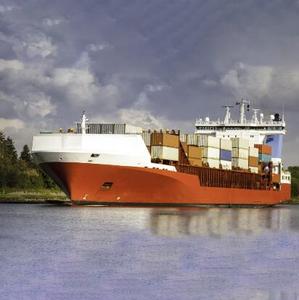
An authoritative operational briefing for international procurement managers, construction contractors, and enterprise distributors sourcing cargo from mainland China into Federal Iraq and the Kurdistan Region.
Navigating Iraqi customs clearance represents one of the most operationally demanding logistical theaters in global commerce. Historically characterized by decentralized documentation, unpredictable tariff appraisals, and extensive manual bureaucracy, Iraq's border management has entered a transformative phase driven by the nationwide rollout of the UNCTAD-backed ASYCUDA World (Automated System for Customs Data). For Chinese exporters and Iraqi importers, this digitization shift establishes uncompromising requirements for transactional transparency, Harmonized System (HS) nomenclature alignment, and strict valuation criteria under the WTO Valuation Agreement frameworks adopted by the General Commission of Customs in Baghdad.
Cargo originating from China's primary manufacturing hubs—such as Shanghai, Ningbo, Shenzhen, Guangzhou, and Qingdao—destined for Iraq must navigate distinct operational corridors governed by two jurisdictional authorities: the Federal Government of Iraq operating through southern sea gateways like Umm Qasr Port and Khor Al Zubair, and the Kurdistan Regional Government (KRG) administering northern terrestrial corridors like Ibrahim Khalil bordering Turkey. Achieving frictionless customs release hinges upon pre-shipment document authentication, where commercial invoices and certificates of origin must receive legalization from the Iraqi Embassy or Consular missions in Beijing and Guangzhou, alongside attestation by the China Council for the Promotion of International Trade (CCPIT).
Non-exempted commercial cargo cannot clear customs at Umm Qasr or Baghdad International Airport without a valid Certificate of Conformity (CoC) issued by an authorized international inspection agency (such as Bureau Veritas, TÜV Rheinland, Cotecna, or SGS) prior to departure from China. Entering Iraqi waters without an authentic Verification of Conformity (VoC) document triggers mandatory re-testing at the port, extreme demurrage penalties, or immediate compulsory re-exportation of the vessel's cargo.
How our multimodal China-to-Iraq customs solutions execute across diverse industrial, civil reconstruction, and commercial distribution ecosystems.
Direct logistical management for upstream and midstream energy infrastructure. Handling heavy engineering valves, drill pipes, pipeline steel, and pumping assemblies routed via Umm Qasr Port (North & South Terminals) into Rumaila, West Qurna, and Majnoon oil concessions under Duty-Exemption Decrees (Ministry of Oil Form 7).
Comprehensive turnkey DDP forwarding for municipal infrastructure, commercial real estate development, and residential housing initiatives. Mobilizing prefabricated structural steel frames, architectural finishing materials, electrical switchgear, and sanitary ware from Foshan and Hebei through port customs into centralized Baghdad holding yards.
Specialized northern corridor operations serving Erbil, Sulaymaniyah, and Duhok markets. Utilizing sea-land transit via Mersin or Bandar Abbas, or direct air express into Erbil International Airport (EBL) for high-value consumer electronics, medical diagnostics, automotive components, and retail inventory requiring expedited customs clearance.
Strategic geopolitical and infrastructure developments reshaping transit velocity, tariff models, and supply chain predictability between China and Iraq through 2030.
The operational commissioning of the Grand Faw Port in southern Iraq is poised to dramatically alleviate container berthing backlogs at Umm Qasr, doubling deep-water container throughput and opening high-speed multimodal connections.
The electronic transition from paper manifest declarations to digital electronic data interchange (EDI) under ASYCUDA World at all major border posts eliminates discretionary port valuation delays and curtails border dwell times.
Known as the 'Dry Canal', the $17 billion rail and highway network linking southern Iraqi ports directly to the Turkish border positions Iraq as the definitive trans-Eurasian trade conduit, reducing China-to-Europe overland transit schedules.
Increasing adoption of bilateral trade settlement mechanics bypassing intermediary foreign exchange hurdles facilitates transparent transactional declarations, shielding Chinese manufacturers from exchange rate volatility.
| Port of Entry / Gateway | Jurisdiction | Primary Cargo Modality | Avg. Transit (Ex-China) | Customs Clearance Dwell | Core Clearance Requisites |
|---|---|---|---|---|---|
| Umm Qasr Port (North/South) | Federal Iraq (Basra) | FCL, Breakbulk, Project Logistics | 24 – 32 Days (Sea) | 4 – 7 Days | Pre-certified CoC, legalized invoice/packing list via Iraqi Embassy Beijing, ASYCUDA declaration. |
| Baghdad Int'l Airport (BGW) | Federal Iraq (Capital) | Air Freight Consolidation, Express | 3 – 6 Days (Air) | 24 – 48 Hours | Direct Master Air Waybill (MAWB), COSQC verification, authorized local customs broker power of attorney. |
| Erbil Int'l Airport (EBL) | Kurdistan Region (KRG) | High-Value Air Parcel, Medical, Tech | 4 – 7 Days (Air) | 24 – 48 Hours | KRG Import License, regional customs valuation compliance, standard commercial invoice attestation. |
| Ibrahim Khalil (Terrestrial) | KRG / Turkey Border | Cross-Border Overland Multimodal | 35 – 45 Days (Sea-Truck) | 3 – 5 Days | Transit TIR Carnet, Turkish transshipment bonded docs, KRG quality control registration. |
| Khor Al Zubair Port | Federal Iraq (Basra) | Bulk Liquid, Petrochemical Equipment | 28 – 35 Days (Sea) | 5 – 8 Days | Ministry of Oil exemption letters (Form 7), specialized dangerous goods classification documentation. |
Securing smooth clearance through Iraqi customs requires proactive orchestration long before the container vessel departs Shanghai or Shenzhen. A breakdown in document sequencing frequently leads to containers being placed under physical quarantine at the port, where demurrage rates accumulate rapidly. Our standard operational clearance procedure adheres to a rigorous five-stage regulatory lifecycle:
Rigorous auditing of HS codes against the Iraqi Customs Tariff Book. Calculating accurate CIF values and identifying specific regulatory exemptions (e.g., Investment Law No. 13 of 2006 exemptions for developmental machinery).
Coordination with certified inspection agencies across Chinese production facilities. Conducting physical laboratory tests, quantity verification, packaging checks, and issuance of the official Certificate of Conformity.
Submitting the original Commercial Invoices and Certificates of Origin to CCPIT, followed by consular authentication via the Ministry of Foreign Affairs (MFA) and the Embassy of the Republic of Iraq in Beijing.
Pre-arrival electronic manifest lodgment, customs declaration preparation, duty calculation, and issuance of the initial assessment notice prior to the vessel berthing at Umm Qasr or aircraft arrival at BGW.
Customs inspection clearance, final duty settlement, physical release through terminal gates, and dispatch under GPS-tracked heavy transport or armed convoy escorts for secure delivery into Baghdad, Basra, or Erbil.
Drawing on the core infrastructure, audited accreditations, and multi-sector logistics capabilities established by Hemisphere Freight Services (HFS).
Our quality management systems adhere to continuous external audits, guaranteeing rigorous chain-of-custody protocols for sensitive cargo, precision instrumentation, food, pharmaceuticals, and industrial consumables.
Ranked among the most reliable independent air freight forwarders, operating direct allocations out of London Heathrow, Guangzhou Baiyun, Shanghai Pudong, and Hong Kong into Baghdad and Erbil international airports.
Leveraging specialized port-adjacent terminals, export packing hubs, and duty-suspension bonded facilities that allow clients to consolidate shipments, mitigate demurrage exposure, and release inventory as demand dictates.
Specific answers to critical operational, fiscal, and regulatory queries encountered by procurement teams importing from China into Iraq.