Reverse logistics between Sweden and China demands coordinated multi-modal transport, secure industrial equipment, precision staging warehouses, and certified consolidation pathways. Explore our key intermodal solutions and integrated product series supporting resilient cross-border operations.

In an era defined by aggressive European circular economy mandates, stringent Ecodesign for Sustainable Products Regulations (ESPR), and zero-landfill requirements across the Nordic territory, reverse logistics can no longer be treated as an incidental cost center. For Swedish importers, industrial engineering contractors, and Scandinavian consumer brands sourcing from the Pearl River and Yangtze River deltas, reverse logistics forms the core framework for capital recovery, warranty remediation, duty mitigation, and Scope 3 carbon compliance.
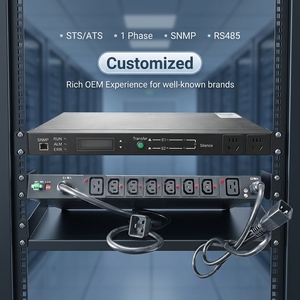
Historically, cross-border returns from Scandinavia back to Chinese production plants were impeded by disproportionately high return freight costs, complex customs nomenclature, and the punitive double-taxation risk under European Union and Chinese General Administration of Customs (GACC) regimes. When an electronic assembly, an industrial power distributor (such as high-precision ATS/STS rackmount PDUs), or complex mechanical cargo developed defects in Sweden, businesses routinely absorbed total write-offs rather than navigating cross-border returns.
Today, escalating raw material costs, high-value component architectures, and Swedish environmental laws enforced by Naturvårdsverket (the Swedish Environmental Protection Agency) prohibit wasteful disposal. Modern reverse logistics architecture bridges this divide through regional sorting hubs, bonded repair processing, return merchandise authorization (RMA) triage, and specialized bilateral transport protocols. By establishing automated inspection points in Gothenburg, Malmö, or Stockholm, consignments are triaged immediately: units qualifying for local software re-flashing or repackaging are retained within the EU single market, while defective assemblies requiring factory rework are consolidated into ocean FCL or air freight consolidations to Shenzhen, Ningbo, or Shanghai under Inward and Outward Processing customs exemptions.
Financial leakage in Sino-Nordic returns typically occurs during customs valuation. Under the Union Customs Code (UCC) administered locally by Tullverket (Swedish Customs), commercial operators returning goods to China for repair, maintenance, or recalibration must utilize Outward Processing Relief (OPR). Without precise OPR registration prior to export, the re-importation of refurbished components into Sweden triggers standard Common External Tariff (CET) rates and a 25% Swedish Value Added Tax (Mervärdesskatt) calculated across the full replacement value rather than the net value added during repair.
Simultaneously, entry into Chinese customs borders requires deep familiarity with GACC's "Returned Goods" regulations (Code 4561) and "Repairs and Alterations" frameworks (Code 1300). Consignments must be backed by original export declaration verification numbers, verifiable serial number registries, and formal commercial contracts proving non-sale return status. As an established multi-modal operator with over 30 years of integrated trade compliance, our cross-border teams coordinate direct electronic data interchange (EDI) filings between Swedish and Chinese authorities, eradicating customs holds and safeguarding supply chain velocity.
Tailored technical workflows engineered specifically for Sweden’s leading industrial clusters, retail platforms, and infrastructure contractors managing high-velocity trade with China.
Sweden's surging data center corridor across Stockholm, Luleå, and Västerås requires rapid warranty replacement and rotatable spare pools for critical rack infrastructure—including intelligent STS/ATS PDUs and server rack cooling systems. Our reverse corridor provides 24-hour dispatch of replacement buffer stock from local bonded facilities while defective systems are batched, ESD-packed, and shipped via expedited air cargo back to manufacturing hubs in Guangdong for motherboard-level diagnosis.
Managing high return rates across Nordic consumer electronics, personal care goods, and retail lifestyle items. Rather than shipping individual parcel returns directly to China at exorbitant postal tariffs, returned parcels are collected via local Swedish drop-offs (PostNord/Bring/DHL integrations), sorted at our consolidation warehouse, graded for cosmetic or functional integrity, relabeled, and restocked for intra-European redispatch, cutting international freight expenditure by up to 68%.
For major Nordic engineering installations, rail construction programs, and renewable energy sites needing heavy equipment rotation, side-open container handling, and breakbulk maritime charters. Our project logistics division coordinates oversized return freight from the Port of Gothenburg (Göteborgs Hamn) to Chinese manufacturing plants, managing ISPM-15 certified timber export crating, route permits, and customs bonded security throughout transit.
Selecting the appropriate reverse logistics routing model determines your landed cost recovery, lead time predictability, and regulatory exposure under Nordic trade governance.
| Return Architecture | Primary Application | Average Lead Time | Swedish Customs (Tullverket) Profile | Carbon & ESG Efficiency | Optimal Mode |
|---|---|---|---|---|---|
| Direct Cross-Border Air RMA | Mission-critical electronics, aerospace rotables, urgent warranty recalls | 3–6 Days | UCC Outward Processing Relief (OPR) electronic pre-clearance | High unit emission; offset via SAF carbon mitigation programs | IATA Scheduled Air Cargo |
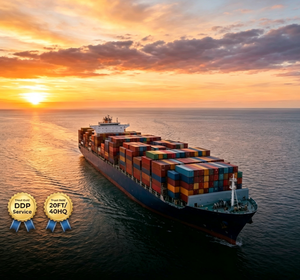
| Consolidated Bonded Sea FCL | High-volume consumer goods, heavy industrial equipment, bulk parts | 32–42 Days | Customs bonded warehousing with duty suspension until re-export | Lowest carbon intensity per ton-kilometer; optimized vessel routing | Ocean FCL / Side-Open Container |
| Regional Nordic Triage & Resale | Consumer retail, B2C e-commerce, open-box electronics, lifestyle items | 24–48 Hours | Goods remain in EU free circulation; zero cross-border tax friction | Zero transcontinental transport; maximum circular utilization | Local Road Haulage & 3PL Hub |
| Certified Disassembly & Material Recovery | End-of-life electrical machinery under Swedish WEEE / Battery Directives | Scheduled Batches | Regulated waste export permits; non-hazardous certificates required | Strict circular alignment with Naturvårdsverket recycling targets | Multimodal Rail & Short Sea |
Operating in the Nordic region requires forward compliance with progressive environmental legal structures and rapid digitalization in supply chain provenance.
The implementation of the EU Ecodesign for Sustainable Products Regulation is transforming Swedish procurement. Importers of Chinese power apparatus, electronics, and textiles will soon require serialized Digital Product Passports documenting component provenance, repair history, and recycling blueprints. Our reverse infrastructure is integrating scan-level tracking ensuring serialized tracking from Swedish return points back to Chinese OEM facilities.
Swedish environmental zones (Miljözoner) across central Stockholm, Gothenburg, and Malmö heavily restrict high-emission commercial transport. Forwarders must deploy electric delivery fleets (EV) and HVO100 renewable diesel for reverse pick-ups. Aligning with our verified carbon-neutral status achieved five years ahead of target, our road networks in Sweden integrate clean collection directly to deep-water consolidation berths.
Sweden's strict enforcement of battery take-back directives under Förordning om batterier requires certified reverse transport for hazardous lithium-ion modules found in electronics. Returning lithium equipment to China demands full ADR/IMDG Class 9 certification, explosion-proof thermal packaging, and vetted shipping carrier approval—competencies directly governed by our specialized Dangerous Goods logistics specialists.
From our deep-water port-centric infrastructure and bonded warehousing to accredited customs brokerages and IATA-ranked air facilities, we eliminate supply chain vulnerabilities across borders.





Essential operational, legal, and financial guidance for Swedish logistics managers, purchasing executives, and European trade directors.
To eliminate double taxation, goods must be declared under Outward Processing Relief (OPR) prior to leaving Sweden. Tullverket verifies the serial numbers and export customs registration. When the refurbished cargo returns from the Chinese factory, customs duties and 25% Swedish VAT are assessed solely on the value of any replacement parts or labor fees incurred during the repair rather than the gross value of the machine.
China Customs requires formal declaration under Customs Regime Code 4561 (Returned Goods) or 1300 (Repairs). Consignments must be supported by the original export declaration from China, the original commercial sales invoice, a signed technical inspection report detailing the defect, and an official return agreement between the Swedish buyer and the Chinese manufacturing vendor.
Yes. Our dangerous goods (DG) team handles Class 9 lithium-ion batteries and hazardous apparatus by sea, air, and road. We provide UN-certified thermal packaging, ensure compliance with ADR road regulations across Sweden, prepare dangerous goods declarations (DGD), and coordinate approvals with maritime container lines and air carriers in accordance with IATA and IMDG regulations.
Consolidated air freight from Stockholm Arlanda (ARN) or Gothenburg Landvetter (GOT) to Shanghai Pudong (PVG) or Shenzhen (SZX) typically requires 3 to 6 business days, including export pre-clearance. Reverse ocean FCL or LCL shipments from Port of Gothenburg to main Chinese ports average 32 to 42 days, representing the most cost-effective solution for non-urgent bulk components and heavy cargo.
By utilizing our bonded storage facilities, disputed or returned consignments can be stored with import duties and VAT fully suspended. This gives Swedish importers time to inspect the cargo, obtain supplier credit notes, or prepare goods for re-exportation directly to China or third countries without ever triggering domestic tax liabilities.
DAP (Delivered at Place) or DDP (Delivered Duty Paid) are commonly recommended for warranty returns where the Chinese vendor accepts financial accountability for the return freight. However, if the Swedish company controls the repair cycle, CPT (Carriage Paid To) or FCA (Free Carrier) provides greater transparency over carrier selection and customs clearance speed.
Whether you require immediate warranty RMA dispatch, bonded consolidation in Scandinavia, or full Outward Processing Relief guidance with Swedish Tullverket, our dedicated international logistics engineers are ready to assist.