
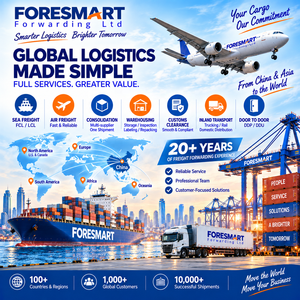
Engineered for hazardous chemicals, lithium battery assemblies, sensitive electronics, and high-spec industrial transfers with verified safety audits.

Years Logistics Legacy
DG Port Clearance Rate
IMO / ICAO Classes Handled
Accident Transit Record
Navigating the global regulatory landscape across the IMDG Code, ICAO TI/IATA DGR, and China MSA Port Fire Safety Mandates.
Navigating international hazardous material (Hazmat) and Dangerous Goods (DG) export from China requires far more than standard freight forwarding workflows. It demands an exhaustive engineering-level understanding of chemical properties, international marine standards, air transport covenants, and the rigorous maritime governance enforced by the Maritime Safety Administration (MSA) of the People's Republic of China. Operating as a tier-one logistics provider, our infrastructure solves the high barriers to entry that global importers face: chemical stability verifications, container segregation rules, terminal safety protocols, and cross-border customs declarations.
Every dangerous goods consignment initiated from mainland industrial hubs—such as the Yangtze River Delta (Shanghai, Ningbo) and the Pearl River Delta (Shenzhen, Guangzhou, Hong Kong gateway)—must strictly adhere to the tripartite compliance pyramid: UN Specification Packaging Certification (Dangerous Goods Package Certificate / 危包证), formal Safety Data Sheets (SDS / MSDS under GHS Rev. 10 standards), and certified Safe Transport Conditions Appraisal Reports issued by accredited Chinese state institutes (such as the Shanghai Institute of Chemical Industry - SICI or DGM China).
Expert supply chain pathways for UN3480, UN3481, UN3171, and UN3536. End-to-end certification handling for UN38.3 test summaries, thermal runaway prevention, and drop-tested UN performance packaging for large energy storage systems.
Paints, industrial resins, adhesives, silicates, and metal powders (UN1263, UN1993, UN3178). Managed under temperature-monitored reefers, explosive-proof container stuffing, and flashpoint verification reporting.
Acids, industrial alkalis, battery electrolytes, and high-purity chemical precursors. Fully segregated per the IMDG Segregation Table (Away from, Separated from, Separated longitudinally by an intervening complete compartment).
Benchmarking ocean freight, air cargo, and multimodal channels for hazardous shipments leaving China ports.
| Freight Mode | Governing Standard | Primary DG Commodity Classes | Packaging Directives | Lead Time Window |
|---|---|---|---|---|
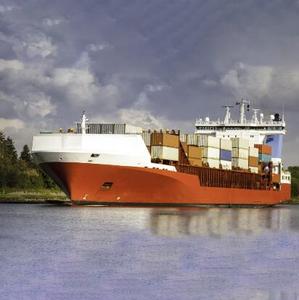
| Ocean FCL (Dangerous Goods) | IMO IMDG Code (Amdt. 41-22) | Classes 2, 3, 4, 5, 6.1, 8, 9 (ISO Tanks / Dry Box) | UN Certified Drums, IBCs, Wooden Cases with ISPM 15 | 30–45 Days (Global Port-to-Port) |
| Ocean DG LCL Consolidation | IMDG Compatibility Groups | Class 3, Class 8, Class 9 (Strictly non-reactive) | UN Combination Packaging with Inner Leak-Proof Seals | 35–50 Days (Depot-to-Depot) |
| Dedicated Hazmat Air Freight | ICAO TI / IATA DGR (65th Ed.) | Class 9 (UN3480 PI965 Section IA/IB), Class 3/6/7 (CAO Only) | Strict Weight/Net Quantity Limits, UN Fiberboard 4G/4GV | 2–7 Days (Hub-to-Hub) |
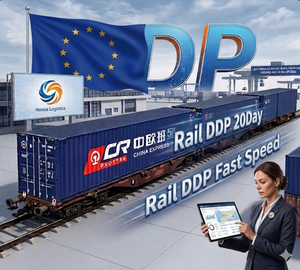
| Cross-Border Multimodal DDP | ADR / US DOT 49 CFR / China JT/T 617 | E-Commerce Lithium Batteries, Power Devices, Sensors | UN Certified Inner Blisters, Terminal Overpack Protection | 7–18 Days (Door-to-Door) |
Technological disruption, regulatory consolidation, and ecological imperatives reshaping chemical and energy logistics.
Global procurement teams now mandate comprehensive CO2e accounting across DG shipments. Utilizing accredited smart routing, electric container handling within port yards, and low-sulfur marine carriers allows buyers to minimize carbon tax liabilities under the EU CBAM regime.
Procurement contracts increasingly require live sensor deployment tracking temperature, internal barometric pressure, shock impact (G-force), and volatile gas emissions in transit. Smart ISO tank containers prevent catastrophic chemical phase changes during trans-equatorial ocean voyages.
With sodium-ion, solid-state, and high-nickel lithium batteries entering the industrial pipeline, customs bodies worldwide have updated H.S. Code tariff lines and documentation criteria. Exporters require forwarders that dynamically interpret maritime classifications to prevent confiscation.
How China's core maritime and air hubs are upgrading infrastructure to handle hazardous industrial transfers.
The modernization of China's hazardous goods supply chain is anchored in deep automation and rigorous port-centric terminal isolation. Key facilities across Yangshan Deepwater Port, Ningbo-Zhoushan Port, and the Port of Shenzhen have deployed automated robotic terminals with dedicated explosion-proof zones and thermal imaging towers. This transition eliminates unauthorized hazardous cargo dwell times and substantially diminishes fire hazard profiles during pre-berthing storage.
Simultaneously, the integration of Digital Customs Clearance (Single Window Integration) matches Dangerous Cargo Declarations against vessel stowage plans in real-time. This eliminates paper-based tampering of UN packaging certificates and ensures full traceability from factory production lines to destination devanning docks.
Three decades of world-class logistics mastery, fully bonded port facilities, and flawless compliance accreditations.
ISO 9001:2015 quality management and BRCGS AA+ storage standards, ensuring zero-defect processes across DG documentation, export crating, and bonded storage.
Direct allocations with world-class airlines, utilizing licensed dangerous goods personnel certified to sign Shippers Declarations for Dangerous Goods (DGD).
Dedicated bonded storage at core coastal terminals, enabling import duty suspension, container devanning, and professional repacking under customs supervision.
Operating a carbon-neutral infrastructure five years ahead of industry baselines, with solar-powered bonded facilities and verifiable per-shipment emissions reporting.
Direct, actionable guidance on dangerous goods protocols, required documentation, and port procedures.
Connect directly with our senior dangerous goods logistics engineers to review your chemical classifications, verify UN packaging, or calculate comprehensive landed freight quotes.