Explore heavy-haul, open-container, multimodal consolidation, and factory-certified marine lashing equipment directly supporting high-tonnage China export operations.
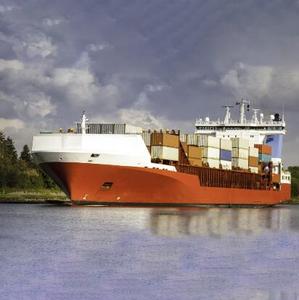
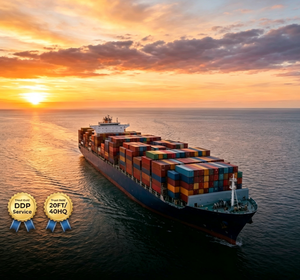
Global project procurement across heavy industrial infrastructure, energy development, and mechanical manufacturing has fundamentally outgrown conventional containerized shipping lines. For abnormal, non-standardized cargo exceeding the dimensional thresholds of 40-foot High-Cube maritime containers (12.03m × 2.35m × 2.69m) and gross weight ceilings of 28.5 metric tonnes, breakbulk ocean shipping serves as the essential logistical arterial route linking China’s leading industrial manufacturing regions (Jiangsu, Shandong, Zhejiang, and Guangdong) directly to European, North American, Middle Eastern, and ASEAN commercial destinations.
Unlike standard container liner traffic where cargo security relies primarily upon internal container dunnage and corner casting locks, wholesale breakbulk transportation demands comprehensive naval architecture calculations, structural deck loading verifications, crane radius stress analyses, and rigorous compliance with the International Maritime Organization (IMO) Code of Safe Practice for Cargo Stowage and Securing (CSS Code). Sourcing breakbulk freight services directly from certified China factory clusters and international logistics engineering partners eliminates costly subcontracting tiers, mitigates port dwelling penalties (demurrage and detention), and guarantees structural integrity through strict adherence to engineered lifting, rigging, and ocean lashing schemes.
Computational trim, stability, and stress modeling (shear force and bending moment) calculated across tween decks, weather decks, and lower holds to prevent vessel deformation during ocean transit.
Tandem crane lifts, modular hydraulic trailers (SPMT), spreader beam balancing, and center-of-gravity (CoG) determinations executing sub-millimeter positioning at quay side and vessel bays.
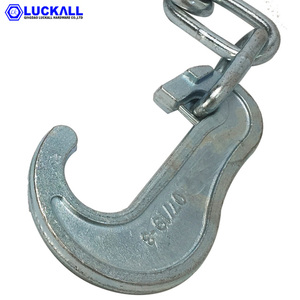
Factory-tested Grade 80 (G80) long-link welded steel lashing chains, heavy-duty ratchet load binders, custom dunnage wedging, and welded D-ring sea-fastening certified under maritime warranty surveys.
Evaluate optimal logistics routing based on cargo footprint, structural deadweight, port handling equipment availability, and total cost of transit ownership.
| Freight Mode | Dimensional & Payload Envelope | Port Infrastructure Required | Cargo Protection Tier | Cost Optimization Profile |
|---|---|---|---|---|
| Conventional Breakbulk (MPP Vessel) | Unrestricted; unit weights from 30T to >500T; lengths up to 75m+ | Heavy-lift quay gantry, mobile harbor cranes, or geared ship cranes (up to 700T tandem) | Underdeck Stowage (climate-protected) or heavy weather-deck tarpaulin | Lowest landed ocean cost per freight-tonne for oversized infrastructure assets. |
| Flat Rack & Open Top (OOG Container) | Restricted to cell-guide clearances; max length ~12m, width <4.5m, weight <40T | Standard container terminal twin-lift STS cranes with specialized over-height spreaders | Exposed to marine atmospheric corrosion; requires vapor barrier shrink wrapping | Liner predictability; premium container slot loss charges apply across full bays. |
| Roll-on / Roll-off (RO-RO MAFI Trailers) | Wheeled, tracked, or static cargo staged on roll-trailers; payload up to 120T | Dedicated stern/quarter ramp quay access; minimal shoreside crane dependency | Full Enclosed Deck; protected from open ocean spray and salt fog | Higher unit cost; limited route availability from secondary China export terminals. |
| Semi-Submersible Heavy-Lift | Extreme structures: offshore rigs, dredgers, mega cranes, barges >10,000T | Deepwater anchorage (>14m draft); float-on / float-off ballasting basins | Open sea-fastening; comprehensive naval architectural structural welding | Project-charter pricing; justified solely for ultra-mega infrastructure projects. |
Combining three decades of international logistics heritage with proprietary UK gateway assets, accredited compliance certifications, and fully integrated supply chain management.
Operating continuously since the early 1990s, our technical teams possess specialized knowledge in handling diverse breakbulk commodities, ranging from precision rail track systems for metropolitan transit authorities to massive electrical transmission infrastructure (e.g., T-pylons for Hinkley Point C).
Independently audited by external classification societies, our operations guarantee verified procedural integrity. We maintain the prestigious BRCGS Storage & Distribution AA+ rating (the highest attainable grade) alongside ISO 9001:2015 quality frameworks covering forwarding, customs, and bonded warehousing.
Direct operational control across core maritime hubs, including our flagship facilities at Felixstowe (the UK's primary container and breakbulk gateway), ABP Port of Ipswich (Westbank engineering & heavy export case making), Port One logistics park, London Heathrow IATA air hub, and Liverpool.
Streamline corporate cash flow through authorized customs bonded warehousing. Store imported machinery, steel components, or raw breakbulk stock with import tariffs and VAT suspended until cargo is discharged into free domestic circulation or re-exported to continental Europe.
Engineered crating and preservation services executed at our specialized Westbank port facility. Every crate, skid, and structural saddle is constructed using heat-treated, ISPM 15-compliant timber, complemented by barrier-foil hermetic vacuum sealing, vapor corrosion inhibitors (VCI), and desiccant buffers.
Achieving carbon neutrality five years ahead of the UK's mandatory 2030 target, our warehousing infrastructure features commercial rooftop photovoltaic arrays, 100% electric handling machinery, and real-time Scope 3 carbon emission accounting provided across every marine charter and breakbulk routing.
Strategic market analysis for global EPC contractors, industrial equipment buyers, and supply chain directors navigating structural shifts in breakbulk ocean freight procurement.
Global procurement teams are moving away from spot-market single-voyage booking due to volatile multi-purpose vessel (MPV) charter indices. Enterprise EPC contractors now establish 12-to-36 month forward-allocation agreements directly with ship owners and integrated freight managers, securing reserved hold capacity for rolling industrial deliveries across Asian port corridors.
Manufacturers in China are increasingly re-engineering massive monolithic machinery into standardized modular skids. By pre-fitting electrical cabling, fluid piping, and electronic telemetry into skid frameworks that conform to max-lift crane envelopes, factories allow project buyers to capture lower breakbulk freight rates while accelerating job-site commissioning.
Sophisticated buyers now reject pure Ocean Freight (O/F) spot quotes in favor of end-to-end Total Cost of Sourcing (TCS). This accounts for origin barge feeding, intermediate terminal storage, mobile crane positioning fees, quay lashing approvals by marine warranty surveyors, and destination inland abnormal route clearances.
To avoid massive berth congestion at gateway container super-terminals (e.g., Rotterdam, Antwerp, Los Angeles), breakbulk procurement strategies increasingly favor regional specialized heavy-lift ports like the Port of Ipswich, Immingham, Bilbao, and Houston, cutting multi-day vessel idling charges.
How digital twins, advanced marine telemetry, decarbonized propulsion, and high-tensile metallurgy are transforming risk management in heavy ocean logistics.
Before cargo reaches the quay, proprietary stowage CAD platforms run Finite Element Analysis (FEA) to simulate dynamic wave accelerations (pitch, roll, yaw, and heave). Point load distributions over vessel frames ensure no structural deformation occurs to hull floors during force-10 sea conditions.
Breakbulk machinery packages are increasingly instrumented with wireless IoT tri-axial shock loggers, tilt sensors, and internal relative humidity transmitters. Cargo owners and underwriters monitor G-force thresholds in real time via satellite uplink, providing irrefutable chain-of-custody data during international transit.
While G80 and G100 alloy steel chains remain the benchmark for rigid heavy-duty fastening, lightweight Ultra-High Molecular Weight Polyethylene (UHMWPE) synthetic lashing lines are revolutionizing topside sea-fastening. Offering equal tensile strength to steel at 85% reduced weight, they prevent paint abrasions on delicate machinery housings.
Direct answers to complex inquiries encountered by international procurement managers, shipping engineers, and overseas industrial equipment buyers.
Consult with our naval logistics engineers, heavy-haul route planners, and licensed customs specialists. Sourcing directly through verified China factory manufacturing clusters and managed UK/EU port-centric facilities guarantees maximum cargo security, predictable lead times, and absolute regulatory compliance.
