
Verified manufacturing units, specialised transit carriers, and international consolidation corridors inspected under strict ISO 9001:2015 and BRCGS AA+ benchmark protocols.





Procuring industrial machinery, automotive sub-assemblies, bulk raw goods, and temperature-sensitive assets directly from Chinese manufacturers demands rigorous oversight that extends far beyond casual visual confirmation. Modern cargo inspection protocols demand systematic engineering evaluations, chemical assays, factory capacity audits, and precise non-destructive testing (NDT). International importers navigating global trade corridors face non-trivial risks: unvetted material substitutions, dimensional non-conformities, sub-standard crating leading to maritime moisture degradation, and regulatory classification errors that trigger port-level impoundment.
To establish defensible quality thresholds, professional procurement organizations mandate ANSI/ASQ Z1.4 (ISO 2859-1) Acceptance Quality Limit (AQL) standards. Inspection regimes must incorporate comprehensive First Article Inspections (FAI), During Production Inspections (DUPRO), and final Pre-Shipment Inspections (PSI). By implementing these gates directly on factory floors in Ningbo, Shenzhen, Qingdao, and Shanghai before cargo dispatch, global procurement directors prevent defective consignments from arriving at destination terminals where rectification costs inflate tenfold.
How automation, ESG audits, and continuous container telemetry are transforming cross-border factory compliance.
Real-time continuous data loggers monitoring shock, tilt, atmospheric moisture, and thermal variance inside 20GP, 40GP, and 40ft Reefer containers during maritime transit.
Verification of factory-level power consumption and packaging lifecycle parameters to comply with UK and EU carbon boundary adjustments (CBAM) prior to export clearing.
Automated optical metrology applied to conveyor rollers, mechanical chains, and heavy-duty fabrication welds to spot micro-fissures imperceptible to standard manual checklists.
Selecting an inspection framework depends heavily on cargo physics, value concentration, and transit methodology. Below is an engineering comparison matrix defining standard inspection methodologies applied across key export sectors originating from China manufacturing clusters:
| Cargo / Asset Category | Core Inspection Protocol | Standard Acceptance Tolerance | Pre-Shipment Risk Mitigation |
|---|---|---|---|
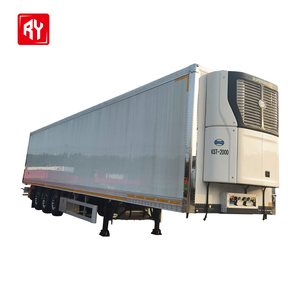
| Reefer Trailers & Cold Assets | Compressor thermal cycle stress testing, insulation density verification, chassis weld NDT. | Zero tolerance on thermal degradation (-25°C to +15°C stability). | Elimination of refrigerant leakage and structural twisting under load. |
| Air DDP Medical & Perishables | Secondary packaging validation, dry ice sublimation rate audits, IATA DGR classification. | Defect Rate < 0.01% on tamper-evident seals. | Prevention of biological degradation and hazardous declaration delays. |
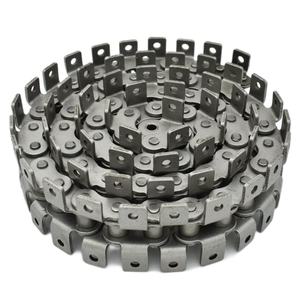
| Precision Conveyors & Roller Chains | Tensile yield testing, metallurgical hardness (Rockwell C), pitch tolerance analysis. | ISO 606 DIN 8187 mechanical dimensional conformance. | Avoidance of catastrophic conveyor line failure in distribution hubs. |
| FCL/LCL General Containerised Cargo | Container Cleanliness, Odor, Moisture (CCI), Container Security Seal verification (ISO 17712). | AQL Level II Major 1.5, Minor 4.0 standard. | Eradication of cross-contamination, maritime water ingress, and cargo shifting. |
Rigorous physical pre-shipment validation guarantees that when commodities land at strategic deep-water ports like Felixstowe or Southampton, container devanning occurs smoothly without unexpected quarantine holds or HMRC border rejections.
The manufacturing ecosystem across East Asia is rapidly shifting from manual end-of-line checking to continuous digital provenance. Over the next decade, supply chain resilience will rely upon cryptographic material passports and integrated vendor scoring. Forward-thinking procurement teams no longer treat inspection as an isolated cost centre; it is embedded as a core pillar of operational logistics.
By bridging factory inspection data directly with third-party logistics (3PL) warehousing management systems (WMS), global buyers eliminate informational blind spots. Real-time inspection data feeds directly into port-centric receiving yards, initiating customs clearance pre-filings, bonded warehouse reservations, and intermodal transport allocations long before vessels dock.
Backed by over 30 years of global freight forwarding, customs clearance, port-centric bonded warehousing, and heavy project cargo expertise.
Direct infrastructure at Felixstowe, Port One, the Port of Ipswich, London Heathrow, and Liverpool—eliminating unnecessary inland haulage fees and avoiding demurrage penalties.
Independently audited operational standards providing top-tier governance for ambient storage, high-value consumer electronics, pharmaceuticals, and temperature-controlled food distribution.
In-house customs compliance officers handling import/export declarations, duty suspension, VAT deferment accounts, and tariff classifications under dynamic UK trade treaties.
Achieved carbon neutrality five years ahead of UK 2030 targets. Operating solar-powered warehousing arrays and providing transparent Scope 3 carbon shipment reports.
Authoritative answers addressing supplier verification, inspection methodologies, customs clearances, and warehousing strategy.
Speak directly with our logistics specialists to coordinate end-to-end factory inspections, multimodal freight forwarding, UK customs clearance, and port-centric distribution.