China Wholesale Cargo Insurance Services Manufacturer & Exporter

Institutional-Grade Marine Underwriting, Multimodal Risk Indemnity, and Direct Port-Centric Supply Chain Protection

30+
Years Industry Heritage
100%
CIF / DDP Underwriting Access
110%
Standard CIF Valuation Cover
AA+
BRCGS Storage & Quality Audit
Verified Asset Portfolios

Integrated Wholesale Shipping & Insured Cargo Logistics Catalog

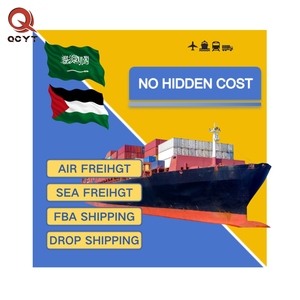
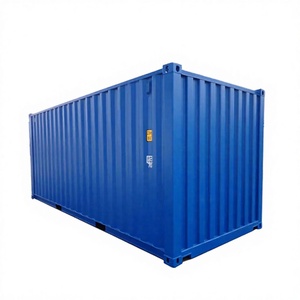
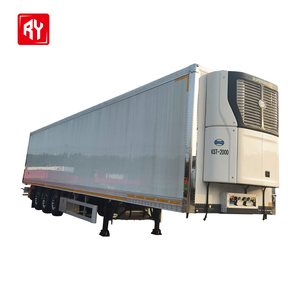
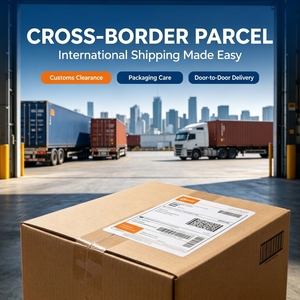
Combining multi-tier insurance underwriting with premier global forwarding: Door-to-Door, FCL/LCL, Reefer, and Cross-Border Air Shipments tailored for global buyers and procurement directors.

Procurement Intelligence

China Wholesale Cargo Insurance Services: Strategic Framework & Market Dynamics

A comprehensive examination of maritime liability limitations, institutional underwriting clauses, parametric tech integrations, and cross-border risk mitigation.

1. The Structural Imperative: Carrier Limitation vs. Marine Cargo Insurance

In contemporary global commerce, a pervasive misconception persists among overseas procurement teams: the assumption that ocean carriers, airlines, and third-party logistics (3PL) providers automatically assume financial liability for goods damaged or lost in transit. Under international maritime conventions—most notably the Hague Rules, Hague-Visby Rules, and the Hamburg Rules—carrier liability is severely limited. Under Hague-Visby, a maritime carrier's financial responsibility is capped at just 2 SDRs (Special Drawing Rights) per kilogram or 666.67 SDRs per package, whichever is higher. For an air freight consignment governed by the Montreal Convention, statutory liability is similarly restricted to 22 SDRs per kilogram regardless of actual commercial value.

Furthermore, carriers are legally exonerated from financial claims arising from an array of statutory exclusions, including acts of God, perils of the sea, fires uncaused by carrier privity, civil unrest, and crucially, General Average (GA). When a master declares General Average—such as during container ship grounding, maritime salvage, or emergency jettison—all cargo owners whose goods are saved must contribute cash bonds proportionally to the vessel salvage fund before their freight is released. Procuring first-party, comprehensive China wholesale cargo insurance converts an unhedged operational catastrophe into an underwritten, predictable business expense.

2. Underwriting Anatomy: Institute Cargo Clauses (I.C.C. A, B, and C)

When executing wholesale cargo insurance from Chinese manufacturing origins to destinations worldwide, policies are formulated under the standard frameworks established by the International Underwriting Association of London (IUA) or the parallel People's Insurance Company of China (PICC) marine clauses. Understanding these coverage tiers determines the viability of claims:

Clause Classification Risk Coverage Profile General Average Inclusion Theft, Pilferage & Non-Delivery Recommended Cargo Category
Institute Cargo Clauses (A)
All Risks Underwriting
All accidental loss, physical damage, rough handling, water ingress, washboard seas, and line-haul drop. Fully Covered (Including GA bonds) Included automatically Manufactured consumer electronics, fashion, precision engineering, solar components, auto parts.
Institute Cargo Clauses (B)
Named Perils Cover
Fire, explosion, stranding, collision, earthquake, volcanic eruption, river discharge, deck washing. Fully Covered Optional rider required Semi-finished industrial parts, raw plastic granules, steel coils, bulk agricultural shipments.
Institute Cargo Clauses (C)
Basic Minimum Indemnity
Catastrophic loss: sinking, capsizing, major collision, derailment, emergency jettison during perils. Fully Covered Excluded Scrap metal, low-value ores, non-perishable construction aggregate, timber.

3. Future Procurement Trends in Wholesale Marine Underwriting

Global supply chains are undergoing structural transformations driven by volatile geopolitics, climatic disruptions, and digital connectivity. Forward-looking exporters and importers are aligning with three decisive operational trends:

Parametric & Smart-Sensor Policies

Rather than relying on post-incident maritime loss adjusters who can take months to inspect devanned cargo, next-generation insurance utilizes 4G/satellite-enabled IoT loggers. Parametric thresholds—such as reefer temperature deviations surpassing ±3°C for over four hours, violent container shock impacts, or water ingress—trigger automated liquidity pay-outs without prolonged legal disputes.

Geopolitical Routing Riders (War & Strikes)

Prolonged disruptions across the Bab el-Mandeb strait and Red Sea route have rendered standard ocean schedules volatile, forcing container transit around the Cape of Good Hope. Procurement heads now mandate tailored Institute War Clauses (Cargo) and Institute Strikes Clauses, hedging against confiscation, piracy, civil unrest, and protracted voyage deviations.

API-Driven Open Floating Policies

Transactional single-shipment certificates are increasingly obsolete for high-velocity importers. Direct API integration between Enterprise Resource Planning (ERP) systems and underwriting syndicates enables automatic certificate generation the moment an export container departs a Chinese manufacturing facility, eliminating human delay and uncovered transit intervals.

4. Calculating Insurable Value: The 110% CIF Rule

Under international Incoterms® (including CIF - Cost, Insurance, and Freight, and CIP - Carriage and Insurance Paid to), international trade standards require that cargo insurance coverage equal the CIF commercial value plus 10% (commonly denoted as 110% of CIF value). This additional 10% provides a cushion intended to cover anticipated importer profit margins, local port handling, and unexpected customs reassessment expenses should the goods suffer total loss in transit:

Total Insured Value = (Commercial Invoice Value + Ocean/Air Freight + Insurance Premium) × 110%

By pairing competitive wholesale premium rates (often starting as low as 0.05% to 0.15% of the total CIF value, subject to commodity profile and destination port) with comprehensive coverage, our global shipping solutions eliminate financial vulnerabilities while optimizing overall cost of goods sold.

Corporate Infrastructure

Why Enterprise Importers Rely On Our Cross-Border Network

Leveraging over three decades of verified logistics mastery, owned port-centric warehouses, and internationally recognized quality certifications.

30+ Years Proven Experience

Managing global forwarding, container shipping, and insured cargo custody since the 1990s. Trusted by top retail and engineering enterprises including BiGDUG, Toolport, and TaylorMade.

Port-Centric Facilities

Strategic distribution centers at the Port of Ipswich, Port One, Felixstowe, London Heathrow, and Liverpool—eliminating unnecessary inland trucking, lowering costs, and preventing port demurrage.

BRCGS AA+ & ISO 9001:2015

Audited quality management, IATA-certified aviation handling, and the highest grade available for unannounced storage & distribution safety audits, providing verifiable cargo reliability.

Hassle-Free Customs & Bond

In-house import and export clearance declarations, commodity code audits, and authorized bonded warehousing for strategic tariff and VAT suspension.

Frequently Asked Questions

Wholesale Cargo Insurance & Global Shipping Logistics FAQ

Essential guidance covering maritime coverage, claim settlements, and international trade compliance.

Why is carrier liability insufficient for ocean and air cargo shipments from China?
International maritime conventions (such as Hague-Visby) and aviation conventions (Montreal Convention) cap carrier liability to minimal statutory amounts per kilogram (e.g., 2 SDR/kg for ocean freight, approximately $2.60 USD). Furthermore, carriers are completely exonerated from financial damages caused by rough weather, fire, navigation errors, and General Average declarations. Wholesale cargo insurance ensures full market value replacement and rapid claim settlements without the need to prove carrier negligence.
What is General Average, and how does cargo insurance protect against it?
General Average is an ancient maritime principle where all cargo owners and the shipowner proportionally share extraordinary sacrifices or expenses incurred to save the vessel from imminent danger (e.g., ship grounding or fire containment). If a container vessel declares GA, your container will not be released until a substantial cash deposit or insurance guarantee bond is posted. An All-Risk cargo insurance policy automatically posts this guarantee, preventing severe operational delays and preserving working capital.
Under what Incoterms should our business arrange wholesale cargo insurance?
Under EXW, FCA, and FOB terms, the risk of transit passes to the buyer the moment goods are handed over or loaded aboard the vessel at the Chinese port. Buyers must therefore arrange their own cargo insurance. Under CIF and CIP terms, the Chinese seller/exporter is legally bound to purchase insurance on the buyer's behalf. We provide flexible options: either coordinating full CIF/CIP insurance from origin or establishing annual open covers for overseas buyers managing their own freight risk under FOB terms.
How quickly are claims settled, and what documentation is required?
Standard claim settlements for non-disputed physical loss or damage are processed within 14 to 30 business days. The required documentation package consists of: the Master Bill of Lading (or Air Waybill), Commercial Invoice, Packing List, Certificate of Insurance, Survey Report (or photos showing package/container seal condition upon delivery), and formal notice of claim issued to the delivery carrier within the prescribed statutory notice window.
Can high-value project cargo, reefer goods, or dangerous items be underwritten?
Yes. Through our project cargo logistics and out-of-gauge heavy haulage teams, we underwrite oversized machinery, sensitive engineering assemblies, temperature-monitored refrigerated shipments, and certified dangerous goods (ADR/IMDG/IATA). Specialized riders covering mechanical breakdown, thermal deviations, and customized export crating (ISPM 15 compliant) are structured on demand.
Complete Supply Chain Risk Management

Protect Your Cross-Border Shipments with Institutional Underwriting

Whether moving single container loads (FCL), consolidated pallets (LCL), or urgent air cargo shipments, ensure your financial capital is backed by industry-standard Institute Cargo Clauses and reliable customs-bonded infrastructure.