
Engineered for volume exporters, industrial procurement managers, and cross-border retailers delivering directly to Canadian commercial centres.

Exporting industrial, commercial, and retail inventories into the Canadian market requires addressing a multimodal logistical corridor across geography, seasonal disruption, and fiscal systems. Unlike typical inland markets, Canada functions as a dual-ocean trade conduit anchored by the primary maritime gateways of Metro Vancouver (Port of Vancouver) and Port of Prince Rupert on the West Coast, balanced by the Port of Montreal and Port of Saint John in the East. Exporters targeting consumer zones in the Golden Horseshoe (Toronto-Mississauga) and Greater Montreal must bridge long distances across the Continental Divide. This requires predictable intermodal handoffs between ocean liners and Tier-1 rail systems like Canadian National (CN) and Canadian Pacific Kansas City (CPKC).
The implementation of the CBSA Assessment and Revenue Management (CARM) system has restructured customs administration for all commercial importers. Commercial entities registered under Canadian Non-Resident Importer (NRI) programs face direct financial and regulatory liability on the digital CARM Client Portal (CCP). The traditional framework, where customs brokers held liability through bulk accounts, has transitioned to a mandate requiring exporters to establish autonomous Financial Security Agreements, obtain electronic Business Numbers (BN9/RM15), and execute automated customs reconciliation before shipment arrivals. Navigating this framework requires an exporter forwarder capable of providing continuous end-to-end cargo movement linked with upfront regulatory compliance.
Engineered routing patterns, inland intermodal ramps, and fulfillment hubs designed to solve unique regional challenges across the Canadian provinces.
Handling high-cube 40HC containers through Vancouver's Robert's Bank and Centerm directly onto daily unit-train intermodal lines. Pre-clearing customs via EDI at sea prevents demurrage prior to long-haul rail dispatch into the Brampton Intermodal Terminal (BIT) servicing the Greater Toronto Area (GTA).
Tailored for B2B distributors requiring bonded staging. Freight enters via Sufferance Warehouses (BW/CW class) in Peel Region, Ontario, where Canadian federal GST (5%) and Harmonized Sales Tax (HST up to 15%) are deferred until items exit bond for regional distribution.
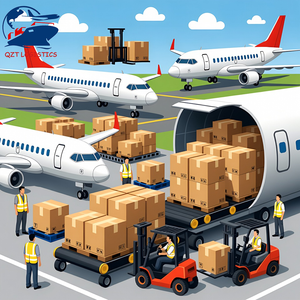
Express consolidation via scheduled cargo freighters directly into Vancouver International Airport (YVR) and Toronto Pearson International Airport (YYZ). Features same-day tarmac de-consolidation and automated PARS (Pre-Arrival Review System) processing for time-sensitive parts.
A technical comparison of routes, customs controls, and transshipment models serving the Canadian industrial sector.
| Routing Model | Primary Entry Hubs | Average Transit Times | Customs / Processing Regimes | Optimal Cargo Suitability |
|---|---|---|---|---|
| Direct West Coast Ocean Intermodal | Vancouver (Centerm/Deltaport), Prince Rupert | 16 – 22 Days (Asia Coast to BIT Ramp) | Pre-Arrival Review System (PARS) / ACI eManifest | Industrial manufacturing machinery, heavy electronics, high-volume consumer commodities |
| Direct Scheduled Air Freight | Toronto Pearson (YYZ), Vancouver (YVR), Montreal (YUL) | 2 – 4 Days (Origin to Ramp Delivery) | IATA Secure Chain, Electronic Customs Clearance | Critical automotive spares, high-value tech, pharmaceutical cold chain |
| Cross-Border Bonded Trucking (Ex-US Transshipment) | Pacific Highway (BC), Ambassador Bridge (ON), Lacolle (QC) | 3 – 6 Days (Linehaul & Border Crossing) | In-Transit Bond (A8A), FAST Highway Carrier Approved | Omnichannel e-commerce inventory, diversified palletized retail loads |
Key structural transformations across regulatory compliance, cold-chain operations, and port infrastructure.
The operational phase of CARM ends manual accounting entries (B3-3 forms). Exporters to Canada must integrate with the digital Commercial Accounting Declaration (CAD) framework. Correct HS-code harmonization and digital invoice mapping directly safeguard goods against non-compliance delays.
Exporters are diversifying discharge points beyond standard corridors. Route strategies combine Prince Rupert marine-rail links with secondary Atlantic corridors via Halifax, bypassing seasonal labor actions and winter-weather slowdowns along the Canadian Rockies.
Canadian corporate buyers and tier-1 retailers prioritize low-carbon freight networks. Incorporating electrified handling equipment, optimized intermodal rail legs, and verified carbon emission reporting gives global exporters a measurable competitive advantage.
Decades of operational experience delivering institutional-grade freight forwarding, audited compliance, and asset-backed logistics management.
Decades of hands-on freight forwarding experience across ocean, air, and overland routes. We operate owned warehouse facilities with specialized container devanning equipment, resolving issues in-house rather than delegating to unvetted subcontractors.
Our operations adhere to independently audited standards, including ISO 9001:2015 Quality Management and the highest BRCGS AA+ Storage & Distribution standard, ensuring strict adherence to cargo care, security, and process control.
As an IATA Cargo Forwarder with dedicated operations adjacent to critical international ports and air hubs, we secure guaranteed space allocations during peak quarters with direct visibility across all handling stages.
Detailed compliance, customs, and operational guidance for procurement professionals and global exporters.
Consult with our international multimodal specialists to design a resilient, CARM-compliant supply chain backed by Tier-1 freight assets and port-centric facilities.