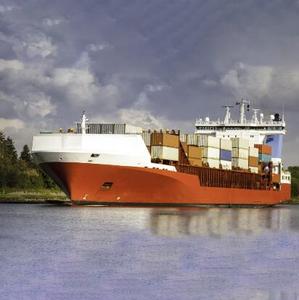
Custom OEM Breakbulk Shipping Services Supplier & Exporter serving Chicago
Engineered heavy-lift forwarding, intermodal rail-to-barge coordination, and end-to-end global project logistics optimized for Chicagoland heavy industry and manufacturing corridors.
Integrated Heavy Logistics Portfolio
OEM Project Cargo & Specialized Freight Services
Full-scale multimodal configurations engineered to connect manufacturing centers in Asia, Europe, and the Americas directly with the Port of Chicago (Iroquois Landing/Lake Calumet) and Midwest rail terminals.
Comprehensive multimodal customs handling and domestic distribution pipeline connecting overseas factory origins straight into Greater Chicago logistics hubs.
Intercontinental network connectivity leveraging major deep-water ports for machinery components transshipped onwards to Midwest heavy manufacturing zones.
Specialized intermodal container solutions and flat-rack configurations designed for side-loading industrial assemblies and continuous rail-line haulage.
Chicago represents the ultimate freight crossroads of North America. Handling abnormal and breakbulk cargo here demands precise engineering, maritime canal access, and coordinated Class I rail interchange.
Midwest Manufacturing & Infrastructure Demands
As the premier industrial epicenter of the American Midwest, the Chicago metropolitan area—stretching from the Calumet industrial corridor to Elgin, Rockford, and northwest Indiana—relies heavily on custom OEM breakbulk shipping. Unlike standard containerized freight, large-format equipment such as stamping presses, industrial generators, heavy agricultural machinery, structural bridge girders, and chemical processing pressure vessels cannot be enclosed in standard twenty or forty-foot maritime containers.
"Executing breakbulk in the Great Lakes Basin is an exercise in nautical clearance, seasonal freeze navigation, and high-precision inland transloading across six Class I railroads."
Our OEM breakbulk export and import services are engineered around the localized physical routing constraints of the St. Lawrence Seaway, the Port of Chicago at Lake Calumet, and the Illinois Waterway barge network. We engineer multi-stage transport programs that transition cargo seamlessly from specialized ocean breakbulk carriers to heavy-duty flat deck barges or direct to multi-axle heavy-haul configurations (such as Schnabel and beam trailers) suited for Illinois Department of Transportation (IDOT) permitted highway routes.
Port of Chicago Calumet Terminals
Direct maritime access through Lake Calumet and Iroquois Landing, offering uncongested berthing for ocean-going vessels and inland barges with heavy-lift crane capacity exceeding 150 metric tons.
St. Lawrence SeawayBarge IntermodalStevedoring
Class I Railroad Integration
Unmatched connection across BNSF, Union Pacific, Norfolk Southern, CSX, CN, and CPKC rail junctions. We design secure heavy-duty railcar tiedown schemes conforming precisely to AAR open-top loading rules.
AAR ClearanceHeavy-Duty RailcarsDirect Transload
IDOT & CDOT Permitted Road Corridors
Turnkey routing surveys, structural bridge clearance calculations, state police escort coordination, and oversized utility relocation across Cook, DuPage, and Will County transport corridors.
Superload PermitsRoute SurveysHydraulic Platform
Logistics Evolution & Trends
Trends Transforming Breakbulk Shipping in Chicago
How advanced engineering modeling, Great Lakes maritime renewal, and decarbonization pressures are altering procurement strategies for Midwest heavy industry.
Technical Innovation in Non-Containerized Freight
Procuring breakbulk services to and from Chicago has evolved beyond simple crating and charter bookings. OEM exporters and importers are confronting a changing supply matrix characterized by three critical localized trends:
1. Digital Twin Rigging & Center-of-Gravity (CoG) Simulation: Modern heavy capital equipment destined for automotive assembly lines or metal fabrication facilities in Illinois is now pre-modeled using 3D spatial simulation. Lashing tension, lifting lug stress, and center-of-gravity calculations are validated before cargo arrives quayside, eliminating handling risks at Port of Chicago transshipment docks.
2. Multimodal River-Barge Arbitrage via New Orleans: With seasonal closures along the St. Lawrence Seaway between late December and late March, project shippers increasingly rely on year-round Mississippi-Illinois River barge waterways. High-tonnage breakbulk arriving via Gulf deep-water ports is barged up-river directly to Chicago industrial docks, cutting inland trucking emissions by up to 70% per freight ton-mile.
3. Carbon-Optimized Heavy Cargo Distribution: Industrial enterprise supply chains are under mandate to measure Scope 3 logistics emissions. By consolidating breakbulk shipments onto river barge and electrified rail corridors via Chicago's rail hub, companies achieve aggressive carbon-neutral goals ahead of regulatory deadlines.
Routing Vector
Typical Transit (Days)
Capacity / Weight Limit
Chicagoland Primary Delivery Point
Carbon Efficiency
St. Lawrence Seaway Direct
28 – 38 Days
Up to 28,000 DWT per vessel
Port of Chicago (Iroquois Landing)
High (Low ton-mile emissions)
Gulf Port to River Barge
32 – 44 Days
1,500 – 3,000 MT per deck barge
Lake Calumet / Cal-Sag Channel
Optimum (Minimal road usage)
East Coast Port + Heavy Rail
18 – 24 Days
150 MT (Heavy-duty flat cars)
Chicago Intermodal Clearing Yard
Moderate
Over-the-Road Specialized Haul
14 – 20 Days
Subject to IDOT axle weight limits
Direct Jobsite (Door-to-Door)
Standard (Higher road emissions)
Enterprise Authority & Reliability
Why OEM Manufacturers Depend on Our Heavy-Lift Logistics
Over 30 years of end-to-end supply chain mastery, audited ISO 9001 and BRCGS AA+ protocols, and purpose-built infrastructure designed to eradicate risk from industrial project cargo.
Accountable In-House Execution
Every phase of your breakbulk movement is handled by one cohesive team—from initial export case-making and ISPM-15 compliant packing to marine warranty surveyor approval and on-site delivery in Chicago.
Zero Subcontract PassingSingle Contact
Certified Rigging & Engineering
Audited according to strict ISO 9001:2015 quality frameworks. We provide detailed lifting plans, dynamic stowage calculations, and load distribution analysis that satisfy stringent project insurance demands.
ISO 9001:2015Rigging Plans
Duty Optimization & Foreign Trade Zones
Strategic integration with Chicago Foreign-Trade Zone No. 22 (FTZ #22). Defer customs duties, avoid state tariffs, and preserve project cash flow while oversized machinery awaits site assembly.
FTZ #22 ChicagoDuty Deferral
Procurement Intelligence
Frequently Asked Questions for Chicago Freight Buyers
Actionable answers to technical, regulatory, and seasonal shipping challenges when moving heavy breakbulk cargo into the Illinois manufacturing basin.
How does winter seasonality in the Great Lakes impact breakbulk delivery schedules to Chicago?
The St. Lawrence Seaway generally closes to navigation between late December and late March due to freezing conditions along locks and channels. For ocean-going breakbulk vessels destined for the Port of Chicago, our logistics engineers design secondary routing mechanisms:
Gulf Port Discharge & River Barge: Discharging cargo at New Orleans or Mobile, Alabama, and utilizing deck barges via the Mississippi and Illinois River systems, which remain open year-round with ice-breaker support.
East Coast Rail Intermodal: Discharging at coastal ports (e.g., Baltimore, Norfolk, or Halifax) and moving inland via specialized heavy-duty depressed center railcars directly into Chicago terminals.
What permits and engineering studies are mandatory for moving Superloads across Illinois roadways?
The Illinois Department of Transportation (IDOT) classifies any shipment exceeding 120,000 lbs (54,431 kg), 14'6" in width, or 15' in height as a "Superload." Moving these consignments across Chicagoland requires:
Comprehensive physical route surveys including laser height verification and bridge structural stress recalculation.
Illinois State Police (ISP) rolling escorts and civil utility crews to handle overhead power lines and municipal traffic signals.
Coordination with the Chicago Department of Transportation (CDOT) for permits specifically traversing Cook County bridge structures.
Can large OEM assemblies be cleared under Foreign-Trade Zone (FTZ) status in Greater Chicago?
Yes. The Illinois International Port District administers Foreign-Trade Zone #22, which covers numerous industrial areas across Cook and surrounding counties. Utilizing FTZ #22 allows international manufacturers to discharge heavy machinery components into bonded storage or designated FTZ subzones without immediate payment of customs tariffs and merchandise processing fees until the cargo is assembled, tested, or moved into domestic commerce.
What technical specifications are required to obtain a firm OEM breakbulk shipping quote?
To accurately quote and plan heavy-lift breakbulk transport, our engineering group requires:
Detailed CAD drawings or dimensional sketches showing overall Length, Width, Height, and exact Center of Gravity (CoG).
Gross weight and tare weight per unit, including marked lifting and jacking points.
Required Incoterms (e.g., FOB origin, CFR Port of Chicago, or DDP direct jobsite).
Lashing and lifting limitations (e.g., maximum allowable angle of slings, structural pressure limits).
How does your team ensure cargo integrity during maritime ocean transits?
Every breakbulk movement is subjected to rigorous Marine Warranty Surveys (MWS). We employ certified export packing, vapor corrosion inhibitor (VCI) shrink-wrapping, welded deck stoppers, and heavy-duty turnbuckle lashing certified to withstand acceleration forces up to 2.5G. Our teams supervise all loading, lashing, and unloading maneuvers quayside.
Connect With Our Project Logistics Engineers
Planning an upcoming oversized OEM equipment export or machinery delivery into Chicago? Request a custom engineering feasibility assessment, route clearance survey, and competitive freight charter schedule today.