Purpose-engineered transport capabilities, supply chain assets, and expedited freight lines configured to meet Ireland's distinctive regulatory framework and trade lanes.
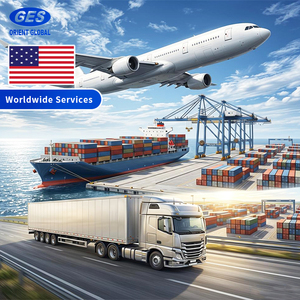
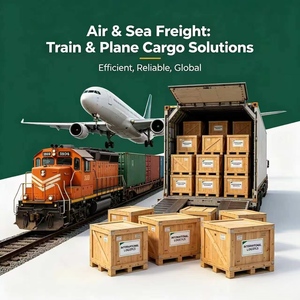
Navigating international freight into the Republic of Ireland requires deep understanding of the country's transformed geopolitical and logistics architecture. Historically reliant on the "UK Landbridge" for expedited European connectivity, Irish importers, global distributors, and overseas multinational manufacturers have decisively shifted toward Direct Ro-Ro (Roll-on/Roll-off) and Lo-Lo (Lift-on/Lift-off) continental maritime routes. As an accredited multimodal freight supplier, our integrated logistics framework connects key production centers in Asia, North America, and mainland Europe directly to Ireland's primary trade gateways: Dublin Port, Rosslare Europort, Port of Cork (Ringaskiddy Deepwater Terminal), and Shannon Foynes.
Multimodal transport merges the geographic range of deep-sea container lines with the localized agility of regional short-sea vessels, bonded rail freight networks, and European road transport. By orchestrating multi-tiered routing models—combining ocean freight into transshipment hubs such as Rotterdam, Antwerp, or Liverpool with direct feeder connections to Ireland—we isolate supply chains from UK cross-border friction, ensure continuous compliance with Irish Revenue Commissioners (Revenue.ie), and eliminate unnecessary secondary transit duties under the Windsor Framework.
Direct entry via Dublin Port and Dublin Airport (DUB) cargo terminals. Tailored for high-turnover consumer goods, electronics, retail FMCG fulfillment, and tech hardware deployment across Dublin, Kildare, and Meath industrial logistics parks.
Specialized active pharmaceutical ingredients (API) and biomedical freight servicing Munster's global biopharma cluster. Offers temperature-controlled reefer corridors, GDP-certified intermediate handling, and rapid customs sign-offs.
Dedicated high-frequency direct ferry connections bypassing the UK directly into Cherbourg, Dunkirk, and Bilbao. Guarantees transit reliability for time-critical industrial machinery, automotive assemblies, and seasonal agriculture.
Ireland stands as a global hub for life sciences, high-technology hardware, medical technologies, and high-yield agrifood. Each sector imposes rigorous criteria on modal selection, payload integrity, and customs architecture. Our multimodal services match each industry's supply chain rhythm:
Irish biopharma exports require end-to-end Cold Chain Integrity under Good Distribution Practice (GDP) standards. We integrate dual-redundancy reefer containers (FCL) by ocean with expedited IATA-certified air freight charters through Dublin and Shannon, complete with real-time temperature loggers and Irish HPRA customs coordination.
Serving the high-density tech corridor along Clonee, Grange Castle, and Leixlip. We oversee abnormal load logistics, heavy haulage transport for modular electrical distribution gear, prefabricated server structural centers, and emergency air freight for mission-critical microchips.
Offshore wind projects and grid reinforcement in Galway, Shannon, and Waterford demand heavy lift project cargo handling. We oversee out-of-gauge (OOG) vessel charters, route path surveys on Irish regional routes, and crane discharge coordination directly onto quayside assembly zones.
High-volume containerized devanning, bonded storage, and automated sorting. We enable global retail brands to position stock inside bonded UK/Irish warehouses, paying customs tariffs and VAT only when cargo is drawn down into local Irish consumer fulfillment networks.
Strategic trade-off metrics comparing direct continental shipping, air cargo hubs, and specialized project transport.
| Logistics Modality | Primary Gateway Routes | Average Transit Time | Customs Protocol & Border Speed | Optimal Commercial Use-Case |
|---|---|---|---|---|
| Direct Ocean Lo-Lo (FCL/LCL) | Asia / US → Rotterdam/Antwerp → Dublin/Cork Port | 28 – 38 Days (Asia) / 12 – 16 Days (US) | Seamless Intra-EU Feeder | Standard manufacturing inputs, bulk chemicals, construction components, dry FMCG. |
| Direct Continental Ro-Ro Ferry | Mainland EU (Cherbourg/Dunkirk/Bilbao) → Rosslare | 20 – 30 Hours (Maritime Leg) | Zero Border Disruption (Intra-EU) | Automotive components, industrial machinery, just-in-time cross-dock assembly. |
| IATA Priority Air Freight | Global Origins → London Heathrow / Dublin / Shannon | 1 – 4 Days Airport-to-Door | Automated AIS Fast-Track | Active pharmaceutical ingredients (API), mission-critical aerospace parts, prototypes. |
| Project Heavy Haulage / OOG | Direct Charter Quayside → Shannon Foynes / Ringaskiddy | Milestone Scheduled | Special Permit & Escort System | Wind turbines, prefabricated steel substations, brewery fermentation vessels. |
Logistics managers and supply chain directors trading with Ireland must contend with four structural shifts reshaping supply security, costs, and carbon liabilities:
Northern Ireland's unique position inside both the UK internal market and the EU Single Market creates operational nuances. Multimodal operators must deploy advanced TMS tracking to segregate shipments entering the "Green Lane" from those requiring full EU border control post (BCP) checks in the Republic.
With Ireland's Climate Action Plan targeting a 51% emissions reduction by 2030, corporate buyers require granular Scope 3 carbon reporting per consignment. Converting traditional road-only legs into ocean-feeder and rail-intermodal configurations slashes transport emissions by up to 65%.
Irish Revenue operates the Automated Import System (AIS) and Automated Export System (AES). Seamless multimodal forwarders must feature direct API integrations, pre-lodged customs entries, and Post-Clearance Amendment capabilities to prevent port gate-holds.
Combining three decades of international freight execution, owned port-centric infrastructure, and certified compliance standards.
Over three decades handling complex international air, ocean, and multimodal routes across the UK, Europe, and Ireland. Established institutional knowledge that solves disruptions before cargo reaches port.
Independently audited quality control systems holding the highest BRCGS AA+ rating for unannounced storage and distribution audits. Fully audited handling for sensitive high-value and consumer cargo.
Certified carbon-neutral operations achieved five full years ahead of the UK's 2030 mandate. We supply full lifecycle carbon emission modeling and green multimodal transport alternatives.
Operating dedicated customs bonded facilities and container devanning hubs adjacent to premier maritime gateways like Felixstowe, Port One, and London Heathrow, offering duty deferment and zero-friction transfer.
Ranked among the UK's premier independent IATA air cargo agencies, securing guaranteed space allocations, chartered capacity, and airside priority customs clearance at Dublin, Heathrow, and continental hubs.
Dedicated customs brokers proficient with Irish AIS/AES documentation, TARIC code classifications, rules of origin documentation, and postponed VAT accounting (PVA) implementation.
Direct answers to questions international exporters and Irish logistics procurement managers ask during vendor vetting.
The historic UK Landbridge route (traversing Dover across Great Britain to Holyhead/Liverpool into Dublin) frequently incurs double customs declarations under post-Brexit UK border checks, potential SPS/veterinary checks, and road haulage driver shortages.
By contrast, direct continental multimodal routes—such as Ro-Ro ferry sailings connecting Cherbourg or Dunkirk directly with Rosslare or Dublin Port—remain entirely within the European Union Single Market. Cargo moves under standard EU free circulation rules without customs transit guarantees (T2 status documentation), eliminating border post delays and potential multi-jurisdiction duties.
Ireland operates a Postponed VAT Accounting (PVA) scheme that allows VAT-registered Irish traders to account for import VAT on their standard bi-monthly VAT return rather than paying it at the port of entry upon cargo clearance.
Our in-house customs brokerage team ensures that your customs entries in the Irish Revenue Automated Import System (AIS) correctly quote the importer's EORI number and declare PVA eligibility, safeguarding working capital and eliminating cash flow bottlenecks at Irish marine terminals.
Yes. We possess proven, specialized experience moving oversized project cargo—such as the 57km T-pylon power infrastructure contract and international rail assembly shipments.
For Ireland, our project logistics team provides comprehensive swept-path route simulations, bridge loading clearance, An Garda Síochána and local county council permits, specialized low-loader and multi-axle modular transport, and direct quay discharge at major industrial harbors like Ringaskiddy and Shannon Foynes.
While CIF or CFR is standard for ocean port deliveries, most multinational and domestic buyers in Ireland prefer DAP (Delivered at Place) or DDP (Delivered Duty Paid). Under DAP, the supplier manages freight to the customer's dock, but the Irish buyer handles customs clearance using their local VAT registration.
Under DDP, the overseas supplier assumes responsibility for transport, import clearances, and local duties. We advise and execute on either model, ensuring accurate valuation, HS/TARIC classification, and transport documentation before shipping.
Our customs-controlled bonded warehousing facilities enable clients to store high-value imported cargo with import duties and VAT fully suspended. Duties are only triggered when goods are released into free circulation for final delivery.
If products are re-exported or distributed to cross-border facilities in Northern Ireland or continental Europe, unnecessary duty payments are avoided entirely—optimizing capital reserves for expanding brands.
Connect with our senior multimodal freight planners to evaluate transit alternatives, request container space allocations, or audit your customs compliance into Dublin, Cork, and Rosslare.
Send an Inquiry