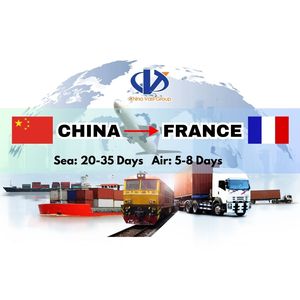
Explore our tier-one maritime container routing, consolidation protocols, and turnkey door-to-door forwarding schedules connecting primary Chinese manufacturing clusters directly to Czech distribution points.
The Czech Republic represents the industrial beating heart of Central and Eastern Europe (CEE). Positioned equidistant between major Northern Range seaports and the Adriatic maritime basin, Czech procurement teams face a complex operational challenge: the country has zero commercial coastline. Achieving optimal landed cost requires moving beyond plain ocean booking; it demands an interconnected, multi-echelon intermodal chain coordinating container vessels, port terminals, trans-European block trains, and localized bonded trucking.
Historically, Chinese freight inbound for Prague, Brno, Ostrava, or Plzeň moved almost exclusively via the Northern Range ports of Hamburg, Bremerhaven, and Rotterdam. While Hamburg boasts historical intermodal rail connections via the Elbe corridor directly to the Metrans hub in Prague-Uhříněves, geopolitical shifts, labor constraints, and North Sea congestion have catalyzed the rise of the Southern Adriatic Corridor. Transit through Port of Koper (Slovenia) or Trieste (Italy) reduces ocean steaming time from Ningbo, Shanghai, or Shenzhen by 7 to 10 days, presenting Czech industrial buyers with dramatic lead-time compression when connected to direct freight trains bound for CEE dry ports.
| Routing Gateway | Maritime Leg Transit | Inland Rail / Feeder Connection | Total China-Czech Transit | Optimal Cargo Archetype |
|---|---|---|---|---|
| Southern Adriatic (Port of Koper) | 20 – 24 Days (via Suez) / 30-34 (via Cape) | Direct Block Train to Dunajská Streda / Prague (24-36h) | 23 – 28 Days | Just-in-Time Automotive OEM, Electronics, Lithium Batteries |
| Northern Range (Hamburg / Bremerhaven) | 28 – 34 Days (via Suez) / 38-44 (via Cape) | Daily Shuttle Trains (Metrans / Eurogate) to Uhříněves (30h) | 32 – 38 Days | Heavy Industrial Machinery, Renewable Energy, Standard FCL |
| Western Hub (Rotterdam / Antwerp) | 30 – 36 Days | Cross-Border Cross-Dock Trucking & Rail Shuttles | 34 – 40 Days | Chemicals, Hazardous ADR Cargo, Specialized Consolidated LCL |
| Polish Baltic Hub (Gdańsk) | 34 – 40 Days | North-South Rail Corridor to Moravia / Ostrava Hubs | 36 – 42 Days | Northern Moravian Manufacturing, Heavy Steel, Fabricated Goods |
Our operations systematically balance these access routes. By maintaining active service contracts with carrier alliances (2M, Ocean Alliance, THE Alliance) across both Adriatic and North Sea calls, we dynamically adjust routings to avoid seasonal blank sailings, terminal strikes, or localized rail embargos.
Real-world operational integration aligning China sourcing factories with specific industrial regional ecosystems within the Czech Republic.
Tier-1 and Tier-2 automotive suppliers require synchronized deliveries to meet lean pull signals. We execute multi-supplier FCL consolidation in Ningbo and Shenzhen, chartering direct Koper rail services that bypass central hub bottlenecks, guaranteeing factory-gate drop-off within 2 hours of customs clearance.
Handling delicate motherboards, semiconductor components, and consumer tech assemblies. We implement specialized humidity-controlled High-Cube (40HQ) dry shipping with integrated shock and tilt telemetry, transitioning directly through bonded devanning stations in Moravia for high-precision fulfillment.
In support of Czech national grid green transitions, we ship heavy breakbulk inverters and Class 9 UN3480 Lithium battery systems. Full compliance with IMDG and European ADR hazardous transit regulations, managed end-to-end under unified customs bonds.
Facilitating regional central warehouses servicing not only the Czech domestic marketplace (Alza, Mall.cz networks) but also Germany and Austria. We manage consolidated ocean LCL deconsolidation, fiscal customs clearance under EU Article 42, and integrated B2B sortation.
The landscape of international freight movement between China and Central Europe is undergoing structural reconfiguration, driven by legislative mandates, carbon pricing, and infrastructural evolutions:
1. Fiscal Neutrality via Article 42 Clearance: Czech commercial entities operating extensive pan-European distribution models are aggressively adopting import customs procedures under EU Customs Procedure Code 42. By releasing cargo into free circulation at the point of maritime entry (e.g., Hamburg or Rotterdam) with deferred import VAT liabilities while transiting immediately to a Czech VAT-registered consignee, enterprises protect substantial operating liquidity.
2. Nearshoring and Buffer Inventory Warehousing: Following global maritime volatility, Czech industrial giants are abandoning purely linear "just-in-time" procurement in favor of "just-in-case" buffer storage. This has triggered heightened demand for bonded warehousing facilities along key Czech transport axes (D1, D5, and D8 highways), where intermediate components from China are stored under duty-suspension protocols until production work orders are confirmed.
3. The Decarbonization Mandate & Fit for 55: With the European Union expanding the Emission Trading System (EU ETS) to maritime transport and pushing CSRD Scope 3 carbon compliance, Czech corporations must now measure the carbon intensity of their supply lines. Intermodal sea-rail logistics via electric rail corridors reduce per-ton-kilometer greenhouse gas emissions by up to 68% compared to continuous trans-European long-haul trucking, creating a measurable strategic advantage for ESG-certified enterprises.
Over three decades of tier-one logistics infrastructure, verified standards, and complete accountability from factory floor to inland consignee.
Since the early 1990s, we have engineered resilient global supply networks. We eliminate intermediaries by maintaining our own facilities, certified personnel, and dedicated contract allocations across major oceanic alliances.
Quality management you can independently verify. Our processes conform strictly to audited ISO 9001:2015 frameworks, while our storage facilities achieve BRCGS AA+ status—the highest operational standard recognized globally.
Eliminate costly border delays. Our in-house compliance units prepare and process import declarations, verify HS classification codes, manage transit T1 carnets, and safeguard preferential origin protocols directly within the NCTS platform.
Protect valuable operational capital. Through our extensive bonded warehousing capabilities, customs tariffs and statutory VAT obligations are held in suspension until goods are formally released into local commerce or re-exported across the Schengen zone.
From industrial stamping presses to infrastructure project structures, our abnormal load division handles complex engineering surveys, specialized flat-rack / open-top stowage, route permitting, and synchronized police escorts across all borders.
Operating a carbon-neutral infrastructure five years ahead of standard regulatory schedules. We provide clients with accurate, certified per-consignment Scope 3 emission audits alongside green intermodal multimodal routing alternatives.
Detailed operational insights resolving common complexities when routing ocean cargo from China into the Czech interior.
The decision hinges on cargo geography and urgent priorities. For shipments originating in Southern or Eastern China (Shenzhen, Guangzhou, Xiamen, Ningbo), routing through the Port of Koper (Slovenia) saves 7 to 10 days of maritime steaming compared to Northern ports. When paired with high-frequency block trains directly to Czech terminals (e.g., Metrans Prague, Ostrava), Koper yields typical port-to-door transit times of 24–28 days. Conversely, Hamburg offers far higher ocean carrier sailing frequencies, higher capacity allocations during market peak seasons, and superior scale for overweight 20ft equipment or specialized heavy-lift project freight.
Czech-bound containers typically land at an external EU coastal port (Hamburg, Rotterdam, Koper) and move inland under a Customs Transit Procedure (T1 Carnet). This suspends all customs duties and value-added tax at the oceanic quay, allowing the sealed container to transit across intermediate EU member states without clearance delays. Upon arriving at the designated inland customs office or dry-port bonded warehouse in the Czech Republic (such as Prague, Brno, or Lovosice), our licensed customs brokerage team completes final customs entry, verifies Taric codes, applies preferential origins, and assesses domestic VAT/duty.
Yes. If your company imports goods via a coastal entry port (e.g., Rotterdam or Hamburg) with immediate cross-border intra-Community onward delivery to a VAT-registered entity in the Czech Republic or other EU states, Customs Procedure 42 can be executed. Under this scheme, import duty is settled at the seaport, while domestic import VAT is fully deferred, neutralizing cash-flow burdens at arrival. Strict documentation (CMR, cross-border proof of delivery) is mandatory to satisfy fiscal regulatory audits.
Historically, the economic inflection point occurs around 13 to 15 cubic meters (CBM). While Less than Container Load (LCL) allows you to pay strictly for the utilized cubic space, consolidation and deconsolidation terminal handling charges (CFS fees) accumulate rapidly. A 20ft Full Container Load (FCL) provides ~28-30 CBM of usable volume, eliminates intermediate cargo handling, reduces structural loss risk, and bypasses deconsolidation waiting periods at inland CEE terminals.
Essential import documentation includes: (1) Commercial Invoice stating full item descriptions, accurate Incoterms, currency, and unit values; (2) Detailed Packing List specifying gross/net weight and packaging types; (3) Clean On-Board Bill of Lading (B/L); (4) Valid Czech Economic Operators Registration and Identification (EORI) number; and (5) Specific conformity documents. For electronic and mechanical assemblies, a CE Declaration of Conformity and compliance with EU RoHS/REACH standards are legally mandatory before cargo will be cleared by the Czech Customs Administration (Celní správa ČR).
Because inland intermodal moves involve multiple transfers (port-to-rail, rail-to-truck), we negotiate extended free-time agreements directly with ocean carriers prior to vessel departure in China—typically targeting 14 to 21 combined days of demurrage and detention. Furthermore, our dedicated inland dispatch teams continuously track container arrival at dry ports to schedule immediate offloading or secure drop-trailer movements, ensuring empty equipment is returned swiftly to designated carrier depots in Prague, Česká Třebová, or Ostrava.
Consult with our specialized maritime operations division to analyze your bill of lading profiles, optimize container utilization, eliminate hidden port charges, and secure guaranteed vessel space on tier-one sailings.