

Deploying specialized rigging, clinical transit solutions, and integrated international trade channels engineered to meet the stringent handling protocols of the Philippine Department of Health (DOH) and the Bureau of Customs (BOC).


The Philippine healthcare sector is navigating an unprecedented structural transition driven by Republic Act No. 11223, commonly known as the Universal Health Care (UHC) Act, alongside the Department of Health’s (DOH) ambitious Health Facilities Enhancement Program (HFEP). As provincial local government units (LGUs), apex hospital networks, and private healthcare conglomerates (such as Metro Pacific Health and The Medical City) scale their diagnostic imaging, surgical infrastructure, and oncology wards, the demand for precision medical equipment logistics has evolved beyond ordinary freight handling.
Biomedical logistics across the Philippine archipelago presents singular supply chain hurdles: transporting multi-million dollar, vibration-sensitive systems—such as 1.5T/3.0T Magnetic Resonance Imaging (MRI) scanners, multi-slice Computed Tomography (CT) systems, linear accelerators, automated immunoassay analyzers, and biopharmaceutical cold chains—across an island nation of over 7,640 islands. This demands engineered vibration dampening, microclimate temperature stabilization, and proactive customs navigation through the Philippine Food and Drug Administration (FDA) and the Bureau of Customs (BOC).
"Biomedical logistics in the Philippines is an engineering discipline. A 0.5-degree thermal excursion during inter-island transit or an unmitigated G-force shock on a CT gantry during intermodal Ro-Ro transport does not merely cause financial loss—it delays critical patient diagnostics across regional hubs."
Custom-engineered handling protocols aligned with the localized geographical, structural, and regulatory environments of the National Capital Region (NCR), Luzon, Visayas, and Mindanao.
Handling tight urban staging, structural stress calculations, and night-shift crane hoist rigging for heavy medical equipment (MRI, cath labs) into tertiary hospitals across Quezon City, Taguig (BGC), Makati, and Manila, synchronizing zero-demurrage offloading at MICP/Port of Manila.
Providing duty-suspension, bonded logistics forwarding, and seamless component delivery for specialized medical device assembly lines operating inside Clark Freeport, Subic Bay Freeport, and Laguna/Cavite PEZA export zones without tax friction or port demurrage.
Bridging refrigerated reagent and vaccine supplies from Luzon distribution hubs to provincial health offices in Visayas (Cebu, Iloilo, Bacolod) and Mindanao (Davao, Cagayan de Oro, Zamboanga) using active GPS/temperature data-loggers across roll-on/roll-off (Ro-Ro) vessels and regional air corridors.
Engineered logistics parameters applied by Hemisphere Freight Services to safeguard biomedical and diagnostic assets arriving through Philippine borders.
| Equipment Category | Handling Vulnerability | Packaging & Rigging Standard | Regulatory Filing (PH FDA) | Primary Domestic Route | Status |
|---|---|---|---|---|---|
| Superconducting MRI (1.5T/3.0T) | Cryogenic helium boil-off; magnetic core displacement | Heavy-duty welded steel chain rigging, ISPM-15 climate crating | CDRRHR Form C / Radiation Device Permit | Port of Manila → Specialized Air-Ride NCR/Luzon | Clinical Protocol Active |
| Multi-Slice CT & Cath Labs | Gantry bearing micro-damage; high-precision sensors | Multi-axis shock indicators, calibrated anti-vibration skids | CPR / LTO Medical Device Category B/C | Batangas Port → Regional Ro-Ro Southern Luzon | Clinical Protocol Active |
| Diagnostic IVD Reagents | Enzymatic degradation at >8°C; tropical humidity | Active PCM Phase-Change shippers, digital data-logger | Cold Chain Protocol / FDA Reagent Clearance | MNL/CRK Airport → Inter-Island Air Freight | Continuous Monitoring |
| Surgical Lasers & Optics | Laser tube alignment; optical lens delamination | Hermetic vacuum foil barrier, desiccant saturation, shock watch | Optical Radiation Clearance / BOC Green Lane | Subic Bay Freezone → Central Luzon Healthcare | Clinical Protocol Active |
| Hospital Autoclaves & Gas Systems | Pressure vessel impact; valve flange distortion | Custom reinforced galvanized lifting assembly, heavy timbering | DOST / Pressure Vessel Certification | Cebu International Port → Visayas Network | Clinical Protocol Active |
Navigating the shift toward decentralization, digital supply chain traceability, and regulatory modernization under the ASEAN Medical Device Directive.
Philippine national healthcare programs are redirecting capital expenditures from Metro Manila into regional specialty centers across Northern Luzon (Baguio, Ilocos), Central Visayas (Cebu), and Southern Mindanao (Davao), requiring multi-tiered regional distribution hubs.
Implementation of the ASEAN Medical Device Directive (AMDD) through Philippine FDA Circular 2020-001 has streamlined product classification (Classes A to D). Strict compliance in technical documentation, labeling, and LTO maintenance is now essential to prevent border detentions.
Manual temperature logs are being phased out by private healthcare groups and donor-funded programs in favor of real-time cloud telematics, providing continuous humidity, temperature, and GPS monitoring across inter-island sea transshipments.
Major healthcare tenders increasingly evaluate the carbon footprint of transport providers. Hemisphere’s early carbon-neutral status (5 years ahead of the UK’s 2030 target) provides verifiable Scope 3 sustainability documentation for hospital ESG compliance.
Over three decades of global freight forwarding, port-centric warehousing, and high-stakes clinical supply chain governance.
Operate under strict ISO 9001:2015 quality management and BRCGS AA+ storage and distribution credentials, ensuring every shipment conforms to stringent international medical device regulations.
Eliminate disputes between freight forwarders, packing companies, and local customs brokers. Hemisphere manages the entire lifecycle: export crating, international transit, customs brokerage, and final-mile positioning.
Leverage port-centric bonded warehousing infrastructure to stage high-value diagnostic spare parts and seasonal inventories with duty and VAT suspended until final dispatch to the operating facility.
Direct answers addressing customs clearances, CDRRHR compliance, cold-chain preservation, and freight cost optimizations.
Importing diagnostic and radiation-emitting equipment requires a License to Operate (LTO) from the Philippine FDA as a medical device importer/distributor, alongside a valid Certificate of Medical Device Registration (CMDR) or Certificate of Medical Device Notification (CMDN) issued by the Center for Device Regulation, Radiation Health, and Research (CDRRHR). Additionally, radiation-emitting assets require a Pre-Operational Permit/Clearance from CDRRHR before installation and formal customs release.
We deploy validated active phase-change material (PCM) shippers and calibrated VIP (vacuum insulated panel) containers that maintain target temperatures (2°C–8°C, -20°C, or -80°C ultra-cold) for up to 120 hours without external power. Each consignment is equipped with multi-point USB/NFC digital data-loggers that record temperature, relative humidity, and transit events, verified upon hospital receiving dock turnover.
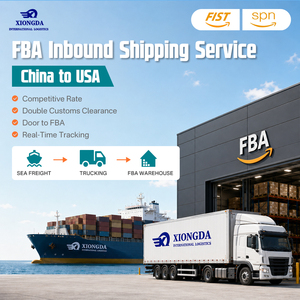
Yes. Under our turnkey DDP medical programs, we manage factory crating and overseas loading, international air or ocean freight, formal Philippine customs declarations, settlement of applicable duties, VAT, and port handling charges, followed by secure final-mile delivery directly into hospital diagnostic suites or cleanrooms across NCR, Luzon, Visayas, and Mindanao.
For sensitive or high-value biomedical assets, dedicated Full Container Load (FCL) or Air Freight is strongly recommended. FCL minimizes co-loading contamination risks, unnecessary port devanning, and mechanical vibration. High-priority items (such as replacement X-ray tubes, ultrasound probes, and urgently required surgical instruments) are routed via our IATA-accredited express air corridor directly into Ninoy Aquino International Airport (MNL) or Clark International Airport (CRK).
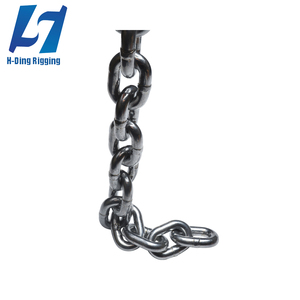
All sensitive modalities are secured using ISPM-15 export-grade engineered wooden framing, calibrated shock-isolation pallets, and load-rated welded steel lashing chains with grab hooks. During domestic transfer, we mandate air-ride pneumatic suspension trailers and monitor shock impact using calibrated multi-axis g-force dataloggers throughout both sea crossings and terrestrial legs.
Yes. Registered Philippine Economic Zone Authority (PEZA) enterprises and Subic/Clark Freeport locators can import assembly parts, testing equipment, and production machinery tax- and duty-free. Our customs compliance division handles Automated Export Documentation System (AEDS) filings and e-IPR permits to ensure non-stop container gate passes directly to factory receiving bays.
Whether you are outfitting a newly built tertiary medical center or setting up an ongoing pharmaceutical cold chain distribution network, consult our senior biomedical freight directors today.
Get Catalog